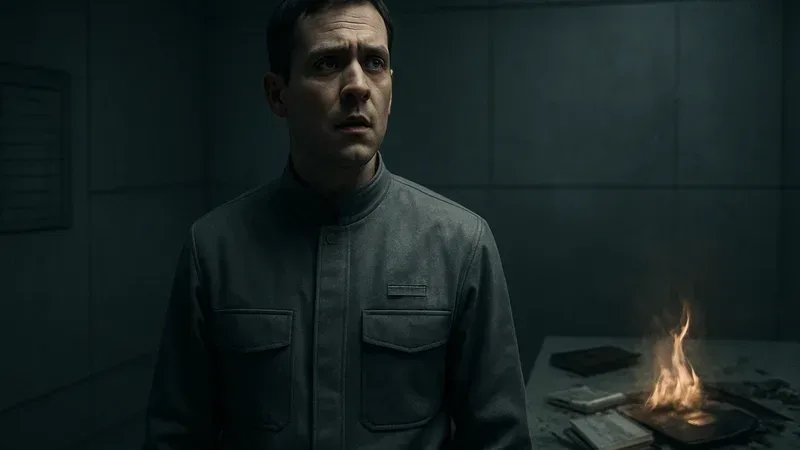
What if peace required you to stop feeling? Not suppress it, not hide it — chemically erase it, every day, on schedule. That is the bargain at the centre of Equilibrium, and it produces one of the strangest images in early-2000s science fiction: a man in a grey uniform, standing in a grey room, realising he has forgotten to take his dose.
📋 At a Glance
- Year: 2002
- Director: Kurt Wimmer
- Country: United States
- Language: English
- Genre: Science fiction, dystopian action
- Main cast: Christian Bale, Emily Watson, Taye Diggs
🔇 The Rules of the Quiet World
John Preston is an enforcement officer in a state that has outlawed feeling. Citizens take a daily drug to keep emotion flat. Art, music, books — anything that might stir something — is contraband, and Preston's job is to find and destroy it. Then he misses a dose. The film does not treat this as a small slip. It treats it as a crack in the floor of reality.
What makes the premise work is how literal it is. This is not a society that discourages emotion; it is one that has built an entire bureaucracy around preventing it. The drug is not a metaphor you have to decode. It is a pill, a schedule, a rule. That bluntness is the film's strength.
🔫 Gun-Kata and the Pleasure of Invention
The film's most famous invention is gun-kata: a fictional martial art that blends firearms with close-quarters choreography. It is not realistic. It is not meant to be. Characters spin, pivot, and fire in patterns that look like dance, and the film commits to it completely.
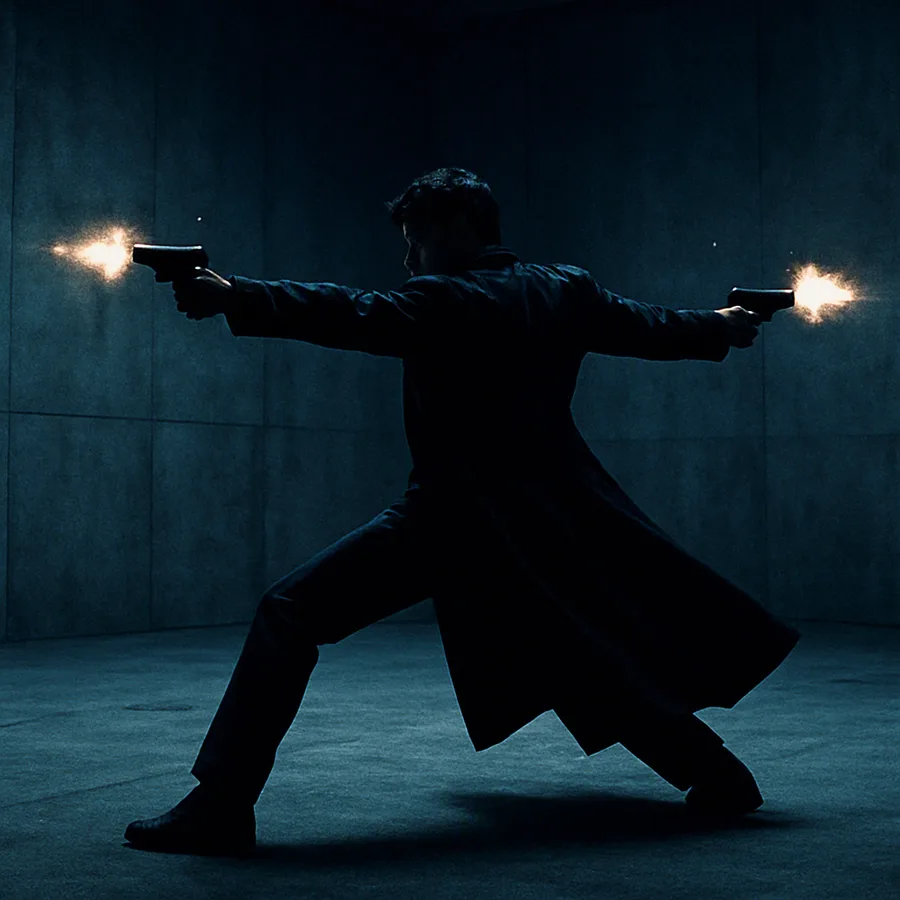
This is where Equilibrium stops being a solemn dystopia and becomes something more fun. The action sequences are staged with a confidence that the quieter scenes sometimes lack. You can feel the director enjoying the problem he has set himself: how do you make gunplay feel like a discipline, a philosophy, even a form of expression? The answer is style, repetition, and a willingness to look a little ridiculous.
🎭 Bale's Face as the Special Effect
Christian Bale plays Preston with almost no expression for long stretches, and that is the point. The performance is a study in restraint that slowly loosens. Early on, his face is a mask — not blank, but deliberately emptied. As the character begins to feel again, Bale lets tiny things through: a flicker, a pause, a breath that does not quite fit the room.
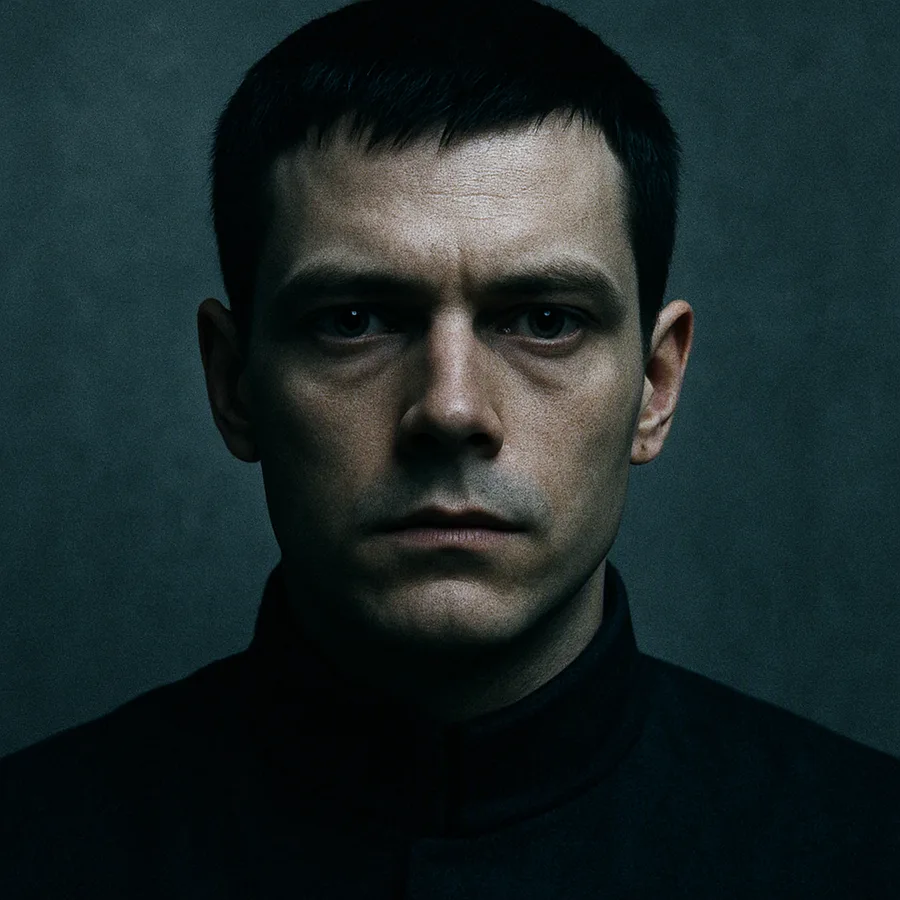
It is a risky way to carry a film. A less disciplined actor would push too hard in either direction — too robotic, then too suddenly alive. Bale keeps the change gradual, so the arc feels like weather rather than a switch. Emily Watson, as a woman caught between the regime and her own instincts, gives the film a warmer counterweight without tipping it into sentimentality.
🏢 Cold Rooms, Cold Light
The visual design is severe and consistent. Grey corridors, hard light, symmetrical framing. The world is built from repetition: the same walls, the same uniforms, the same faces. It is not a lush dystopia. It is a bureaucratic one, and the look sells the idea that feeling has been sanded away.
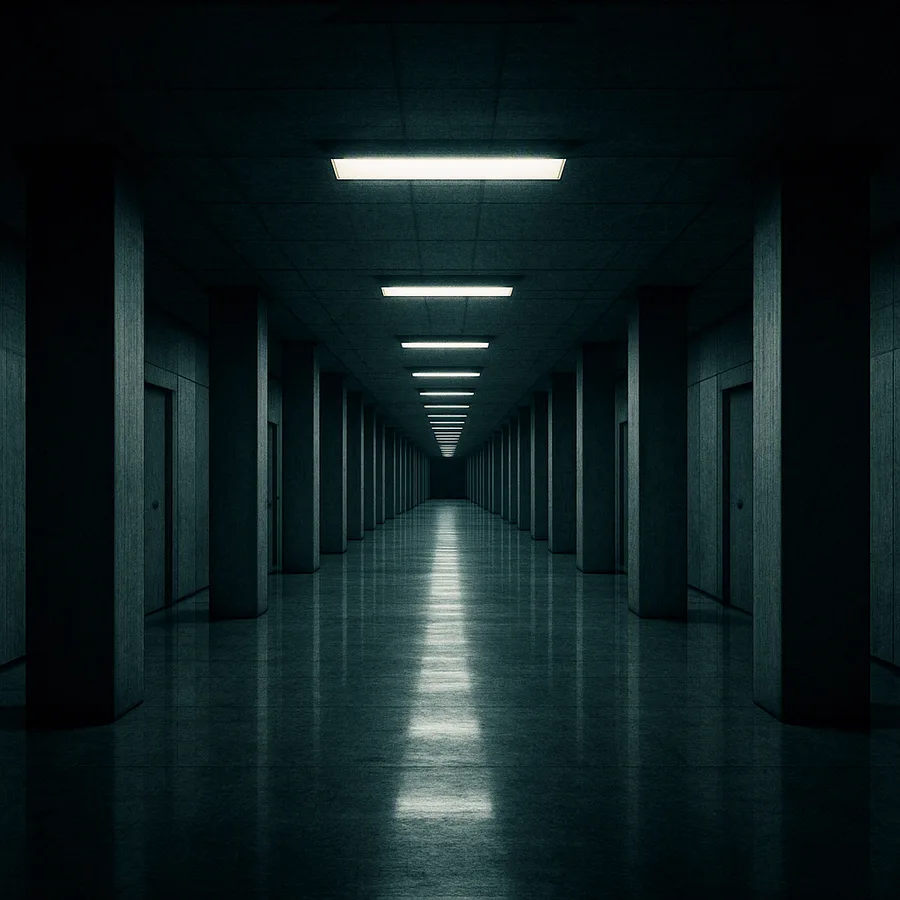
Where the film sometimes stumbles is in its earnestness. It wants to be about something, and it says so out loud, more than once. The dialogue can tip into lecture. But the images do more work than the words, and the best moments are the quiet ones — a hand on a piano key, a room full of confiscated art, the strange intimacy of a society that has agreed to feel nothing together.
ℹ️Where the film sometimes stumbles is in its earnestness. It wants to be about something, and it says so out loud, more than once.
✅ What Still Works
- ✅ The central concept: a state that treats emotion as a public health threat.
- ✅ Bale's controlled, gradual performance.
- ✅ The gun-kata sequences, which are inventive even when they are absurd.
- ✅ The production design, which commits fully to its grey, ordered world.
- ✅ The film's sincerity — it believes in its own ideas, and that belief is contagious.
⏳ What Aged
Some of the visual effects look thin now, and the film's earnest tone can feel unfashionable next to the irony that later science fiction adopted. The action, while energetic, occasionally mistakes speed for clarity. None of this ruins the film, but it dates it. Equilibrium belongs to a moment when a dystopia could be this direct without apologising.
❓ The Question Behind the Movie
The film keeps asking whether peace is worth the price of feeling. Its answer is not subtle, but the question is sharper than it first appears. The regime in Equilibrium is not evil for the sake of evil; it is responding to war, violence, and human cruelty with a solution that actually seems to work. That is what makes Preston's awakening complicated. He is not just fighting a villain. He is fighting a system that has a real argument.
And the film knows it. The most interesting scenes are not the shootouts but the ones where someone explains, calmly and reasonably, why emotion had to go. You do not have to agree. You just have to notice how tempting the logic is — and how much it costs.
You do not have to agree. You just have to notice how tempting the logic is — and how much it costs.
🎬 A Sincere Dystopia
Equilibrium is not a perfect film. It is too talky in places, too pleased with its own ideas in others. But it has something that a lot of slicker science fiction lacks: conviction. It takes its premise seriously, follows it to its logical extremes, and trusts the audience to care about a man learning to feel in a world that has decided feeling is the enemy. That is worth remembering.
🔗 Source
Equilibrium (film) Wikipedia

Kommentare (0)
Kommentar hinterlassen
Schreiben Sie den ersten Kommentar!