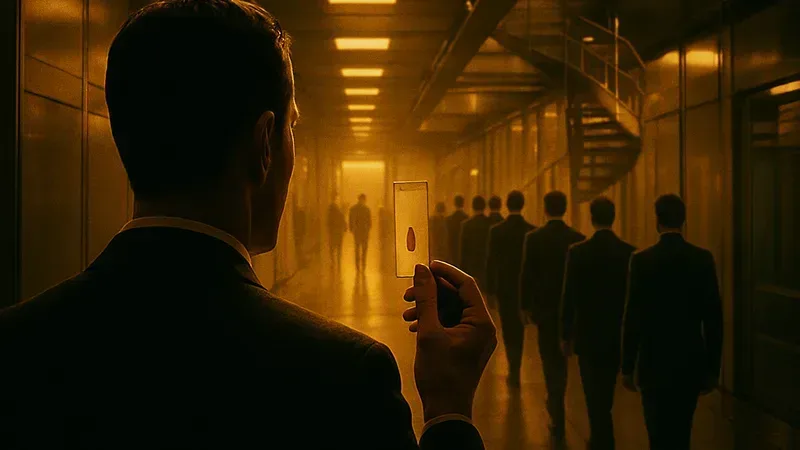
There is no gene for fate. That line, from the film's own poster, is the whole argument in five words. Gattaca imagines a near future where a drop of blood or a strand of hair tells an employer, an insurer, a lover, exactly what kind of person you are going to be. And then it asks what happens to the people who refuse to accept the reading.
📋 At a glance
- Year: 1997
- Director: Andrew Niccol
- Country: United States
- Language: English
- Genre: Dystopian science fiction
- Main cast: Ethan Hawke, Uma Thurman, Jude Law
🧬 A world that sorts you at birth
Vincent Freeman is a "faith birth" — conceived the old way, without genetic selection, in a society where that makes him an outsider from the moment he takes his first breath. A nurse reads his blood and can already tell his parents his probable lifespan, his likely illnesses, his odds. His dream is simple and enormous: he wants to go into space. The space program, Gattaca, does not take his kind.
What makes the premise land is how little the film has to explain. Nobody gives a speech about eugenics. The rules are visible in a job interview, a urine test, a handshake that leaves a hair behind. Discrimination here is not a law, it is a habit — and that is far more chilling than any tyranny.
🩸 Borrowing another man's body
Vincent's way in is Jerome Morrow, a former swimming champion with perfect genes and a broken body after an accident. Vincent buys Jerome's identity: his blood, his urine, his hair, his signature. Every morning he scrubs himself clean of his own cells and becomes someone else.
This is the film's best relationship, and the least sentimental. Jerome is not a wise mentor or a tragic victim. He is a man who was told his whole life that he was built to win, and he lost anyway. Vincent is a man who was told he would never be anything, and he keeps going. Neither one is simply using the other. Each needs the other's body to keep existing in a world that has already decided what they are worth.
🕵️ The noir engine under the science fiction
Gattaca is built like a detective story. There is a murder, an investigation, a trail of evidence, a detective closing in. That structure is not decoration — it is how the film turns its ideas into suspense. Every clue in a normal crime film is a clue about guilt. Here, every clue is a piece of Vincent's body, and the question is not whether he did it but whether he can be found out.
It is a clever delivery system. The film never stops to lecture, because the plot keeps asking the same question in a new form: what is identity, if identity is a sample you can carry in a vial?
🎞️ Designing a future that looks like the past
Most science fiction of the nineties chased chrome and screens. Gattaca went the other way. The cars look like the 1950s, the suits are sharp and old-fashioned, the buildings are stone and glass and concrete. The palette is amber and gold and shadow. The result feels less like a prediction than like a memory of the future — a world that has decided it is already perfect and has stopped changing.
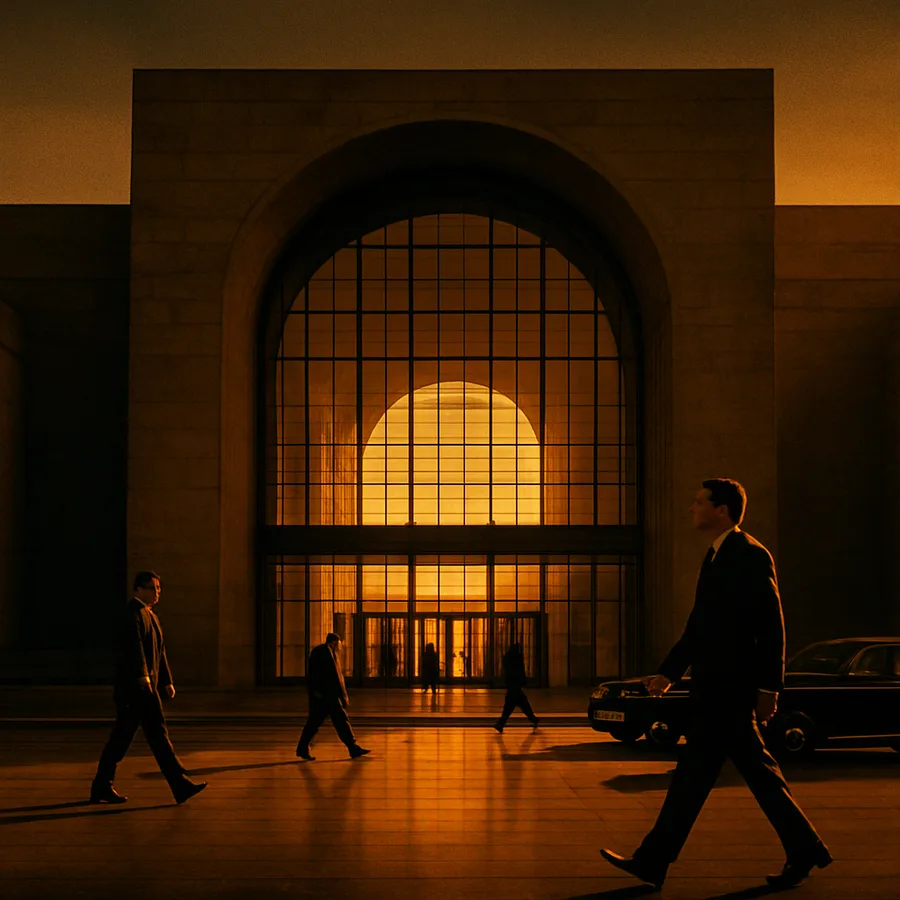
That choice matters. A shiny future would feel like a warning about technology. This one feels like a warning about people. The retro look also quietly says something cruel: this society believes it has finished, that everything worth deciding has already been decided at conception.
✅ What still works
- ✅ The production design, which builds a whole society out of a few rooms and a lot of amber light.
- ✅ The urine and blood rituals — small, repetitive, and somehow more tense than any chase.
- ✅ Jude Law's performance, which makes a man who has given up his own name feel vivid rather than pitiable.
- ✅ Michael Nyman's score, which turns the film's quietest moments into something close to grief.
⏳ What aged
The biology. In 1997, reading a person's future from a drop of blood sounded like a real possibility. Today the science looks almost quaint — the film's genetics are closer to astrology than to a lab report. That is not fatal. The fear underneath it, that institutions will use data to decide who deserves a chance, has only gotten more familiar.
💭 The question behind the movie
Gattaca is not really asking whether genetic engineering is dangerous. It is asking what we mean when we say someone is gifted. Jerome has every advantage and no will to use it. Vincent has no advantages and an unreasonable amount of will. The film keeps putting those two facts side by side and refusing to resolve them into a tidy lesson.
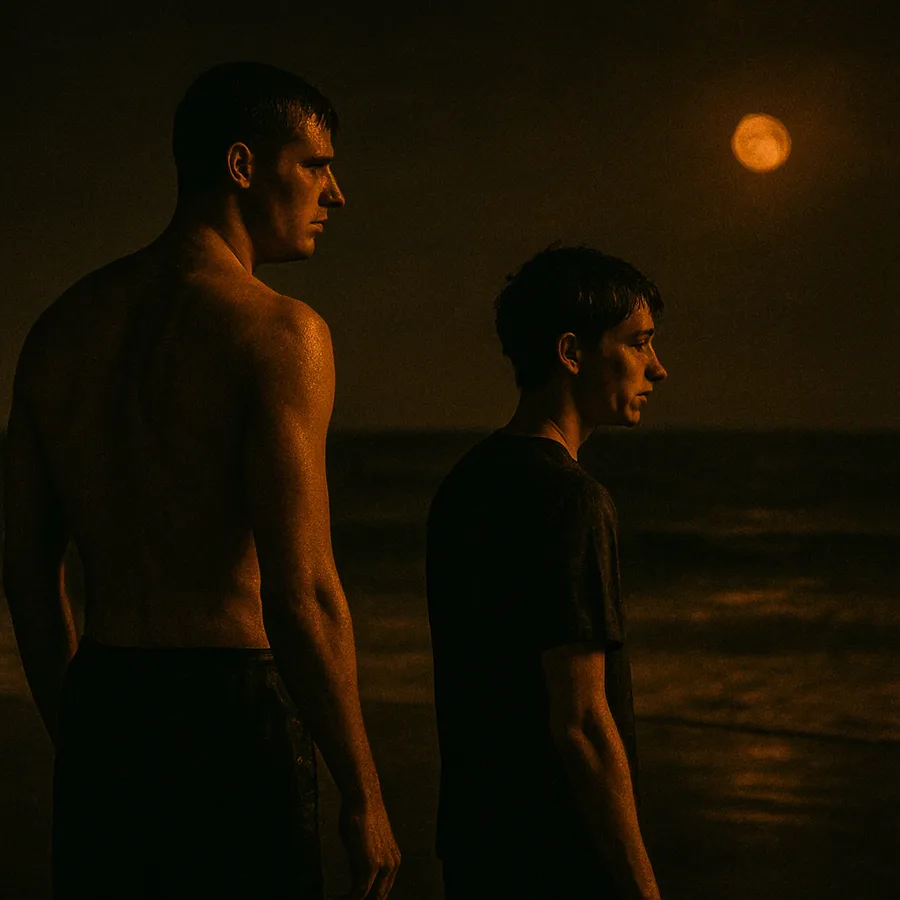
Watch the small moments: Vincent beating his brother in a swimming race as a child, not because he is stronger but because he refuses to save anything for the swim back. That is the film's real subject. Not what your genes say you can do, but what you are willing to do anyway. It is a simple idea, and the film earns it by never letting anyone say it out loud.
🏁 Final thought
Gattaca is a quiet film about a loud idea. It does not need explosions or monsters, because it knows the most frightening thing in the room is a form you have to fill in. Nearly thirty years on, its future still looks close — and its central refusal, that a person is not the sum of their sample, still feels worth defending.
🔗 Source
Gattaca Wikipedia

Comments (0)
Leave a Comment
Be the first to comment!