Introduction
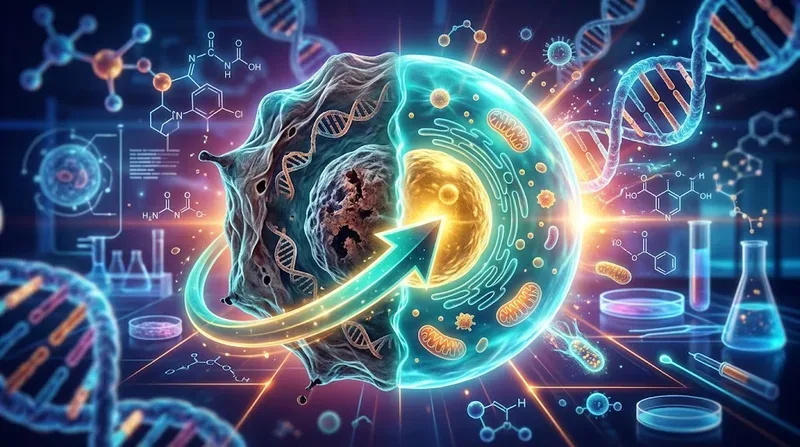
As we age, our cells lose their youthful function. Scientists are studying a process called cellular reprogramming, which may help restore that function. This review looks at recent progress and challenges in using this approach to treat age-related decline.
What the study did
This is a review article, meaning it summarizes findings from many earlier studies. It focuses on research in humans, but also discusses work in animals and cells. The review examines how cellular reprogramming can be done safely and effectively, and what obstacles remain.
What it found
- Cellular reprogramming shows promise for improving age-related cellular decline.
- Earlier methods lacked specificity, meaning they could affect the wrong cells.
- There was a risk of causing cancer, but recent advances have reduced that risk.
- These improvements are a step toward developing safe treatments for age-related diseases.
How much to trust it
This is a review, which is a summary of many studies, so it provides a broad view. However, it is not a single experiment, and the trust tier is Moderate because it relies on other research. The biggest limitation is that it is not a direct test in humans, so we cannot be sure the approach works in people yet.
Your action plan
- Focus on general healthy habits like eating well and staying active, as these support cell health.
- Keep up with new research, but be cautious about claims until human trials confirm them.
- Talk to a doctor before trying any new treatment or supplement.
This summary is for general information only and is not medical advice. Talk to a qualified professional before changing anything about your health.
Source
Targeted partial reprogramming as a novel therapeutic strategy for age-related decline.. Ageing research reviews. 2025 PubMed

Comentários (0)
Deixe um Comentário
Seja o primeiro a comentar!