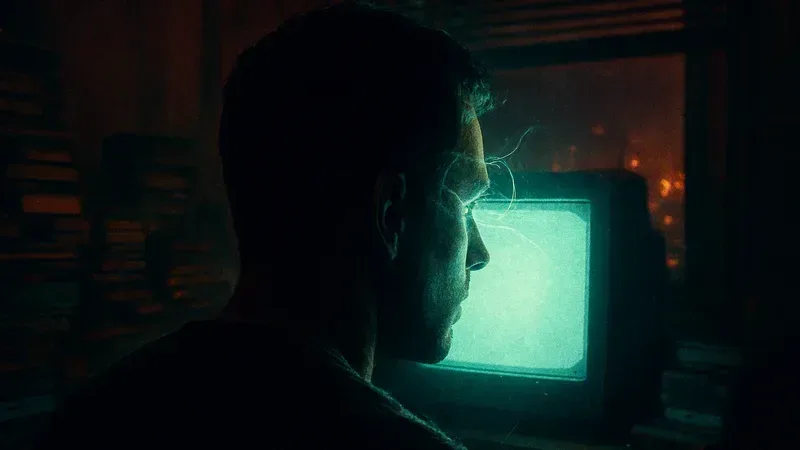
In the final days of 1999, Los Angeles is a powder keg. And on the streets, a man is selling the most dangerous drug of all: someone else's life. Strange Days imagines a device that records not just what you see, but what you feel — and then asks what that does to the person who buys it.
🎬 At a Glance
- Year: 1995
- Director: Kathryn Bigelow
- Country: USA
- Language: English
- Genre: Science fiction thriller
- Main cast: Ralph Fiennes, Angela Bassett, Juliette Lewis
- Runtime: 145 minutes
🌆 The Last Days of the Century
Lenny Nero (Ralph Fiennes) is a former cop who now deals in "clips" — recorded experiences that let anyone live another person's moment. He's a hustler with a heart, still hung up on his ex-girlfriend Faith (Juliette Lewis), a singer chasing fame in a city about to explode. His only anchor is Mace (Angela Bassett), a limo driver who watches his self-destruction with weary, steel-eyed patience.
The premise is pure science fiction, but Bigelow grounds it in sweat and neon. This is not a clean future. It's a city on the edge, and Lenny is about to get pulled into something far darker than his usual trade.
🧠 Empathy as a Drug
The film's central device — the SQUID — is more than a gadget. It's a moral test. When you plug in, you feel exactly what the recorder felt. That could be the thrill of a robbery, or the terror of a murder. The film doesn't just show this technology; it makes you sit with its implications.
Lenny sells these experiences, but he's also an addict. He uses clips to relive his happiest moments with Faith, trapping himself in a past that no longer exists. The movie asks a sharp question: if you can relive any memory, do you ever really move on? It's a 1995 film about a future technology, but it's really about how we consume other people's lives — and what it does to our own.
ℹ️In Strange Days, the SQUID (Superconducting Quantum Interference Device) records the full sensory experience of the wearer, making it a literal tool for experiencing another's perspective.
🎥 Bigelow's Camera Is a Thrill Ride
Kathryn Bigelow directs with a ferocious energy. She opens the film with a single, unbroken POV shot that drops you inside a robbery — you're not watching it, you're living it. It's a bravura sequence that instantly proves the power of the SQUID concept.
Throughout, the camera moves with a restless, almost dangerous freedom. It glides through clubs, chases down alleys, and hovers over faces like a predator. Bigelow doesn't just film the action; she makes you feel the city's pulse. The result is a thriller that's physically exhausting in the best way, a film that grabs you by the collar and doesn't let go.
🔥 A City About to Burn
This is not a generic dystopia. The film is soaked in the real anxieties of its time — police brutality, racial tension, the fear that the turn of the millennium might bring chaos. The streets are filled with protesters, and the air crackles with the threat of violence.
Bigelow uses this setting to give the thriller real weight. Lenny's personal troubles play out against a backdrop of a society on the brink. The film's climax isn't just about saving a person; it's about whether a city can save itself. It's a reminder that the most frightening science fiction is the kind that feels uncomfortably close to home.
If you can relive any memory, do you ever really move on?
👍 What Still Works
- ✅ The opening POV sequence remains a stunning piece of filmmaking.
- ✅ Angela Bassett's Mace is a grounded, powerful anchor amid the chaos.
- ✅ The neon-soaked, grimy production design creates a world you can almost smell.
- ✅ The film's central question — about the ethics of experiencing others' lives — feels more relevant than ever.
⏳ What Aged
The technology is charmingly dated — the SQUID clips are stored on discs that look like CDs, and the slang ("jack in") feels very mid-90s. Some of the visual effects, particularly in the virtual reality sequences, have a distinctly retro sheen. But these are surface details. The film's core concerns — voyeurism, addiction, and the gap between seeing and understanding — haven't aged a day.
💡If you're revisiting Strange Days, focus on the character dynamics and the social commentary — those remain just as powerful today as they were in 1995.
❓ The Question Behind the Movie
At its heart, Strange Days asks whether experiencing someone else's life can ever replace living your own. Lenny thinks he wants Faith back, so he replays their memories until they're worn thin. Mace, who has no time for such indulgences, tells him to live in the real world. The film doesn't offer an easy answer. It just shows you two people — one trapped in the past, one fighting for the future — and lets you decide which one is truly alive.
🏁 Final Thought
Strange Days is a film that knows exactly what it's doing. It's a thriller, a love story, and a warning, all wrapped in a dazzling, dangerous package. And in an age where we scroll through other people's highlight reels every day, its warning feels less like science fiction and more like a mirror.
📚 Source
Strange Days (film) Wikipedia

Kommentare (0)
Kommentar hinterlassen
Schreiben Sie den ersten Kommentar!