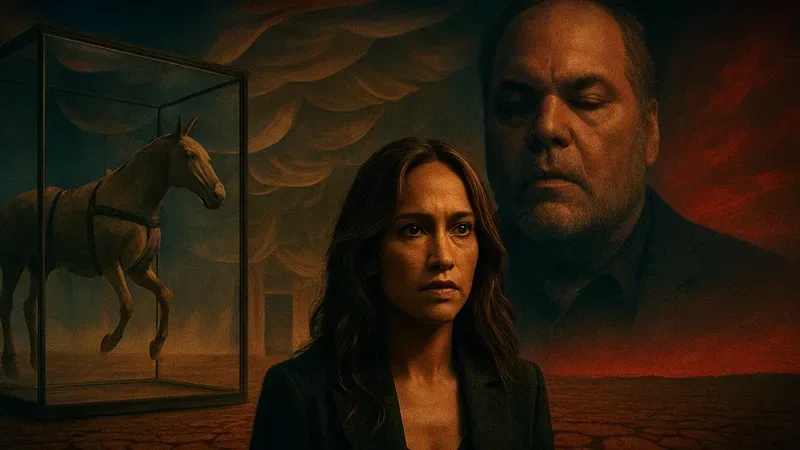
What if the most beautiful place in the world was inside the head of a murderer? That is the unsettling proposition at the heart of Tarsem Singh's feature debut, a film that looks like a perfume ad and thinks it is a thriller. It is both, and not quite either.
📋 At a glance
- Year: 2000
- Director: Tarsem Singh
- Country: USA
- Language: English
- Genre: Science fiction, psychological horror
- Main cast: Jennifer Lopez, Vince Vaughn, Vincent D'Onofrio
- Runtime: 107 minutes
🎬 The setup
Child psychologist Catherine Deane (Jennifer Lopez) is part of an experimental program that lets her enter the minds of comatose patients. When the FBI discovers that a captured serial killer, Carl Stargher (Vincent D'Onofrio), has left a woman to die in a hidden cell, they ask Catherine to go inside his mind and find her.
The catch: Stargher is in a coma, and his mind is not a place anyone should visit. The premise is a race against time, but the film's real interest is what happens when you spend too long in someone else's head.
🎨 A fashion photographer's nightmare
Tarsem Singh came from music videos and commercials, and it shows. The film's dream sequences are a series of jaw-dropping tableaux: a horse sliced into sections and suspended in glass, a room of floating silk, a desert of cracked earth under a bleeding sky.
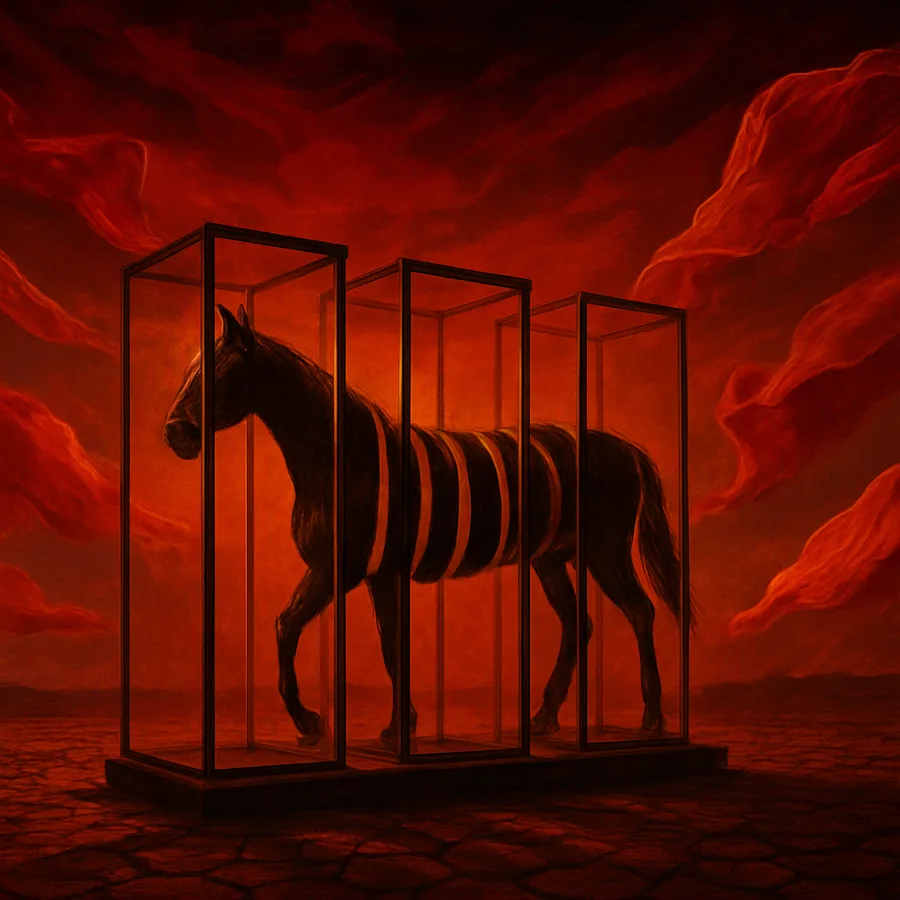
These images do not serve the plot so much as overwhelm it. That is both the film's great strength and its central problem. The visuals are so arresting that the story feels like an afterthought, a thin wire connecting one gorgeous set piece to the next.
🎭 The killer is the best part
Vincent D'Onofrio does something remarkable with Carl Stargher. He plays a monster, but not a cartoon. In the real world, he is a twitching, pathetic figure. Inside his mind, he becomes a god of his own twisted creation.
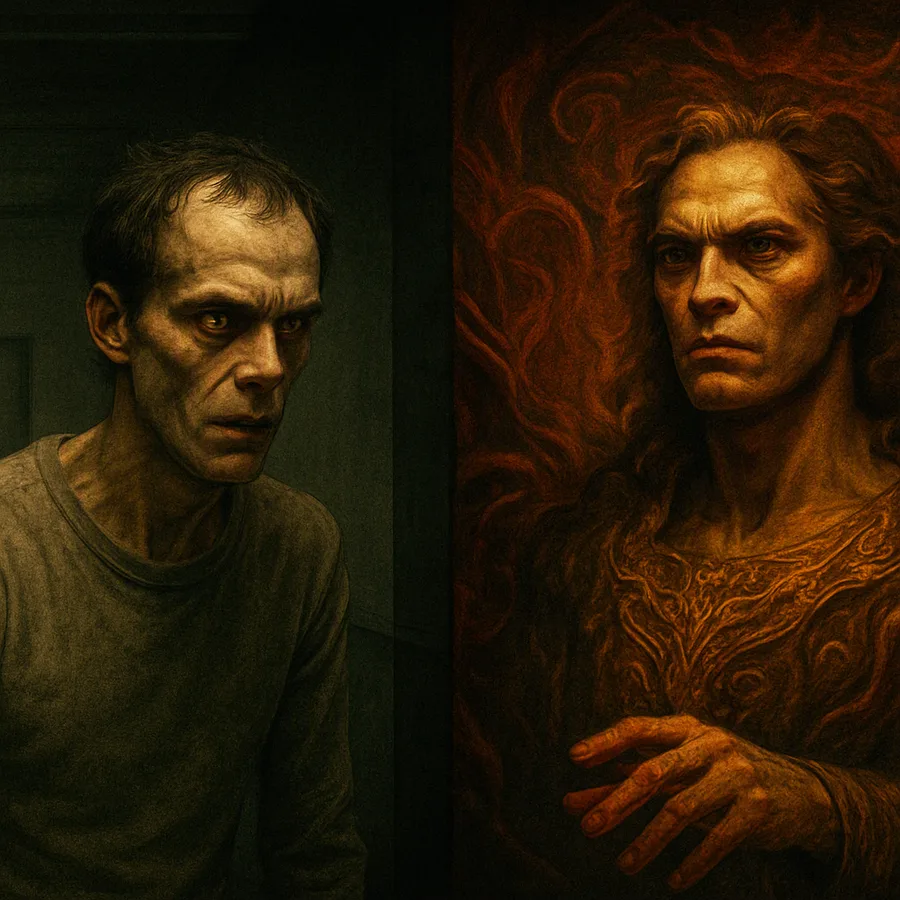
D'Onofrio shifts between childlike vulnerability and terrifying control, and the film is never more alive than when he is on screen. He makes you understand that the horror is not the violence; it is the loneliness behind it. Without him, the film would be a slideshow.
💃 Jennifer Lopez, anchor and afterthought
Lopez is the film's emotional center, and she is good in a role that does not ask much of her. Catherine is compassionate, professional, and increasingly out of her depth. Lopez plays that well, but the script gives her little to do besides react.
She is the audience's surrogate, walking through Tarsem's gallery, and the film never lets her become as interesting as the world she is exploring. It is a waste of a strong presence, and it leaves the human stakes feeling thinner than they should.
🧩 The problem with the plot
The film wants to be a psychological thriller, but its investigative thread is routine. The FBI agents (Vince Vaughn, Jake Weber) are generic, the ticking clock is mechanical, and the resolution of the kidnapping plot is predictable.
Every time the film cuts back to the real world, the energy drops. The dream sequences are where the film lives, and the screenplay never finds a way to make the two halves feel like they belong to the same movie. It is a beautiful dream wrapped around a forgettable procedural.
ℹ️The film's structure splits cleanly in two: the dream world, where it soars, and the procedural, where it stalls. That gap is the source of both its strangeness and its unevenness.
✅ What still works
- ✅ The production design and costumes, which create a coherent, unsettling aesthetic.
- ✅ D'Onofrio's performance, which gives the film a genuine emotional core.
- ✅ The audacity of the imagery, which refuses to be ordinary.
- ✅ The sound design, which makes the dream world feel physically oppressive.
🕰️ What aged
Some of the CGI, particularly in the transition sequences, looks its age. The film's portrayal of psychology and law enforcement is also simplistic by modern standards.
And the pacing, which lingers on visuals at the expense of momentum, can feel self-indulgent. It is a film that prioritizes style over substance, and that choice is more noticeable now than it was in 2000.
💭 The question behind the movie
Can you understand a monster without becoming one? Catherine's journey is not just about finding a victim; it is about the risk of empathy. To enter Stargher's mind, she has to see the world as he does, and the film suggests that this is a kind of contamination.
The most frightening moment is not a jump scare but a quiet one, when Catherine realizes she is starting to feel something for the man she is hunting. The film does not answer the question, but it leaves you with the uncomfortable idea that the line between healer and patient, between good and evil, is thinner than we like to think.
It is a reminder that sometimes a movie's problems are also its personality, and that a beautiful nightmare can be worth the mess.
🏁 Final thought
The Cell is a flawed film with a singular vision. It does not always work, but it is never boring. Tarsem Singh went on to make more controlled films, but none as raw or as strange as this one.
🔗 Source
The Cell (film) Wikipedia

Kommentare (0)
Kommentar hinterlassen
Schreiben Sie den ersten Kommentar!