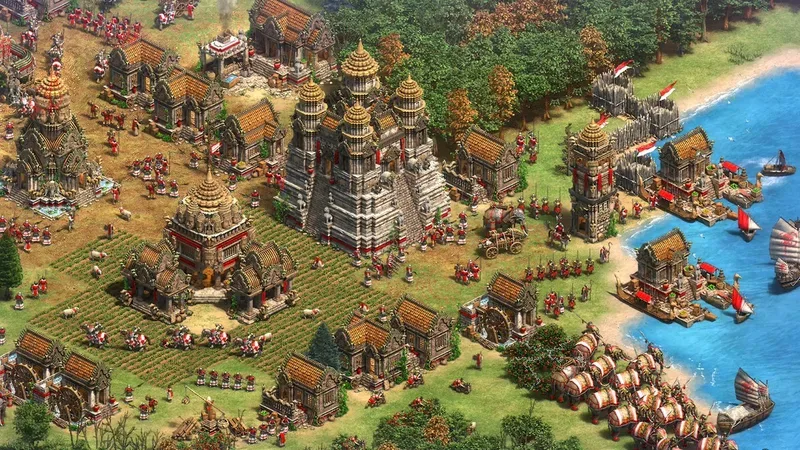
The Mystery of Age of Empires II
Microsoft released Age of Empires IV as the spiritual successor to Age of Empires II. Even so, a game created in the late 90s continues to attract more players in various periods than its modern successor.
How is this possible?
To find the answer, we need to go back to the beginning of the story.
A studio created by players
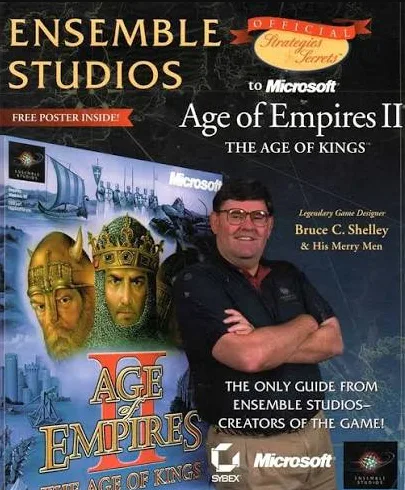
Ensemble Studios was not born inside a large gaming company. It was founded by programmers who worked developing corporate software and were tired of creating systems they considered uninteresting.
Instead of continuing to follow the safer path, they decided to try something they truly loved: making video games.
They weren't just developers. They spent countless hours playing games, discussing strategies, and hanging out in arcades. Before they created games, they were the audience for them.
They created the game they wanted to play
Many companies start by thinking about the market.
Ensemble seemed to think differently.
Instead of asking "what will sell?", they asked "what would be fun to play?".
This philosophy is clearly seen in Age of Empires II. The game has simple rules to understand, but enormous depth for those who want to master it.
You learn to gather resources in a few minutes.
You can spend years learning all the strategies.
The secret lies in the small choices
Age of Empires II did not revolutionize only because of the battles.
The game made dozens of small correct decisions:
- Relatively fast matches for an RTS.
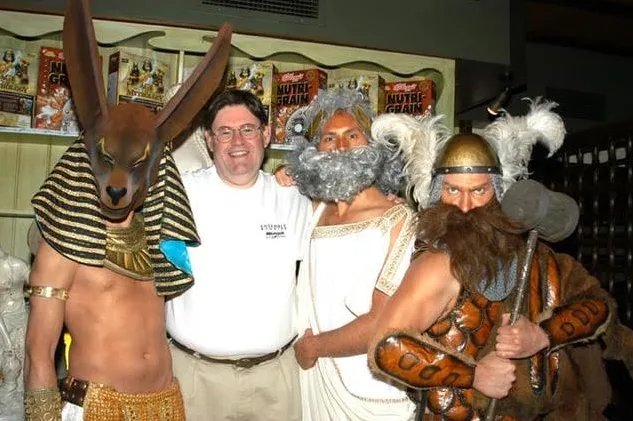
- Very cool civilizations like Vikings or Goths, easy to recognize with unique and well-designed units.
- Simple economy to learn.
- Clean interface.
- Easy to understand combat.
- Little randomness.
When a player loses, they usually know why. This creates a sense of fairness that keeps people playing for years.
A game that never stopped evolving
Another important factor is that Age of Empires II was never abandoned.
Even decades after release, the game continued receiving expansions, fixes, new civilizations, and quality of life improvements.
Few games from 1999 can say the same.
While many classics remained stuck in the past, Age of Empires II continued evolving alongside its community.
More than nostalgia
It is common to hear that Age of Empires II survives only because of nostalgia.
But nostalgia does not explain why new players keep arriving every year.
If it were only nostalgia, people would play for a few hours and leave.
They stay because the game still works.
The fundamentals remain solid almost three decades later.
The true achievement of Ensemble Studios
The greatest achievement of Ensemble Studios was not selling millions of copies.
It was creating something timeless.
A game made by people who understood exactly what makes a game fun.
Technology changed.
Graphics evolved.
The entire industry transformed, yet to this day there has been no significant evolution in RTS mechanics.
But Age of Empires II remains here, being played every day.
Perhaps that is the true secret: genuine fun ages much slower than technology.
A game made with care for details
Gameplay was one of the reasons for Age of Empires II's success, but it was not the only one.
Ensemble Studios also did an impressive job with the atmosphere. Instead of creating only generic units, each civilization had its own visual identity. It was easy to differentiate an Aztec warrior from a European knight or a Japanese samurai.
The soundtrack also helped create this immersion. The music mixed instruments and styles inspired by different cultures, making the game convey the feeling of traveling through various parts of the medieval world.
The feeling of participating in History
Another differentiator was the historical campaigns.
Instead of simply playing random matches, the player could follow characters and conflicts inspired by real events. Names like Joan of Arc, Saladin, Genghis Khan, and William Wallace presented periods of History in a fun and accessible way.
For many players, Age of Empires II was their first contact with these historical figures.
Long before the series Vikings showed the story of Ragnar, Age of Empires II already had these battles recounted in its history.
Each civilization felt unique
Today it is common to find games where different factions only have small attribute changes.
Age of Empires II went further.
Each civilization had exclusive units, its own architectural styles, specific technologies, and different strategies. This made learning a new civilization almost like learning a new game.
This attention to detail helped create a strong sense of identity and made the game world feel alive.
More than strategy
Age of Empires II was not just about gathering resources and building armies.
It was about commanding Japanese samurai, Frankish knights, British archers, or Aztec warriors while a memorable soundtrack played in the background. It was about reliving great moments of History and creating your own stories within each match.
Perhaps that is why so many people still return to the game after almost three decades. Age of Empires II offered not just strategy. It offered immersion.

Comentários (0)
Deixe um Comentário
Seja o primeiro a comentar!