
My neighbor brought over a pot of lentil soup last winter when I was sick. I ate it standing at the counter, still in my coat, and it was the best soup I'd had in years. A week later I made the same soup, from the same kind of lentils, and it was fine. Just fine. I sat there annoyed, spoon in hand, trying to figure out what she had done that I hadn't.
🤔 A riddle about the cook
It's not a riddle about recipes. It's about the cook. When you make something yourself, you taste it the whole way through — a spoon at the start, another after the salt, another before serving. By the time it reaches the table, your mouth is bored. You've been eating it for an hour without sitting down. The person who receives it tastes it once, all at once, and that first taste is the one that counts.
By the time it reaches the table, your mouth is bored. The person who receives it tastes it once, all at once, and that first taste is the one that counts.
🧂 You cook to your own tongue
Every cook has a bias they can't feel. I under-salt everything, because my mother under-salted, and now I reach for the shaker out of habit. A friend who grew up on hot food finds my chili mild. We season toward the palate we grew up with, then call it correct. So when someone else cooks, you're tasting a different set of habits — a different childhood, a different hand on the salt. That difference registers as flavor, even when the ingredients are identical.
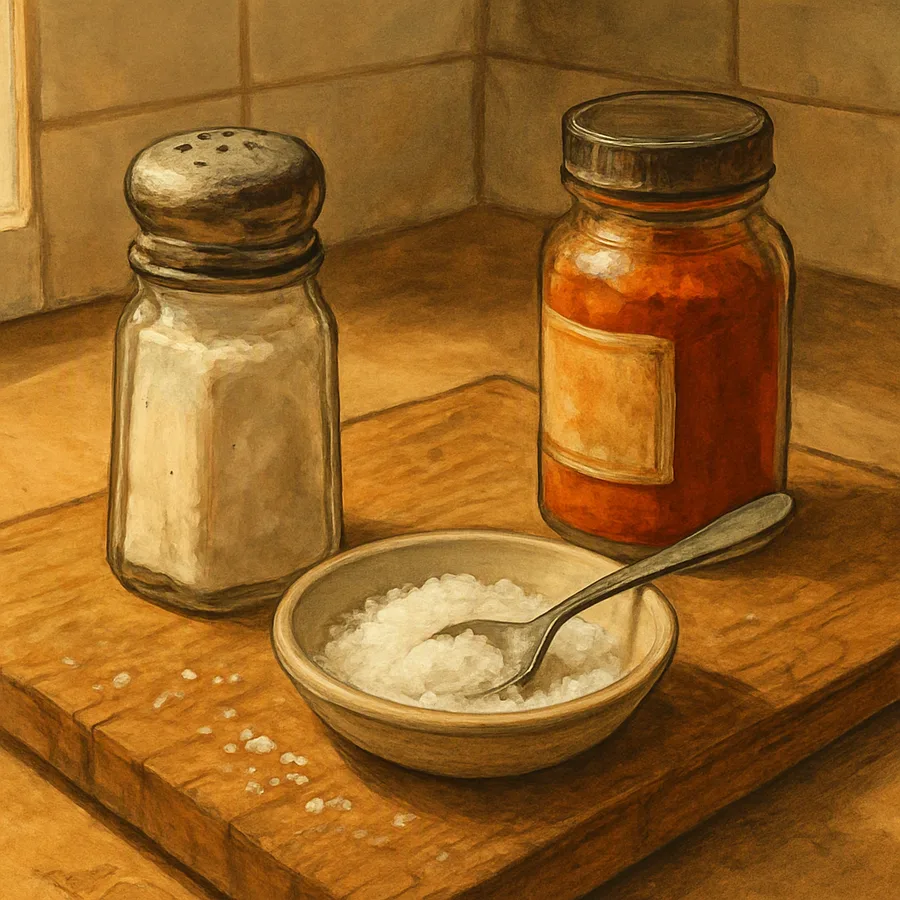
ℹ️Every cook seasons toward the palate they grew up with. What reads as flavor is often just a different set of habits.
🏠 The room is part of the meal
Food eaten in someone else's kitchen tastes different from food eaten in yours. There's the smell that hits you at the door, the sound of a lid being lifted, the small ceremony of being handed a bowl. You didn't do any of the work, so you arrive hungry instead of tired. Hunger is an ingredient. So is gratitude, and so is the simple relief of not having to decide what's for dinner. None of that is in the pot. All of it is in the bowl.
🔍 Maybe it's just novelty
The honest objection: maybe my neighbor's soup wasn't better at all. Maybe it was only unfamiliar, and unfamiliar reads as delicious when you're sick and someone is being kind to you. If she ate my soup, she might think the same thing — that mine had something hers lacked. There's no way to test this fairly, because you can't taste your own cooking as a stranger would. The whole comparison might be a trick of the tongue, not a fact about soup.
🍲 What I do with it now
I still make my own soup most weeks. But I've stopped trying to match hers, and I've started noticing what I actually taste when I sit down — the salt I forgot, the garlic that went in too early. Sometimes I bring a bowl to the neighbor. She always says it's good. I never quite believe her, and I never quite don't.

Comentários (0)
Deixe um Comentário
Seja o primeiro a comentar!