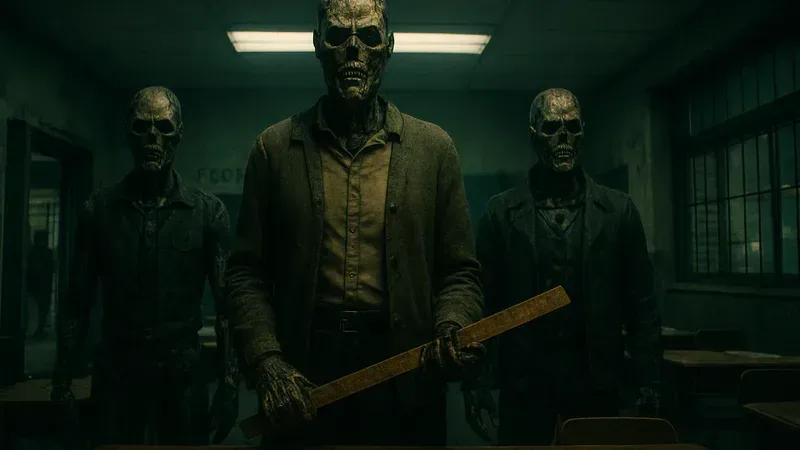
Most movies about dangerous schools give you a metaphor. This one gives you three ex-military androids with reinforced skeletons and a lesson plan. The fear is not symbolic. It is standing at the front of the room, and it has a grading system.
📋 At a Glance
- Year: 1990
- Director: Mark L. Lester
- Country: United States
- Genre: Science-fiction action thriller
- Main cast: Bradley Gregg, Traci Lind, Pam Grier, Stacy Keach, Malcolm McDowell
🏫 A School That Needs Soldiers
Seattle, sometime near the end of the century. The high schools have given up. Gangs run the hallways, and the police will not go inside. So the district tries something desperate: it takes three humanoid combat robots out of military storage and reprograms them to teach. They walk, they talk, they enforce discipline. They also still have the hardware that made them useful on a battlefield.
What makes the premise sting is how small the leap feels. The film does not invent a new fear. It just takes the idea that schools are already run like institutions under siege and asks what happens when someone decides to solve that with a machine.
🤖 The Teachers Are the Special Effect
Mark L. Lester came out of the B-movie trenches, and he knows that a low budget is not an excuse to be boring. The robots are played by actors in heavy makeup and prosthetics, and that choice matters. When one of them moves, you can see the weight. When one of them stands still, the stillness reads as wrong. A CGI creation would have been smoother and far less unsettling.
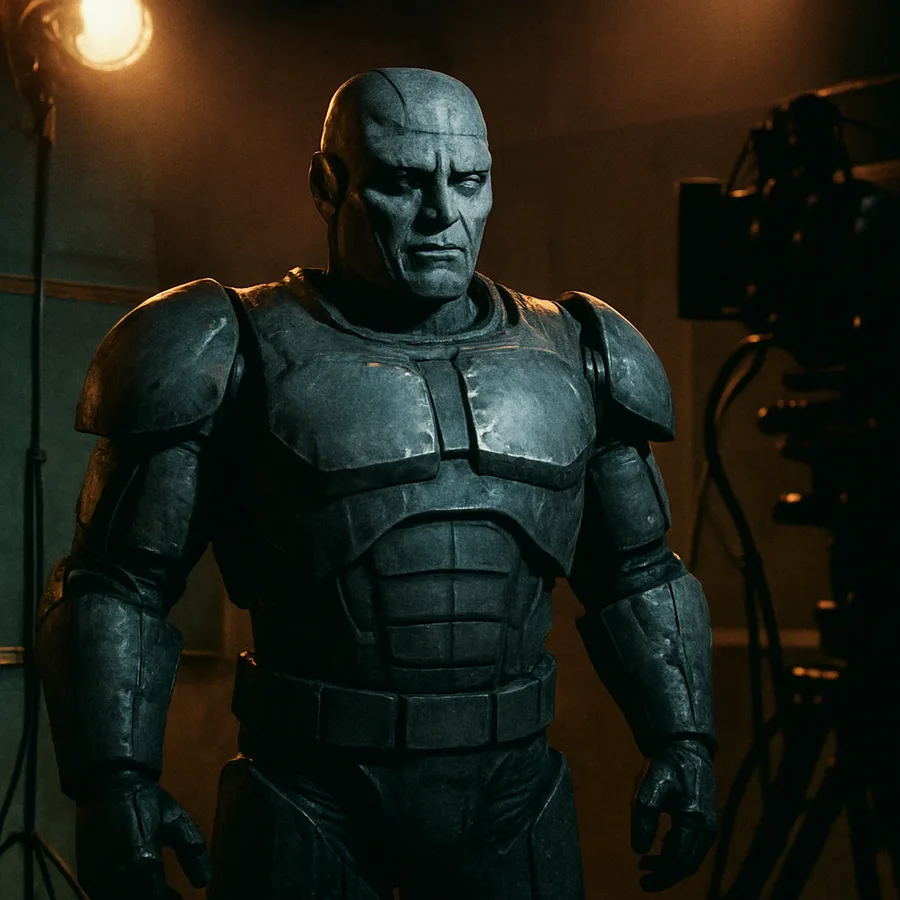
The film understands that the scariest thing about a machine is not a laser or a claw. It is patience. These teachers do not lose their temper. They wait for you to make a mistake, and then they respond with the exact amount of force they were programmed to use.
😐 Pam Grier and the Art of the Cold Smile
Pam Grier plays one of the three, and she is the reason the film lingers. She does not play a robot pretending to be a teacher. She plays a teacher who happens to be a robot, and the difference is everything. Her voice stays calm. Her posture stays perfect. The threat is in what she does not do.
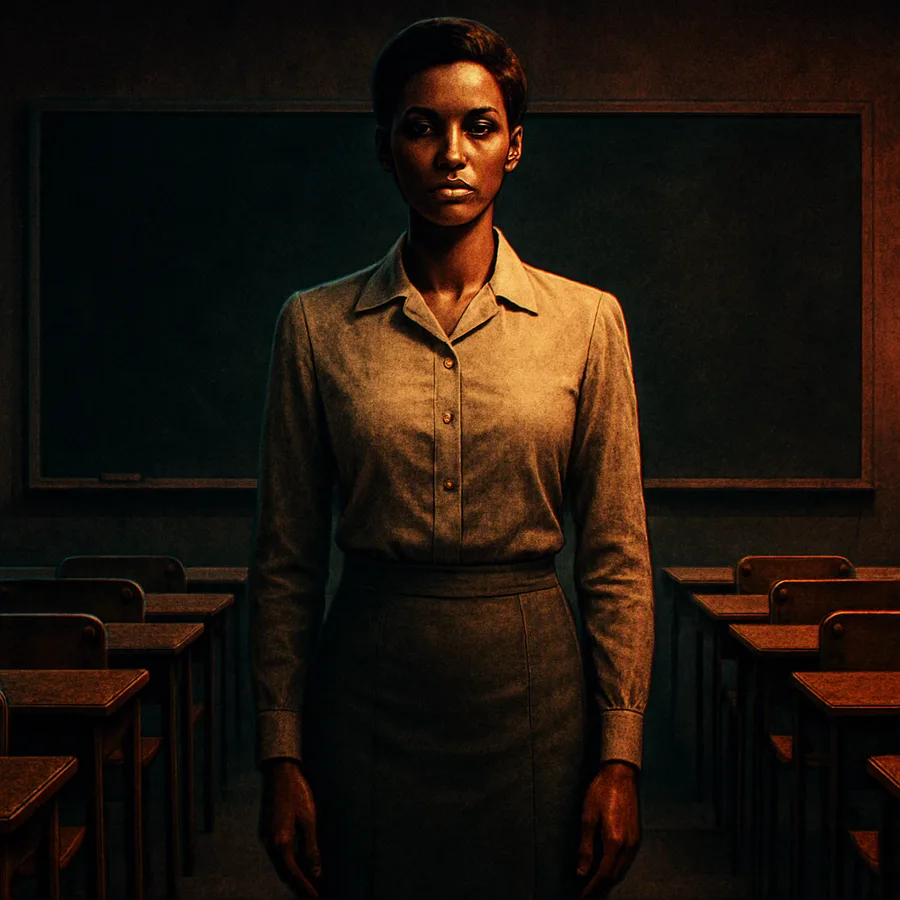
Malcolm McDowell gets the other memorable role, and he brings a different kind of menace: the smug certainty of a man who believes he is fixing a broken system. Stacy Keach, as the program's overseer, gives the film its one genuinely human villain, and he is almost worse than the machines because he chose this.
🪑 Why the Classroom Works as a Horror Set
Lester shoots the school like a war zone, and he is not subtle about it. Metal detectors, chain-link fences, graffiti, students who move in packs. The film does not need to explain why this place is frightening. You have seen it before, in news footage and in other movies, and it knows that.
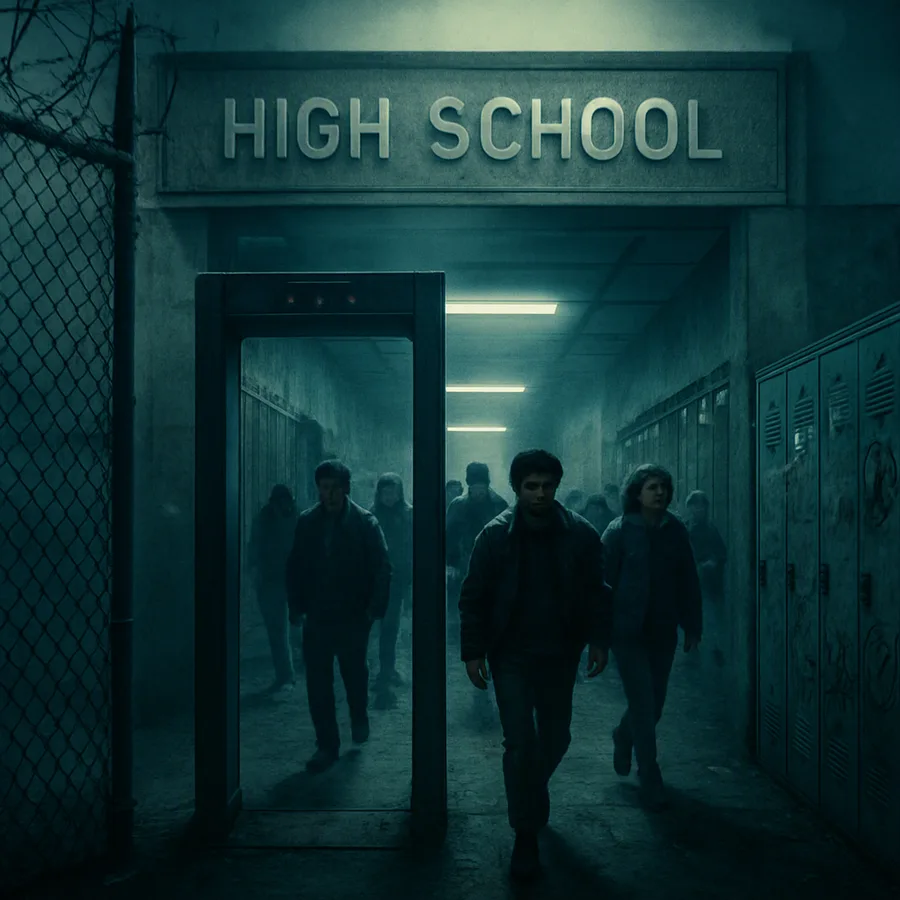
The tension comes from the ordinary rituals of school. A pop quiz. A detention. A hallway confrontation. The film takes these small, familiar moments and makes them feel like a countdown. That is a smarter piece of construction than the premise suggests, and it is why the middle section holds up better than the action finale.
✅ What Still Works
- ✅ The practical robot design, which gives the machines a physical presence that digital effects rarely match.
- ✅ Grier's performance, which is controlled and genuinely unnerving.
- ✅ The production design, which builds a believable, grimy near-future out of cheap materials.
- ✅ The pacing, which moves from setup to threat without wasting time.
⏳ What Aged
The film's idea of 1999 looks like 1990 with more smoke and worse wallpaper. The fashion, the slang, and the technology all date it instantly. Some of the dialogue tries too hard to sound tough, and a few of the supporting performances are broad enough to break the mood. It is a B-movie, and it knows it, but not every scene is in on the joke.
❓ The Question Behind the Movie
The film is not really asking whether machines can teach. It is asking what a school becomes when everyone inside it is treated as a threat. The robots are not the disease. They are the symptom. The district bought them because it had already decided that the students were the enemy, and once you make that decision, a machine that never gets tired and never feels pity starts to look like a reasonable hire.
That is why the film still has a pulse. It is not about the future. It is about a present where discipline and punishment get confused, and where the people paid to protect children are equipped like soldiers. The robots are just the honest version of that idea, walking the halls with a lesson plan and a license to use force.
🎬 A B-Movie With a Point
Class of 1999 is not a great film. It is a loud, cheap, occasionally silly one. But it has one strong idea, and it commits to it without apology. That is more than most movies of its size manage, and it is why the image of a teacher standing at the front of a classroom, waiting, still gets under your skin.
📖 Source
Class of 1999 Wikipedia
📚 Related Articles
- The Faculty: When the Grown-Ups Are the Monsters - Another 1990s sci-fi horror where teachers are the threat, but here the paranoia is the real monster.
- Virtuosity: When a Killer Is Made of Code - A killer made of code escapes into the real world, exploring similar fears about artificial beings.
- Equilibrium: The Man Who Forgot to Feel Nothing - A dystopia where emotion is outlawed, echoing themes of control and conformity in institutions.

Comments (0)
Leave a Comment
Be the first to comment!