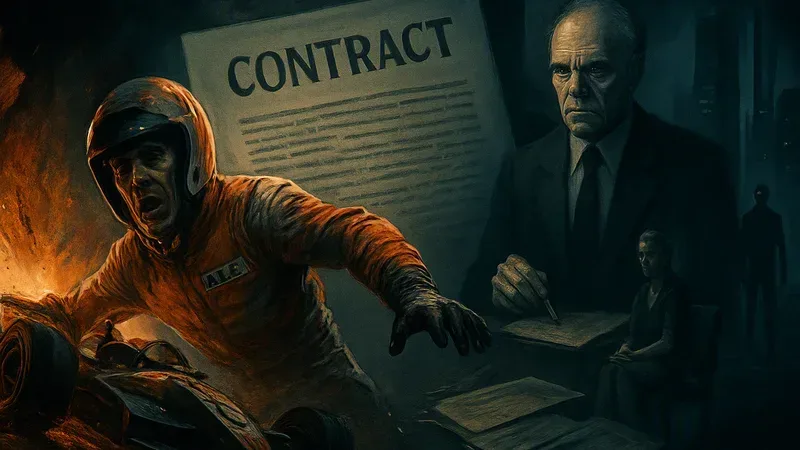
In the future of Freejack, death is not the end. It is a scheduling problem. The wealthy do not die; they wait for a replacement body to become available. That single idea powers a film that is smarter than its reputation suggests, even when it fumbles the execution.
📋 At a glance
- Year: 1992
- Director: Geoff Murphy
- Country: United States
- Genre: Science fiction thriller
- Main cast: Emilio Estevez, Mick Jagger, Rene Russo, Anthony Hopkins
- Based on: Robert Sheckley's 1959 novel Immortality, Inc.
💥 A crash, then a theft
The film opens in the present day. Alex Furlong, a race car driver played by Emilio Estevez, is about to die in a crash. Before he can, he is ripped out of his own time and into a future where his body is now merchandise.
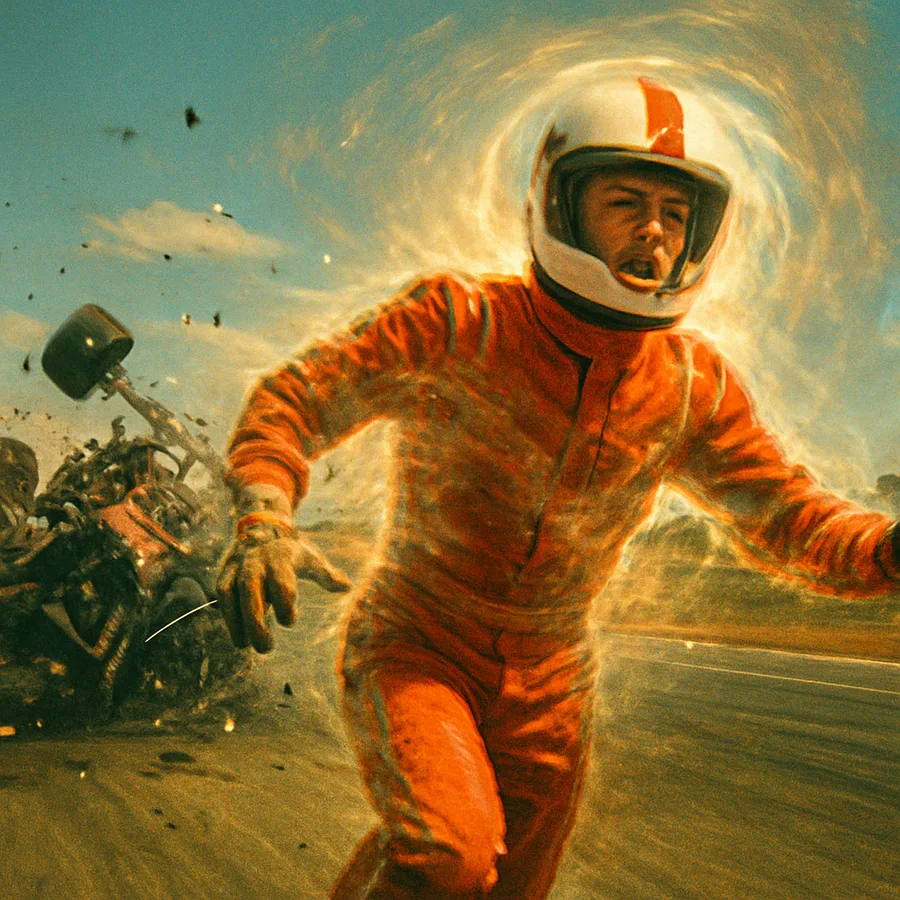
He arrives in a city controlled by a corporation that has already sold him to a dying executive. Alex has no money, no identity, and no legal standing. He is a freejack — a person who technically does not exist.
🧠 The premise is the best character
Most science fiction films of this era imagined robots or aliens. Freejack imagines paperwork. The horror here is not a monster; it is a contract. Alex's body has been transferred, his death has been filed, and the system that did it is perfectly legal.
The film understands that the scariest version of the future is one where nothing has been outlawed, only monetised. That idea is strong enough to carry a better movie than the one around it.
The horror here is not a monster; it is a contract.
🎭 Hopkins and Jagger, doing very different jobs
Anthony Hopkins plays the executive waiting for Alex's body, and he is quietly excellent. He does not rant or gloat. He speaks about the transfer the way a man discusses a delivery date. His calm is the film's most effective special effect.
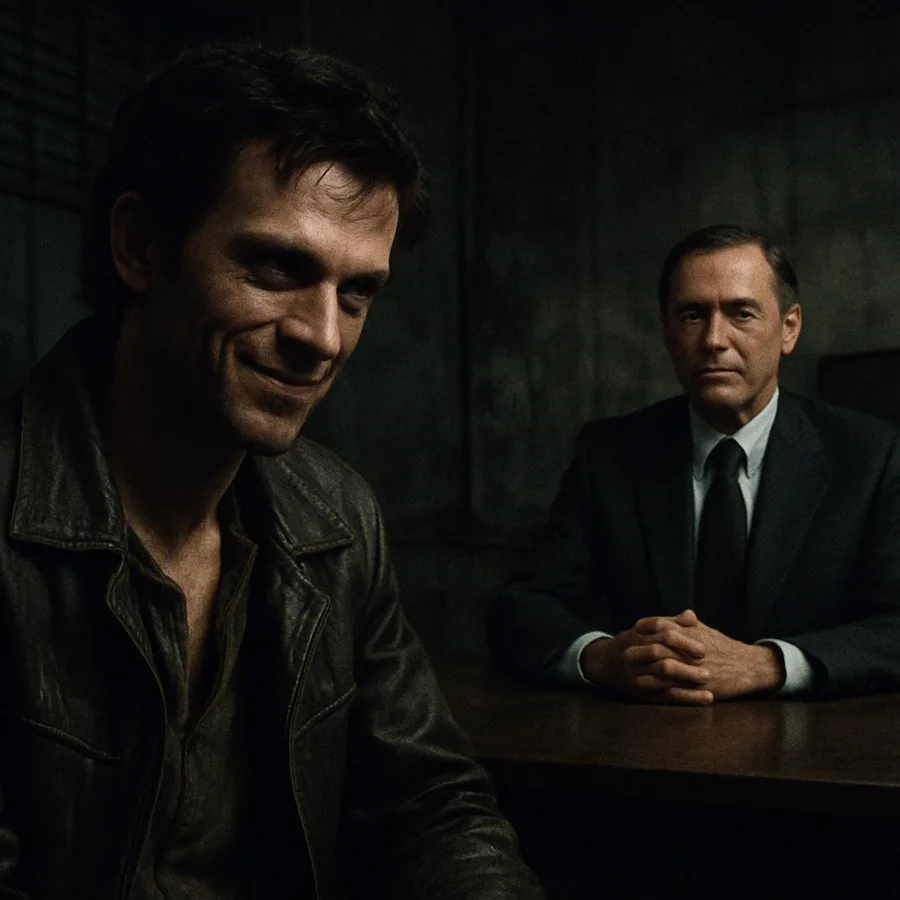
Mick Jagger, as the bounty hunter sent to retrieve Alex, is a stranger pleasure. He has a lean, amused menace that fits the film's grimy tone, and he moves through the city like he owns a piece of it. He is not asked to carry the movie, and that is exactly why he works.
🏚️ The city looks like it was built from scrap
The production design is the film's most distinctive choice. This is not a sleek future of glass towers. It is rust, corrugated metal, wet streets, and neon. The city feels assembled rather than designed, which fits a world where human beings are also assembled from parts.
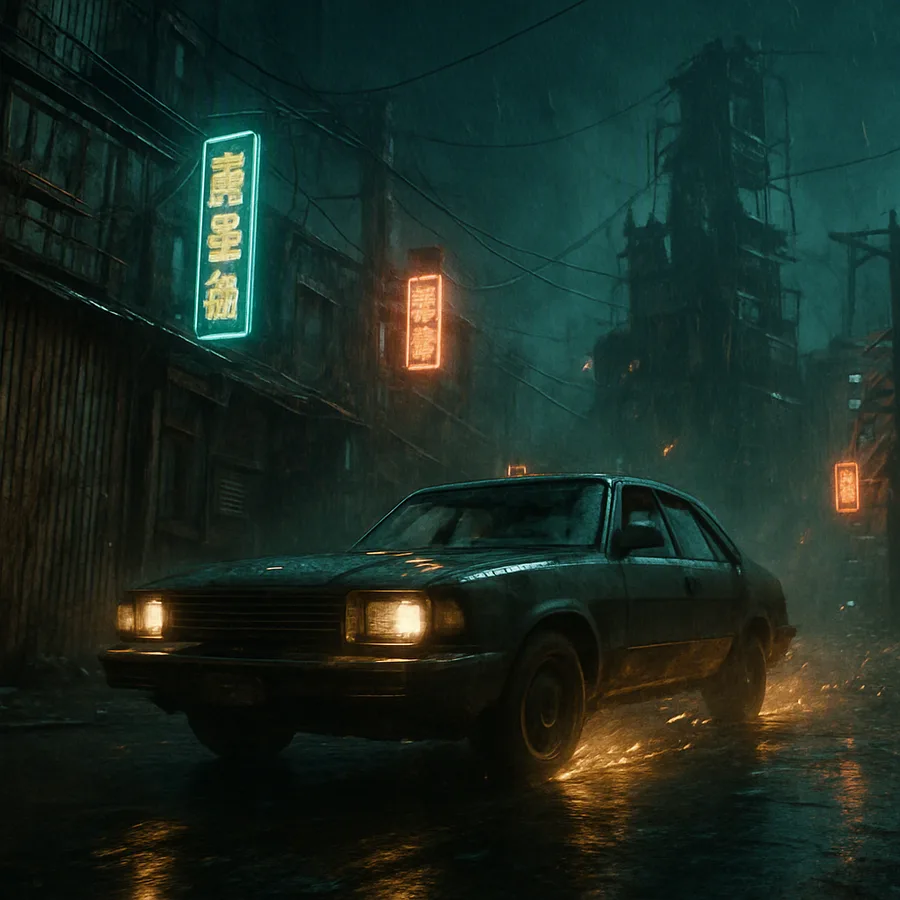
The practical stunts and car chases have a physical weight that modern CGI rarely matches. When a vehicle crashes here, it costs something.
⚠️ Where it stumbles
The film has one great idea and does not fully trust it. Once Alex is on the run, the story becomes a standard chase, and the questions raised by the premise — about identity, consent, and what makes a person — get pushed aside for action beats.
The pacing sags in the middle, and some of the technology now looks quaint rather than futuristic. It is an ambitious film with an uneven follow-through, which is more interesting than a safe one that works perfectly.
⚠️A great premise alone does not carry a film: when the chase takes over, the questions about identity, consent, and personhood get left behind.
✅ What still works
- ✅ The central premise, which remains genuinely unsettling.
- ✅ Hopkins' understated villainy — no shouting, just certainty.
- ✅ The tactile, junkyard aesthetic of the future city.
- ✅ Practical chase sequences with real momentum and real metal.
- ✅ Jagger's relaxed, dangerous screen presence.
❓ The question behind the movie
Freejack asks what happens when a body becomes property. If your consciousness can be moved, sold, or overwritten, what exactly is you? The film never answers this, but it does something useful: it shows a world where the question has already been settled in favour of the buyer.
Alex's struggle is not just to survive. It is to prove he is still a person, and the system he is fighting has no form for that. That is the film's real subject, and it is why the premise lingers even when the plot does not.
🏁 Final thought
Freejack is remembered as a footnote, but its central image — a man waking up as someone else's purchase — has only grown more relevant. It is a flawed film with a sharp idea, and the idea is the part that stays with you.
🔗 Source
Freejack Wikipedia
📚 Related articles
- Gattaca: The Future Sorted People at Birth - Another 90s future where biology is destiny and a person's body is assigned a value by the system.
- Strange Days: When Memories Become a Drug - A neighbouring 90s vision of the body and experience as commodities, sold on a black market.
- Dark City: A City That Rewrites Itself - A man with no stable identity hunts for himself in a grimy, rusted future city run by unseen powers.

Comments (0)
Leave a Comment
Be the first to comment!