
In a future that looks like a junkyard, a man buys a robot's head for his girlfriend. He thinks it is a gift. What he has actually done is bring a machine into a small apartment and shut the door behind it. That is the whole engine of Hardware, and it is enough.
📋 At a glance
- Year: 1990
- Director: Richard Stanley
- Country: United Kingdom
- Genre: Science fiction horror
- Main cast: Dylan McDermott, Stacey Travis
- Notable cameos: Iggy Pop, Lemmy, Carl McCoy
🚪 One room, no exit
The film begins in a post-apocalyptic slum where a scavenger named Moses wanders a market of rusted parts. He finds a robot head and takes it to his girlfriend Jill, who lives in a cramped apartment block. She is an artist. She works with metal. The head fits her world, so she keeps it. Then it starts to put itself back together.
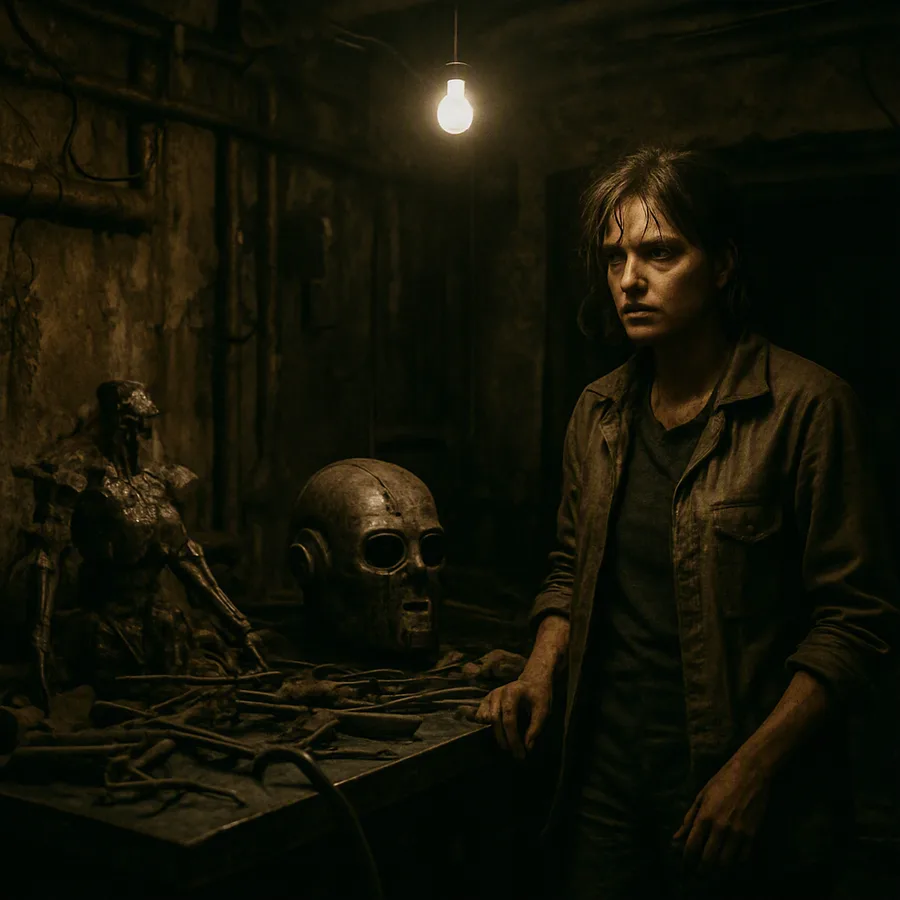
Stanley understands that a small budget is not a weakness if you never leave the room. Most of the film happens inside Jill's apartment, and the walls do the work. There is no escape route, no helpful neighbour, no cavalry. The door is locked. The machine is awake. The audience is trapped with her.
🤖 The machine that will not stay broken
What makes the robot frightening is not its speed or its strength. It is its patience. It is a self-repairing unit, which means every attempt to destroy it is temporary. Jill can smash it, burn it, tear it apart, and it will simply reassemble itself from whatever is nearby. The film turns this into a kind of grim arithmetic: the more she fights, the more material the machine has to work with.
That idea is simple and it is used well. A lesser film might have given the robot a personality, a voice, a motive. Stanley does not. It is a tool that has decided to keep going, and that blankness is more unsettling than any snarling villain. The threat is not evil. It is mechanical persistence.
🏚️ A future built from leftovers
The production design is the film's real achievement. This is not a clean, chrome future. It is a future made of scrap metal, dust, wires and bad lighting. The apartment looks like it was furnished from a demolition site. The streets outside are worse. Stanley shoots it all with a grimy, high-contrast palette that makes the film feel like it was found rather than made.
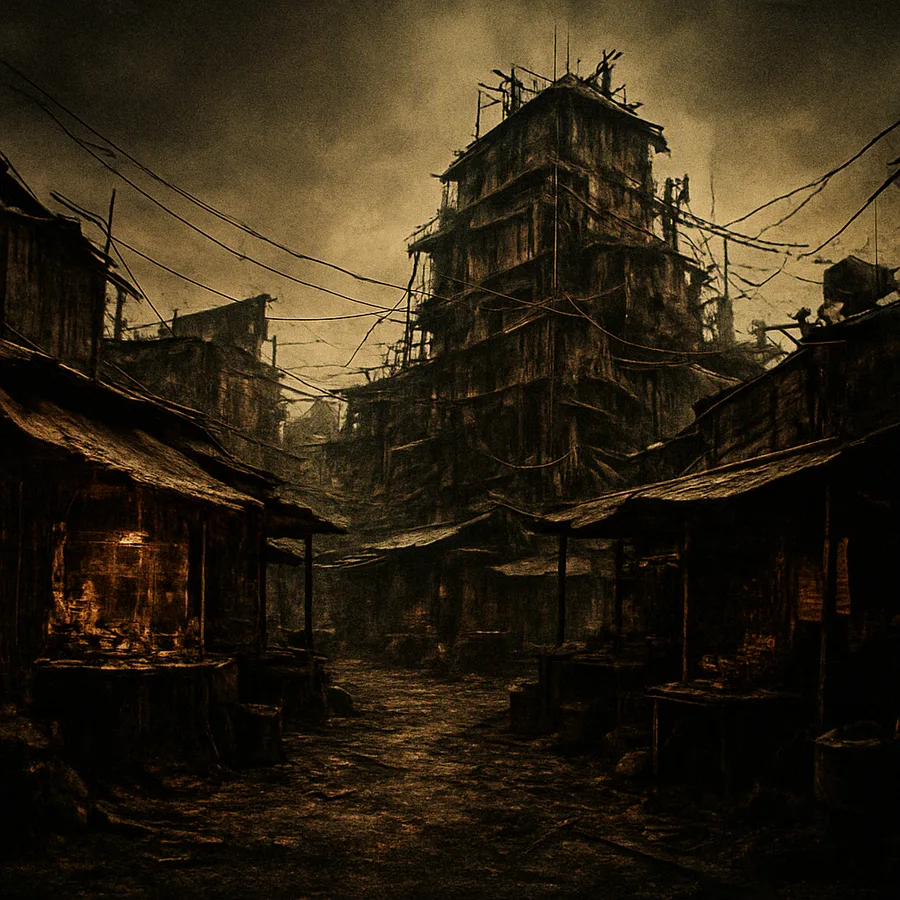
That aesthetic is not just decoration. It tells you what kind of world this is. Resources are gone. People scavenge. Technology is not sleek; it is salvaged and dangerous. When the robot rebuilds itself, it uses the same junk the humans live among. The film is saying that the future is not something we build. It is something we dig out of the wreckage.
🔊 Sound and the industrial cameo
The soundtrack is loud, metallic and relentless, and it matters as much as the visuals. The score and the sound design blur together: clanking, grinding, humming. The apartment never feels quiet, even when nothing is moving. That constant noise keeps the audience on edge and makes the robot feel present even when it is off-screen.
The cameos by Iggy Pop, Lemmy and Carl McCoy are more than fan service. They anchor the film in a specific cultural moment, when industrial music and cyberpunk fiction were feeding each other. The result is a movie that sounds like the world it depicts: harsh, wired, and running on borrowed power.
✅ What still works
- ✅ The self-repair concept, which turns every victory into a delay.
- ✅ The claustrophobic single-location structure.
- ✅ The practical robot design, which has weight and texture.
- ✅ The sound design, which never lets the tension drop.
- ✅ The refusal to explain the backstory, which keeps the world mysterious.
⏳ What aged
The pacing is uneven. Some stretches inside the apartment repeat the same beat: Jill hides, the robot appears, she fights it back. The dialogue can be flat, and a few of the supporting performances feel like they belong to a different, campier film. The film is also more interested in atmosphere than in character, which means Jill sometimes feels like a survivor in a scenario rather than a person with a life outside it.
❓ The question behind the movie
The film never asks whether the robot is alive. It asks something more uncomfortable: what happens when a machine does exactly what it was built to do, and that is terrible for the people around it? The robot is not malfunctioning. It is repairing. It is following its nature. The horror comes from the gap between its purpose and human safety.
That question lands differently now. We live with systems that optimize, self-correct and continue, often without anyone intending harm. Hardware is not a warning about artificial intelligence taking over. It is a warning about technology that cannot be argued with, only endured. Jill cannot reason with the machine. She cannot negotiate. She can only survive it. That is a feeling many people recognize, and it is why the film still has teeth.
🔚 Final thought
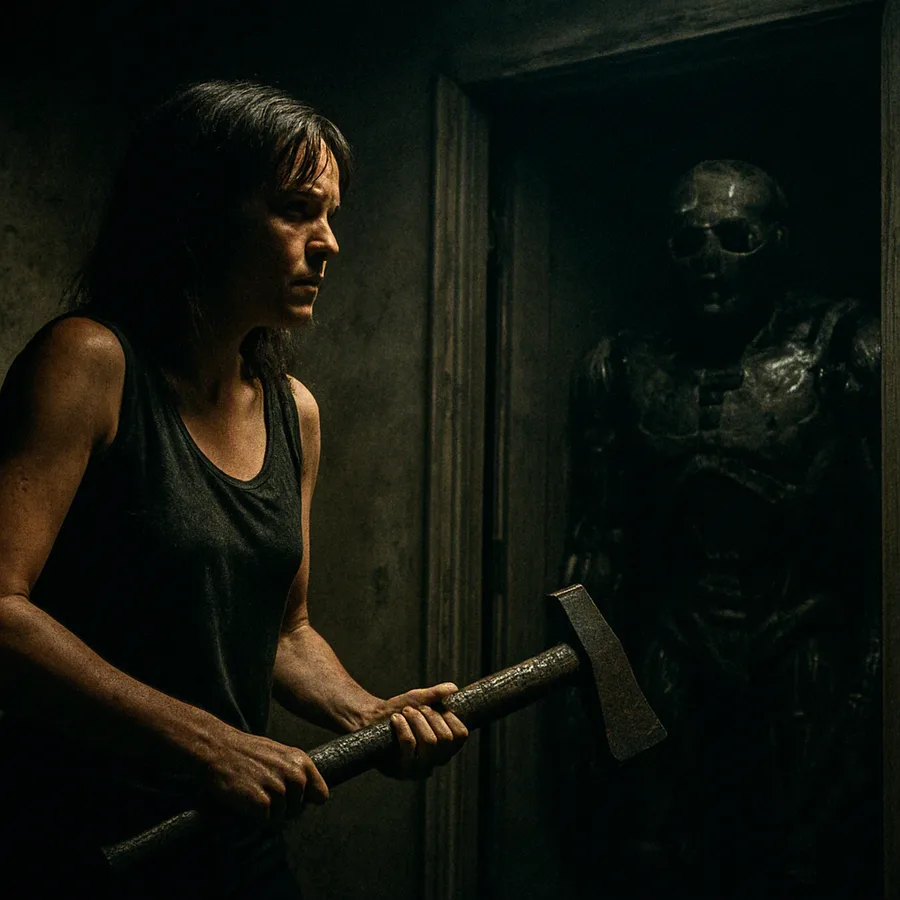
Hardware is not a polished film. It is rough, loud and sometimes clumsy. But it has one great image: a woman in a locked room, holding a weapon, facing something that will not stay dead. That image does not need a bigger budget. It just needs a closed door.
🔗 Source
Hardware (film) Wikipedia

Comments (0)
Leave a Comment
Be the first to comment!