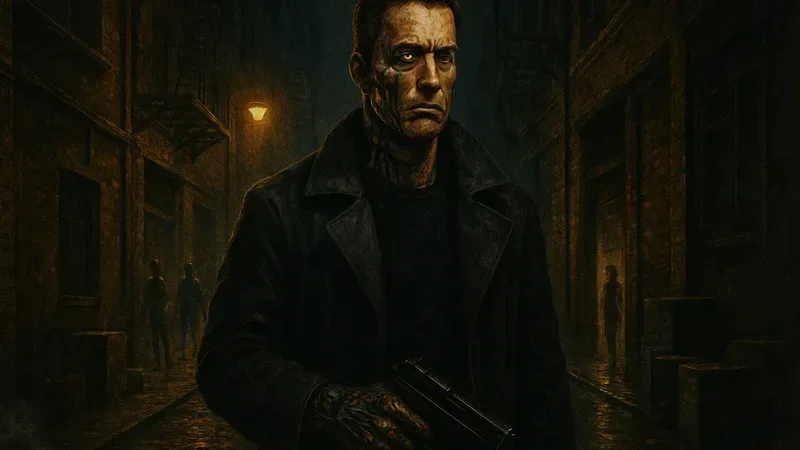
Alex Rain is 86.5% human. The film gives you that number early, and then spends the rest of its runtime making you wonder what the other 13.5% is doing. He is a cyborg, a former counterterrorism operative, and his old employers have a job for him: kill the woman he used to love. The premise is a hit movie. The number is what makes it a science-fiction one.
📋 At a Glance
- Year: 1992
- Director: Albert Pyun
- Country: United States
- Genre: Cyberpunk action
- Main cast: Olivier Gruner, Tim Thomerson, Brion James
- Language: English
🎯 The Job and the Woman
The film opens in a near-future world where androids walk among people and the line between them is mostly a matter of paperwork. Alex is pulled back into service by the same agency that built him, pointed at a militant underground group, and told the target is someone he knows.
What makes the setup interesting is not the mission. It is the fact that Alex accepts it. He is a professional. He is also a man with a history, and the film lets that history sit in the room without explaining it away.
🎬 Albert Pyun Builds a World Out of Spare Parts
Pyun was a director who worked fast and cheap, and Nemesis is what that looks like when the imagination is bigger than the budget. There is no glossy digital sheen here. The future is made of real locations — warehouses, alleys, stairwells — dressed up with smoke and neon and a lot of squibs. When a body gets hit, it gets hit with something physical.

The result has a texture that bigger cyberpunk films of the era lost in their own production design. It feels used. It feels like a place people actually live.
That scrappiness is not always a virtue. Some sets look like exactly what they are, and the film's ambition occasionally outruns what it can put on screen. But when it works, it works because Pyun treats limitation as a style rather than a problem.
🤖 The Body That Can't Be Trusted
Alex's enhancements are not a superpower. They are a liability. His body can be overridden, his memories can be edited, his reflexes can be triggered by someone else's command. The film keeps returning to the idea that being part machine means being part owned. Every fight he wins is a fight he might not have chosen.
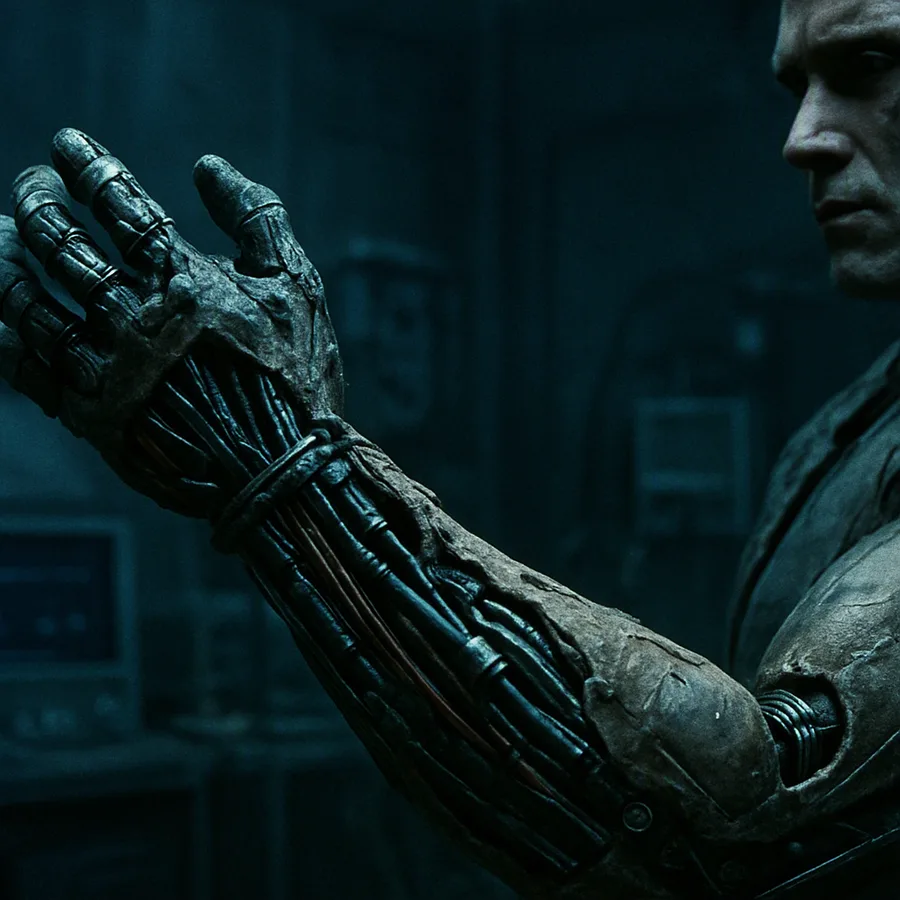
That is a darker idea than most action films of the period were willing to entertain, and Nemesis does not soften it. Olivier Gruner plays Alex with a stillness that suits the material. He is not a quipping hero. He is a man doing a job he is not sure he agreed to, and the performance holds that uncertainty without announcing it.
🔫 Gunplay With a Borrowed Accent
The action in Nemesis owes a clear debt to the Hong Kong cinema that was reshaping American action in the early nineties. Guns are fired in motion, bodies fall in twos and threes, and the camera stays close enough that you feel the choreography rather than just watching it.
Pyun stages these sequences with a practical energy that holds up better than the film's dialogue. A stairwell shootout, a chase through a rain-slicked street — these are the moments where the movie stops explaining itself and just moves.
🌀 A Plot That Doubles Back on Itself
The story is a maze of betrayals, and not all of it is easy to follow. Characters switch sides, loyalties shift, and the film sometimes seems to be confusing itself as much as the audience.
But there is a logic to it. Alex cannot trust his own perceptions, so the plot refuses to give him — or us — a stable version of events. The confusion is not a bug. It is the theme wearing a trench coat.
ℹ️The film's real question is not whether Alex is human. It is what happens to the parts of a person that cannot be replaced: memory, loyalty, the specific face of someone you loved.
✅ What Still Works
- ✅ The practical effects: real explosions, real squibs, real sweat.
- ✅ Gruner's physical presence in the action sequences.
- ✅ The production design's refusal to look clean.
- ✅ The central idea, which is more unsettling than the film sometimes knows what to do with.
⏳ What Aged
The pacing is uneven, and some of the dialogue lands with a thud that the actors cannot rescue. The near-future geopolitics feel like a time capsule. None of this sinks the film, but it keeps Nemesis in the realm of interesting B-movie rather than the classic it might have been.
💭 What the Machine Leaves Behind
Memory, loyalty, the specific face of someone you loved — these are the things the machinery cannot manufacture, and the things it can most easily erase. Alex is 86.5% human. The film is about the other 13.5%, and whether it is enough to make a decision that matters. That question stays open.
It is the best thing Nemesis does.
🏁 Final Thought
Nemesis is not a polished film, and it does not pretend to be. It is a director with a vision, a star with a jawline, and a budget that forced them to solve problems with smoke and squibs instead of software. Thirty years on, that is exactly why it is still worth watching.
📖 Source
Nemesis (1992 film) Wikipedia
📚 Related Articles
- Virtuosity: When a Killer Is Made of Code - Another 90s cyberpunk where a being made of code blurs the line between program and person.
- Gattaca: The Future Sorted People at Birth - A different take on bodies defined by percentages and the question of who gets to be human.
- Strange Days: When Memories Become a Drug - Another 90s vision of bodies and memories as things that can be bought, sold, and overridden.

Comments (0)
Leave a Comment
Be the first to comment!