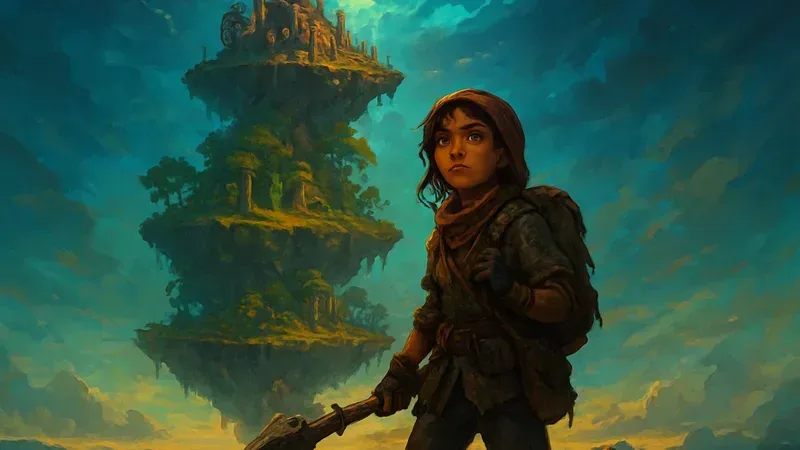
Set on a world of floating continents called Septerra, the game follows a scavenger named Maya on a quest tied to the mysterious Creator. It arrived near the end of the 2D RPG era on PC.
🌍 About the Game
- Release: 1999
- Developer: Valkyrie Studios
- Publisher: Monolith Productions
- Platform: Windows
- Genre: Role-playing game
ℹ️Septerra Core came out near the end of the 2D RPG era on PC, making it a transitional title.
🎮 The Experience
Septerra Core feels like a strange, vivid dream. Its world is a vertical stack of landmasses, each with its own culture, from steampunk cities to tribal jungles.
The atmosphere is lonely and mysterious, with a sense that ancient powers are just out of sight. You play as Maya, a scrappy outsider navigating this layered world, uncovering secrets that feel both personal and cosmic.
"It feels like a strange, vivid dream... with a sense that ancient powers are just out of sight."
⚔️ How It Plays
Combat is turn-based with a twist: a timeline bar shows when each character and enemy will act. You can delay enemy turns or chain your party's attacks for extra damage.
Exploration is 2D side-view, with puzzles and NPCs to talk to. Progression comes through leveling up and equipping items found or bought.
💡It's a classic JRPG-style loop, but with a Western PC sensibility in its writing and structure.
🌟 What Makes It Special
- ✅ Layered world design: Each of the seven continents has a distinct biome and society, making travel feel like a journey through different worlds.
- ✅ Timeline-based combat: The bar system adds strategy beyond simple turn order, letting you interrupt or delay enemies.
- ✅ Maya as a protagonist: She's a young female scavenger, not a chosen hero, which was unusual for RPGs in 1999.
- ✅ Mix of sci-fi and fantasy: The setting blends advanced technology with magic and spiritual themes, creating a unique aesthetic.
🎨 The Retro Charm
Septerra Core uses pre-rendered 2D backgrounds and sprite characters, giving it a look similar to late-90s JRPGs like Final Fantasy VII.
The resolution is low by today's standards, and the interface is clunky, with small text and menus. But the hand-drawn art and detailed environments still hold a certain pixel-art charm.
⚠️Be prepared for a clunky interface and small text — part of the retro experience.
🎵 Sound & Atmosphere
The music is a moody blend of synth and orchestral tones, fitting the game's mysterious world. It shifts from haunting melodies in quiet areas to energetic battle themes.
Sound effects are sparse but effective, with clanking machinery and ambient nature sounds. The audio helps sell the loneliness of Septerra's floating continents.
⏳ Then vs. Now
- Still works: The story and world-building remain engaging, with a unique setting you won't find elsewhere.
- Feels dated: The turn-based combat can be slow, and the interface requires patience to navigate.
- Still interesting: The timeline combat system adds a layer of strategy that modern RPGs rarely use.
- Demands patience: Expect to grind for levels and deal with random encounters that can feel repetitive.
💡The timeline combat system is a strategic layer that still feels fresh even today.
💎 Why Remember It?
Septerra Core is a creative oddity from the late 90s, blending Eastern and Western RPG ideas in a world that still feels fresh. Anyone who enjoys story-driven RPGs with a unique setting should give it a look.
"It's a quiet gem worth unearthing."
📚 Sources
Septerra Core Wikipedia
🔗 Related Articles
- Dark Earth: A Post-Apocalyptic Adventure Worth Digging Up - Another late-90s PC game with a rich, decaying world and strong atmosphere, similar to Septerra Core's lonely mysticism.
- Sin: A Cyberpunk Shooter from the Late 90s - A cyberpunk FPS from the same era, offering a different genre but a similar sci-fi dystopian vibe.
- Rage of Mages II: Necromancer – A 1999 RPG Gem - A 1999 PC RPG with a unique blend of strategy and magic, appealing to fans of Septerra Core's hybrid style.

Comments (0)
Leave a Comment
Be the first to comment!