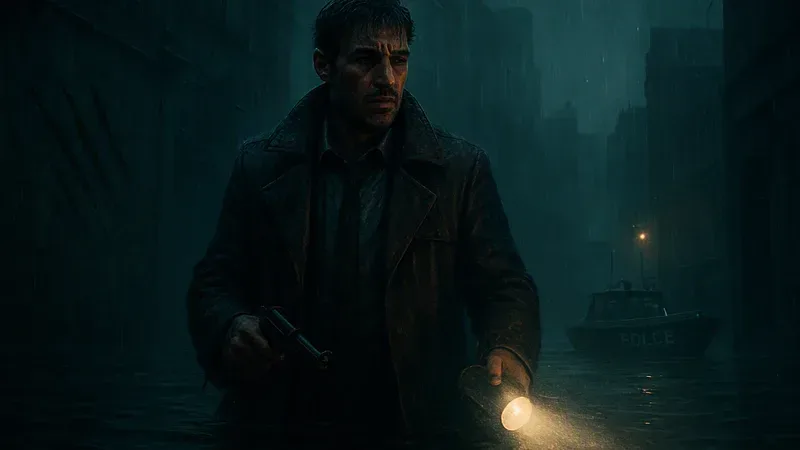
Most cop movies give their detective a partner, a bottle, and a bad attitude. This one gives him a flooded London, a countdown, and a killer that leaves claw marks. The water is the first thing you notice. It is also the last thing you forget.
📋 At a glance
- Year: 1992
- Directors: Tony Maylam, Ian Sharp
- Country: US / UK co-production
- Genre: Science fiction horror
- Main cast: Rutger Hauer, Kim Cattrall, Pete Postlethwaite
🌊 A city underwater
London, 2008. The Thames has risen and never gone back down. Streets are canals, buildings are islands, and the police work from boats and stairwells. It is a cheap effect by modern standards — a lot of rain, a lot of darkness, a lot of water lapping at things — but it does something expensive effects often fail to do. It makes the city feel like a place where something could hide.
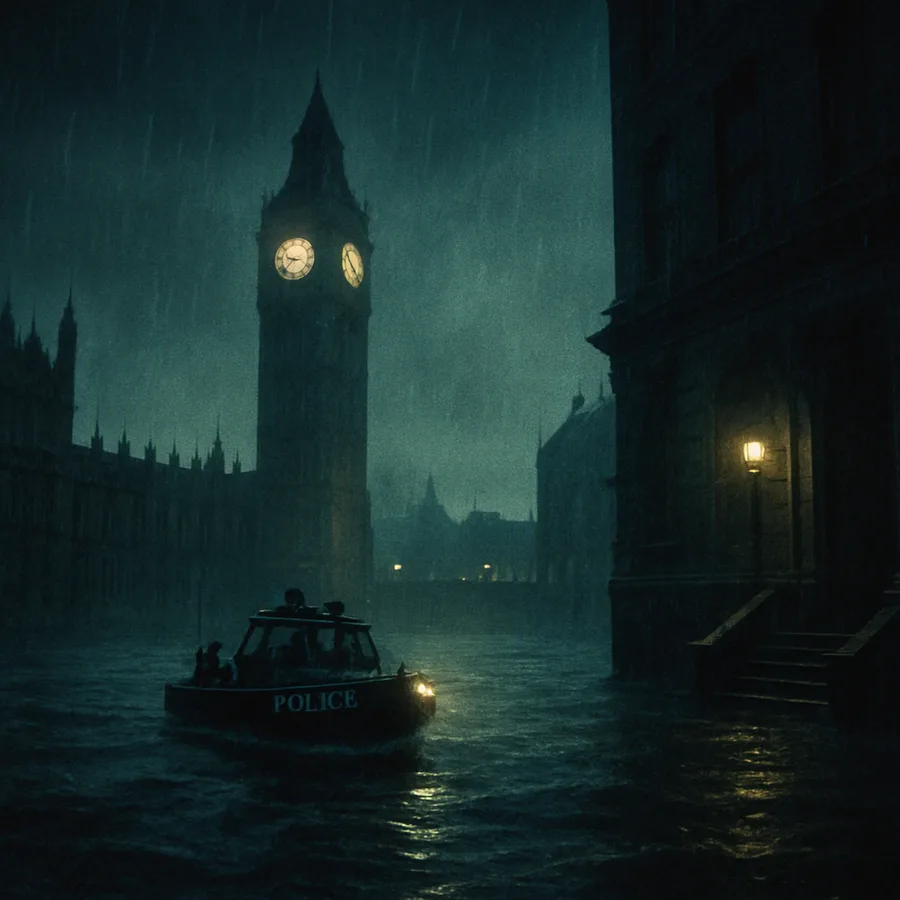
The film never explains the flood. It does not need to. The water is not a plot point; it is a mood. Every scene is damp, cramped, and lit like a bad dream. You believe the world, which is more than you can say for most dystopias of the era.
🎭 Hauer, and the art of being finished
Rutger Hauer plays Harley Stone, a detective who has already lost. His partner is dead, his marriage is gone, and he eats chocolate bars like they are a medical treatment. Hauer does not play tired. He plays a man running on fumes and spite, and he is genuinely fun to watch.
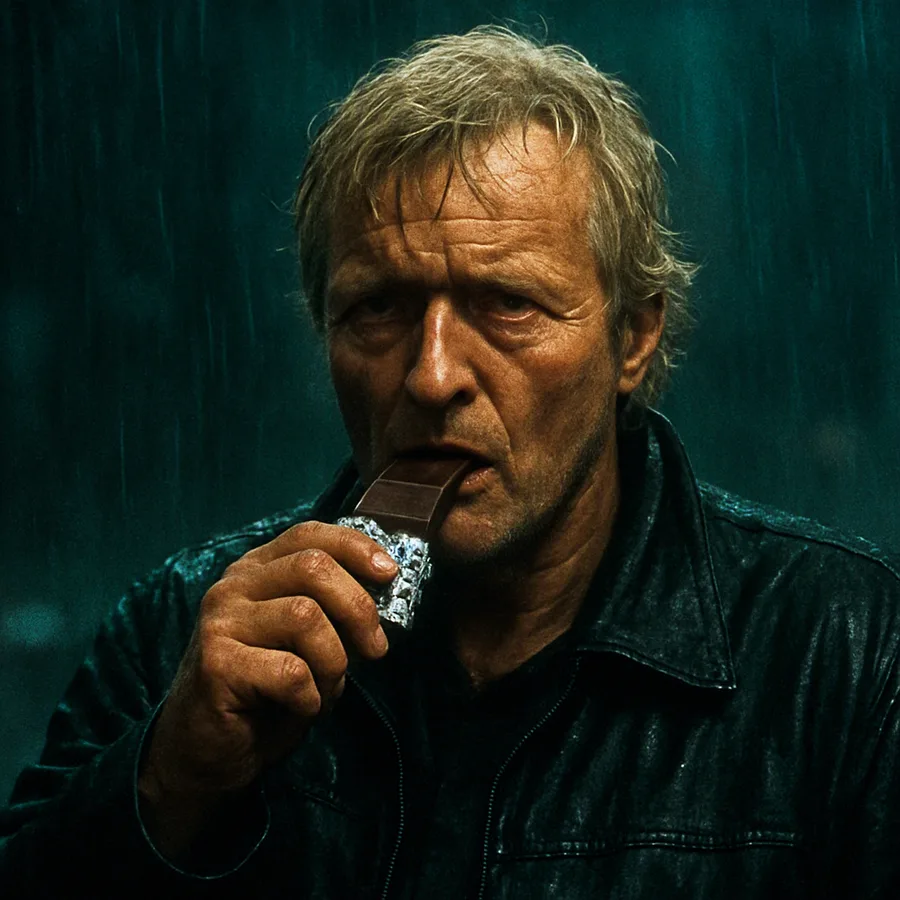
The performance is big. It is supposed to be. Stone shouts at superiors, ignores procedure, and treats the case like a personal debt. The film is smart enough to let him be ridiculous and sincere at the same time. When he says he will find the killer, you believe him — not because he is competent, but because he has nothing else left.
🚔 The buddy cop movie, bent out of shape
The film borrows the shape of a buddy cop movie and then refuses to play by its rules. Stone gets a new partner, a by-the-book type played by Alastair Neil Duncan, and the usual friction follows. But the jokes land strangely, because the world around them is so grim.
That mismatch is the film's real personality. It wants to be a wisecracking action movie and a grim horror movie at the same time. It does not always succeed. Some scenes feel like they wandered in from a different film. But the tension between those two moods is more interesting than either one alone would have been.
👁️ The killer you never quite see
The monster is kept at a distance for most of the runtime. You get glimpses, sounds, the aftermath. That restraint is the film's smartest choice. A creature fully shown becomes a costume. A creature half-seen becomes a fear.
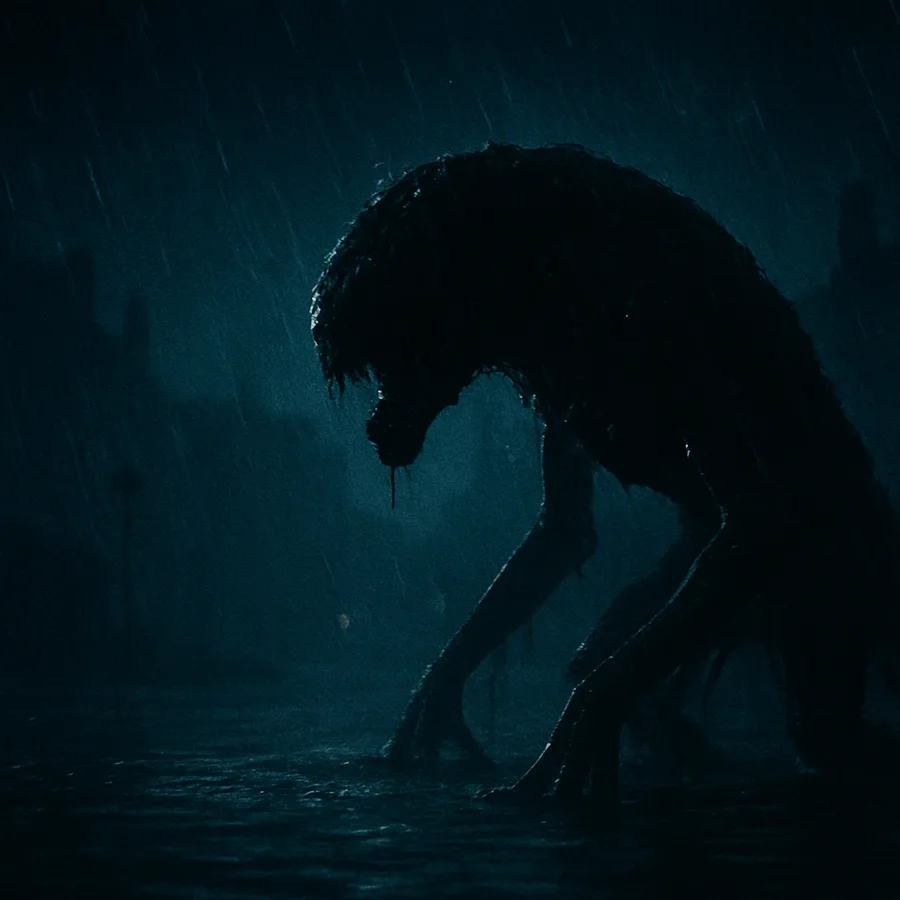
What the killer actually is matters less than what it represents: a thing that cannot be reasoned with, arrested, or understood. Stone's whole method is force and instinct. Against something like that, both are useless. The film knows this, and it lets the dread build instead of explaining it away.
Obsession looks like dedication from the outside and feels like drowning from the inside.
✅ What still works
- ✅ The rain-soaked production design, which turns a familiar city into a maze.
- ✅ Hauer's commitment to a role that could easily have been a joke.
- ✅ Pete Postlethwaite, who makes a small part feel like it belongs to a better film.
- ✅ The pacing, which moves fast enough that you forgive the rough edges.
🕰️ What aged
The creature effects show their budget, and the dialogue occasionally reaches for a tough-guy line it cannot quite land. The film's idea of a dystopian future — all rain and neon and leather — is pure early-nineties. None of this ruins it. It just dates it, the way a leather jacket dates a photograph.
💭 The question behind the movie
Stone is not really hunting a monster. He is hunting the thing that took his partner, and he has decided that killing it will fix him. The film never says whether that is true. It just watches him push everyone away — his new partner, the woman who cares about him, his own superiors — in the name of a case that may not be solvable.
That is the quiet idea underneath all the water and shouting. The flooded city is not just atmosphere; it is a picture of what Stone has become. He is a man standing on a rooftop in a place that has already sunk, insisting he can still win. The film does not judge him for it. It just lets him keep going.
ℹ️Stone's whole method is force and instinct — against something that cannot be reasoned with or understood, both are useless.
🏁 Final thought
Split Second is not a great film. It is a strange, committed, occasionally clumsy one, and that is a rarer thing. It takes a silly premise seriously, hands it to an actor who refuses to wink, and lets the rain do the rest. You will remember the water long after you forget the plot.
🔗 Source
Split Second (1992 film) Wikipedia

Comments (0)
Leave a Comment
Be the first to comment!