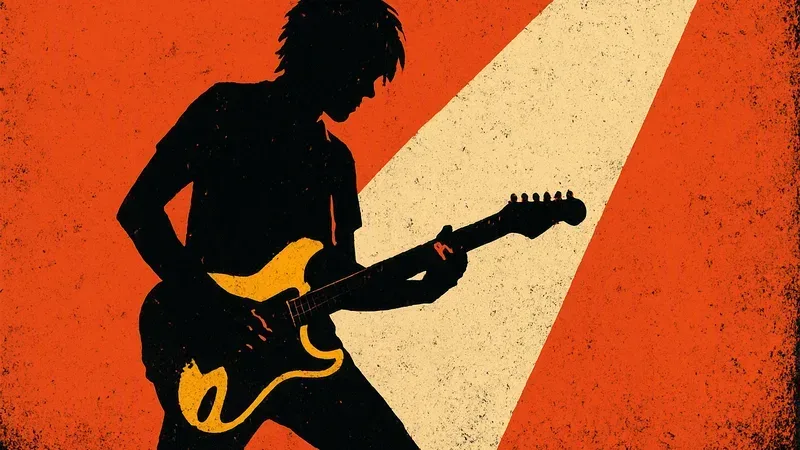
The opening of “Marquee Moon” is a dare. Two guitars, clean and bright, weave around each other like they're arguing in a language only they understand. Tom Verlaine and Richard Lloyd aren't playing punk riffs. They're playing a duet that could go anywhere. Then the drums kick in, and you realize this is punk, just punk that thinks.
🎯 At a Glance
- Subgenre: Punk rock, art rock
- Years active: 1973–1978, 1992–1993, 2001–2023
- Origin: New York City, New York
- Core lineup: Tom Verlaine, Richard Lloyd, Billy Ficca, Fred Smith
- Key producer: Andy Johns (Marquee Moon)
- Label: Elektra, Capitol, ROIR
🎸 The Pitch
Television were the thinking person's punk band. They shared CBGB's stage with the Ramones and the Talking Heads, but they traded three-chord rage for intricate, interlocking guitar lines and lyrics that read like beat poetry. They made two albums in their prime, and those two albums changed how punk could sound.
📜 History
Television formed in New York City in 1973, growing out of the Neon Boys, a band that featured Tom Verlaine and drummer Billy Ficca. Guitarist Richard Lloyd and bassist Fred Smith completed the lineup. They became a fixture at CBGB, helping define the nascent punk scene.
Their debut album, Marquee Moon, arrived in 1977 to critical acclaim but modest sales. A follow-up, Adventure, appeared in 1978, and then the band split. They reunited in the early 1990s for a self-titled album and again in the 2000s, playing live until Verlaine's death in 2023.
⚖️ The Case Against Them
Television were never a prolific band. Their original run produced just two albums, and the second, Adventure, lacked the first's fire. The 1992 reunion album, while competent, felt like a band going through the motions.
Critics often point to Verlaine's elliptical lyrics as pretentious, and the band's meticulous approach could come off as cold or overly cerebral. For a punk band, they could be awfully polite.
⚠️Careful: That very restraint is what made them radical. While their peers shouted about anarchy, Television whispered about the moon and the sea. Their music didn't punch you in the face; it invited you to lean in.
💡 The Paradox
The complexity that could seem pretentious was actually a form of respect for the listener. They trusted you to follow the musical conversations, and that trust made the work more rewarding.
🎶 Sonic Identity
Television's sound was built on twin lead guitars. Verlaine and Lloyd played clean, trebly lines that intertwined and sparred, often moving in parallel or answering each other in call-and-response. They rarely used distortion, relying instead on the natural bite of the amp.
Billy Ficca's drumming was loose and jazzy, swinging where punk usually stomped. The bass, first played by Fred Smith, was melodic and propulsive, anchoring the guitars without getting in their way.
Their signature was the extended guitar break. Songs like “Marquee Moon” stretch past ten minutes, but they never feel padded. The solos are structured like conversations, each phrase building on the last.
Verlaine's vocals were another marker: airy, almost detached, delivering cryptic lyrics as if they were everyday observations. It was a sound that owed as much to jazz and the Velvet Underground as it did to punk.
🏆 Why They Last
Television's influence is everywhere. Bands from the Strokes to Sonic Youth have cited them, and their approach to guitar interplay became a template for post-punk and indie rock.
But the deeper legacy is their songwriting mechanic: the way they built tension through repetition and variation. A riff would repeat, but each time it shifted slightly, pulling you forward. They understood that punk's energy could coexist with complexity, and that a song could be both immediate and deep.
People still put on Marquee Moon because it sounds like a band discovering what they could do, and that discovery is still thrilling.
🔍 Curiosities
- ✅ Tom Verlaine's real name was Thomas Miller. He took his stage name from the French poet Paul Verlaine, a nod to his literary ambitions.
- ✅ Television evolved from an earlier band called the Neon Boys, which included future Talking Heads bassist Tina Weymouth's husband, Chris Frantz, on drums.
- ✅ Fred Smith left Television after their first album to join Blondie, replacing their original bassist. He played on Parallel Lines.
- ✅ The band's name was inspired by the medium itself, a wry comment on the coming media age.
- ✅ After the band's initial split, Verlaine pursued a solo career, releasing several albums that continued his explorations of guitar and poetry.
🏁 Final Note
Television never sold out arenas or topped charts. They made two albums that mattered and then walked away. In a genre built on immediacy, they chose intricacy. And in doing so, they proved that punk could be a place for thought, not just noise.
That's why we're still talking about them.
“Marquee Moon” is not just a song; it's a conversation between two guitars that never ends.
🎧 Essential Tracks
Marquee Moon 1977 - Marquee Moon
The title track is a ten-minute epic that defines Television. The twin guitar solos in the middle section are a masterclass in tension and release, each note answering the last. It's the sound of a band pushing punk into new territory.
Listen: Spotify · Apple Music · YouTube
Venus 1977 - Marquee Moon
This track shows Television's pop side without losing their edge. The riff is catchy and immediate, but the lyrics are cryptic, and the guitar break adds a layer of sophistication. It's a perfect entry point for newcomers.
Listen: Spotify · Apple Music · YouTube
See No Evil 1977 - Marquee Moon
The opener of the album is a burst of energy, with a driving rhythm and a memorable vocal hook. It's the most straightforward punk song on the record, but even here, the guitars twist in unexpected ways.
Listen: Spotify · Apple Music · YouTube
Friction 1977 - Marquee Moon
A tense, angular track that highlights Verlaine's staccato guitar lines and Lloyd's sharp interjections. The rhythm section is tight, and the song builds to a frantic climax. It's a reminder that Television could be as aggressive as any punk band.
Listen: Spotify · Apple Music · YouTube
Foxhole 1978 - Adventure
From their second album, this song shows a more relaxed, almost country-tinged side. The guitars are still intricate, but the mood is warmer. It's proof that Television could evolve without losing their identity.
Listen: Spotify · Apple Music · YouTube
Prove It 1977 - Marquee Moon
A shorter, punchier track that demonstrates their ability to write concise rock songs. The chorus is anthemic, and the guitar solo is a burst of controlled chaos. It's a hidden gem that deserves more attention.
Listen: Spotify · Apple Music · YouTube
📚 Source
Television (band) Wikipedia

Comments (0)
Leave a Comment
Be the first to comment!