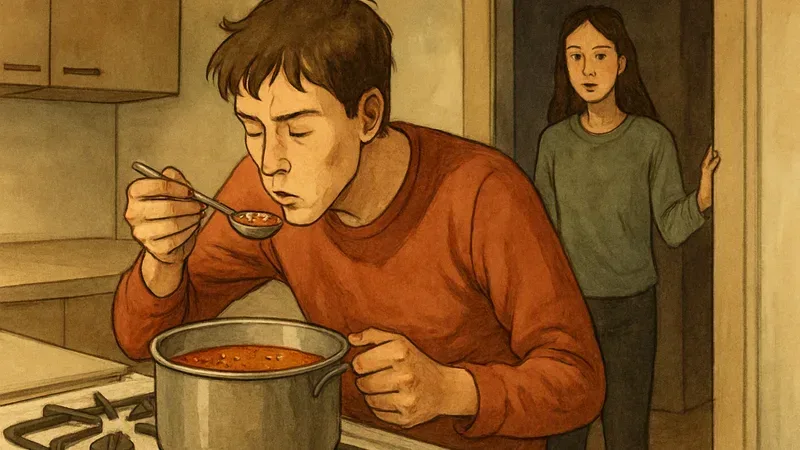
I made a big pot of lentil soup on Sunday. Monday it was fine. Tuesday I added a spoonful of yogurt and called it lunch. Wednesday I stood over the stove, eating it cold from the pot, and I didn't think anything of it. Then my roommate walked in and said, "You're having that again?"
🤔 The unspoken question
Why is eating the same meal three days in a row perfectly fine until someone else notices? The soup didn't change. My hunger didn't change. But the moment it became visible to another person, it felt different. Suddenly I wasn't just eating; I was being seen eating the same thing again. And that felt a little sad.
🔒 The private logic of leftovers
When you live alone or eat alone, leftovers are a quiet pact you make with yourself. You cooked once, you eat thrice. It's efficient. It's thrifty. It's a little ritual of not wasting. There's no one to comment, so there's no commentary. The third night of the same dish is just another meal. You might even enjoy the way the flavors have deepened.
But the moment someone else sees the bowl, the whole thing becomes a performance. And you realize you're performing the role of someone who eats the same thing over and over, which is not a role anyone wants to play.
ℹ️In sociological terms, eating is a performance when observed. The private act becomes a public symbol — and leftovers suddenly carry unintended meaning.
👀 The social mirror
We eat differently when we're watched. That's not a revelation. But the interesting thing is how quickly the shame attaches itself. It's not about the food. It's about the story the food tells.
- A fresh meal says: I care about this moment.
- Leftovers say: I am getting through this moment.
And when someone else is there, you want to be seen as someone who cares, not someone who is just getting through. So you hide the bowl, or you make a joke, or you lie and say you're really into lentils this week.
The moment the food becomes visible to another person, it feels different. Suddenly I wasn't just eating; I was being seen eating the same thing again.
😌 The honest complication
Maybe the problem isn't the watching. Maybe the problem is that by the third night, you actually are a little tired of the soup. You just didn't admit it to yourself until someone else gave you permission to feel that way. The comment doesn't create the boredom; it just names it. And once it's named, you can't un-name it. So you scrape the rest into the compost and make something new. And that feels good too.
The third night of the same dish is a small test. It asks whether you can enjoy something without anyone else's approval. Most of us can, until we can't. And that's not a failure. It's just what happens when a private habit meets a public glance.
💡If you catch yourself judging your own leftovers when someone watches, pause. Ask yourself: Am I bored of this food, or just performing for an audience? The answer can free you — or give you permission to cook something fresh.
📚 Related articles
- ✅ The Good Jam at the Back of the Fridge — We save special food for a day that never comes — another quiet ritual of private eating.
- ✅ The Plate You Don't Bother With When You Eat Alone — The difference between a proper meal and eating from the pot isn't hunger — it's who's watching.
- ✅ The Soup That Tastes Better When Someone Else Makes It — Same recipe, same pot — yet it never tastes like theirs. The missing ingredient might be the cook's attention.

Comments (0)
Leave a Comment
Be the first to comment!