Before Final Fantasy VII, Square tried its hand at a 3D fighter. Tobal No. 1 landed in 1996, a time when PlayStation was still proving itself as a fighting-game machine.
📋 Game details
- Release: 1996
- Developer: DreamFactory
- Publisher: Square
- Platform: PlayStation
- Genre: Fighting game
🎮 The experience
Tobal No. 1 feels like a fighting game from a parallel dimension. The arenas are open boxes with walls, not flat planes. Characters move in full 3D, and the camera follows the action smoothly.
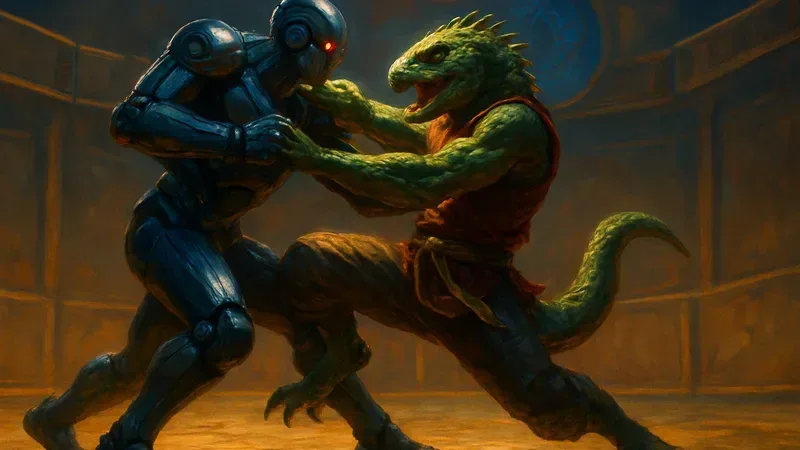
The mood is serious but not grim — think sci-fi tournament with a hint of martial-arts mysticism. Each fighter has a distinct look, from a cyborg to a lizard-man, but the game never feels cartoonish.
⚔️ How it plays
Fights are about positioning and timing. You can sidestep, dash, and jump off walls. The core loop: close distance, land strikes, then grapple.
Grappling is deep — you chain holds and throws by pressing buttons in sequence. There is no block button; you evade or counter. The Quest mode sends you through dungeons, fighting enemies and bosses, collecting items and leveling up your character.
💡Tip: The grappling system feels like a mini-game — timing and button sequences matter more than button-mashing.
🌟 What makes it special
- ✅ Grappling system that feels like a mini-game — timing and button sequences matter more than button-mashing.
- ✅ Quest mode is a full action-RPG dungeon crawl, rare for a fighting game in 1996.
- ✅ Wall-jumping adds verticality and escape options, changing how you approach each fight.
- ✅ No block button forces you to learn movement and counters, making fights feel more reactive.
🕹️ The retro charm
Polygon characters are blocky by modern standards, but the animation is fluid. Textures are simple, and the menus have that late-90s PlayStation look — clean, with bold fonts and primary colors. The camera can clip through walls occasionally, a reminder of early 3D experimentation.
🎵 Sound & atmosphere
The music is a mix of electronic and orchestral themes, each stage getting its own moody track. Sound effects are punchy — hits land with a satisfying thud. The announcer's voice is deep and dramatic, adding weight to every round.
No composer is credited in the source, but the audio fits the serious tone.
⏳ Then vs. now
- The grappling system still feels fresh — no modern fighter does it quite the same way.
- Quest mode offers a single-player experience that many modern fighting games lack.
- The camera can be disorienting in tight spaces, a relic of early 3D design.
- Character models look dated, but the animation holds up surprisingly well.
Tobal No. 1 is a fascinating what-if: Square trying a 3D fighter with RPG elements before becoming synonymous with RPGs.
🔍 Curiosities
- Tobal No. 1 was developed by DreamFactory, a studio formed by former Sega AM2 staff who worked on Virtua Fighter.
- The game was released in North America with a demo disc of Final Fantasy VII, boosting its sales.
- A sequel, Tobal 2, was released only in Japan in 1997.
💡 Why remember it?
Anyone curious about experimental fighting games or early PlayStation history should give it a look. It is a hidden gem that deserves more than a footnote.
📄 Sources
Tobal No. 1 Wikipedia
📚 Related articles
- The Unholy War: A 1998 Fighting Game With a Twist — Another PlayStation fighter from the same era, with 3D arenas and a demo of a classic series.
- Legend of Legaia: The RPG Where You Punch In Combos — An RPG that borrows fighting-game mechanics, making combat feel like a brawler.
- Azure Dreams: A Monster-Taming Dungeon Crawler — A dungeon-crawling RPG with monster taming and town-building, similar to Tobal's Quest mode.

Comments (0)
Leave a Comment
Be the first to comment!