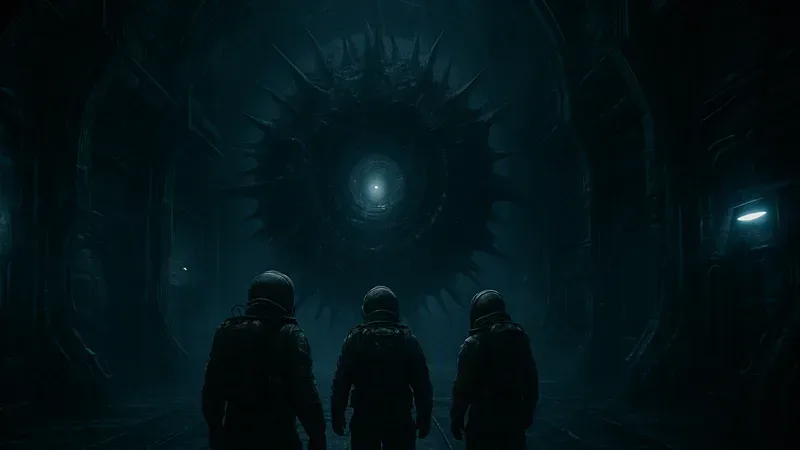
In 2047, a distress signal comes from a ship that should not exist. The Event Horizon disappeared seven years ago, and now it is back, parked in orbit around Neptune. A rescue crew boards it expecting wreckage. What they find is a vessel that feels less abandoned than waiting. The film's best trick is not the gore or the shocks. It is the slow realisation that the ship is not a crime scene. It is a door that was opened, and something came through.
📋 At a Glance
- Year: 1997
- Director: Paul Anderson
- Country: United States
- Language: English
- Genre: Science fiction horror
- Main cast: Laurence Fishburne, Sam Neill, Kathleen Quinlan, Joely Richardson
🚀 The Mission That Should Have Been Simple
Captain Miller (Laurence Fishburne) leads the Lewis and Clark on a rescue mission. He is a practical man, the kind who wants to do the job and go home. Dr. Weir (Sam Neill), the missing ship's designer, comes along because he built the gravity drive that was supposed to fold space and let humanity reach the stars.
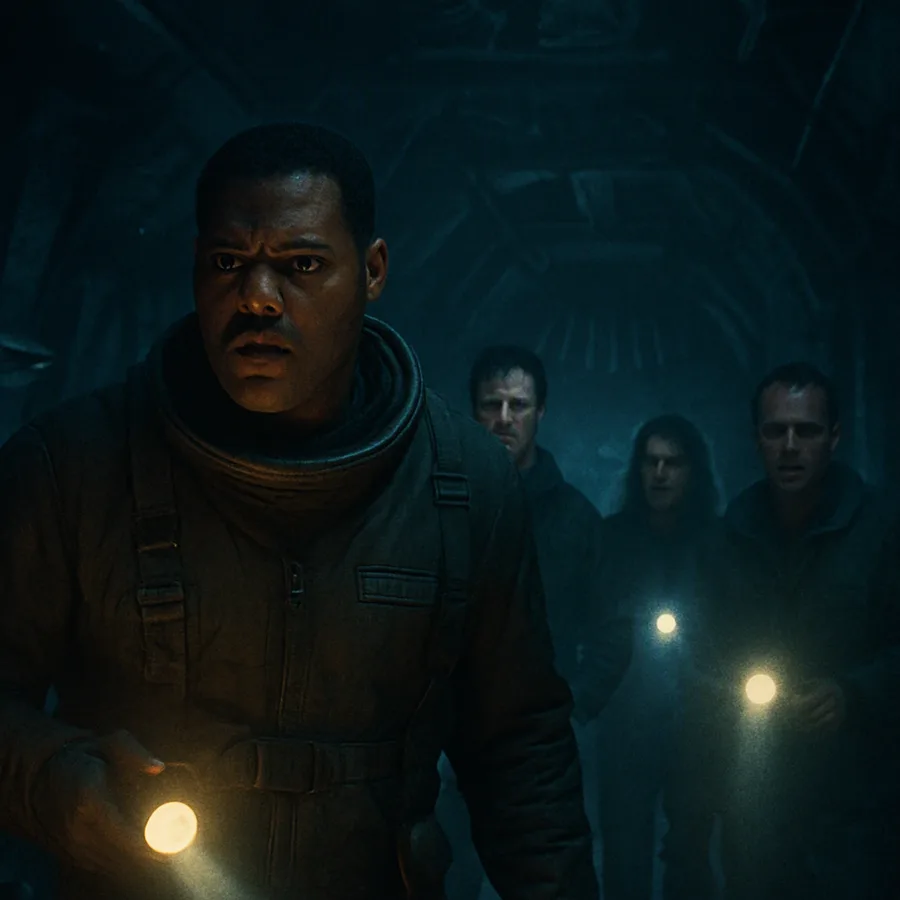
When the crew boards the Event Horizon, they find no survivors, no bodies, and a ship that seems to be breathing. The premise is simple: find out what happened. The problem is that the answer is not a thing that happened. It is a thing that is still happening.
🚪 The Drive Is Not an Engine
The gravity drive is the film's central science-fiction idea, and it is a good one. It does not push the ship through space. It creates a doorway, bending space-time so that a ship can step from one point to another. That sounds like a shortcut. The film treats it as a violation.
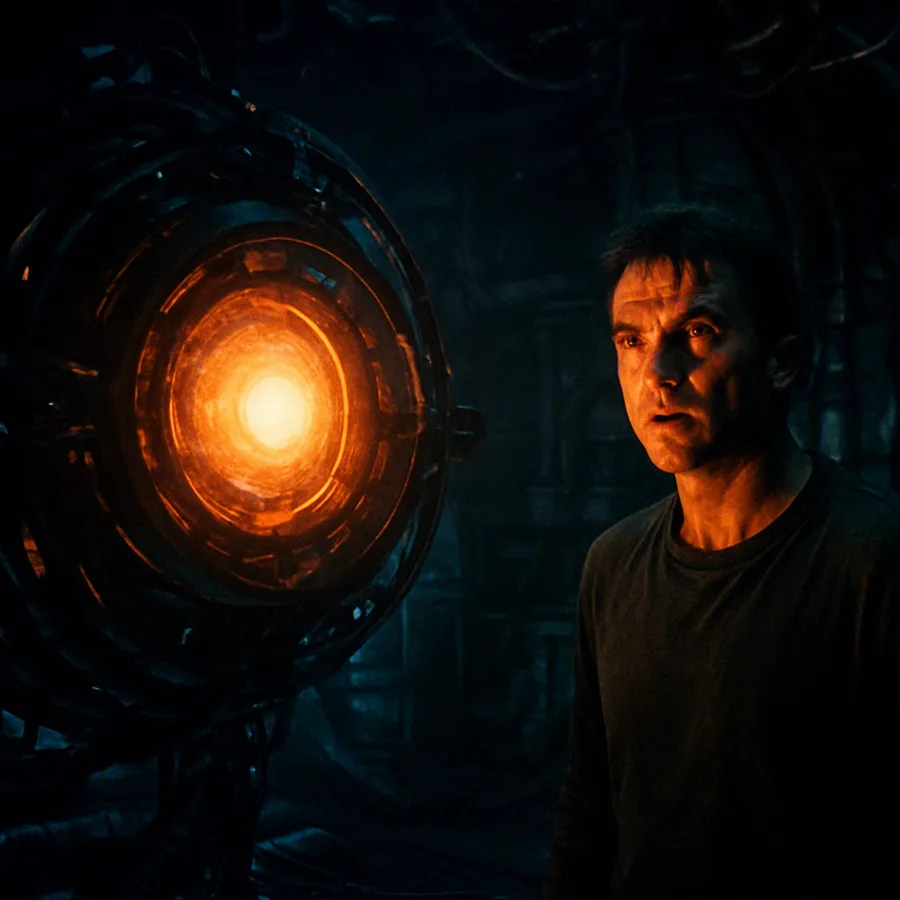
Weir built a machine that opened a door, and he never asked what was on the other side. The horror does not come from aliens or monsters. It comes from the idea that some distances are there for a reason.
The drive is not a tool. It is a wound, and the ship is still bleeding.
🚢 A Ship Built to Unsettle
The production design does more work than any special effect. The Event Horizon is all dark corridors, sharp angles, and a central corridor lined with spikes that looks like a throat. It is not a place where people live. It is a place where people are processed.
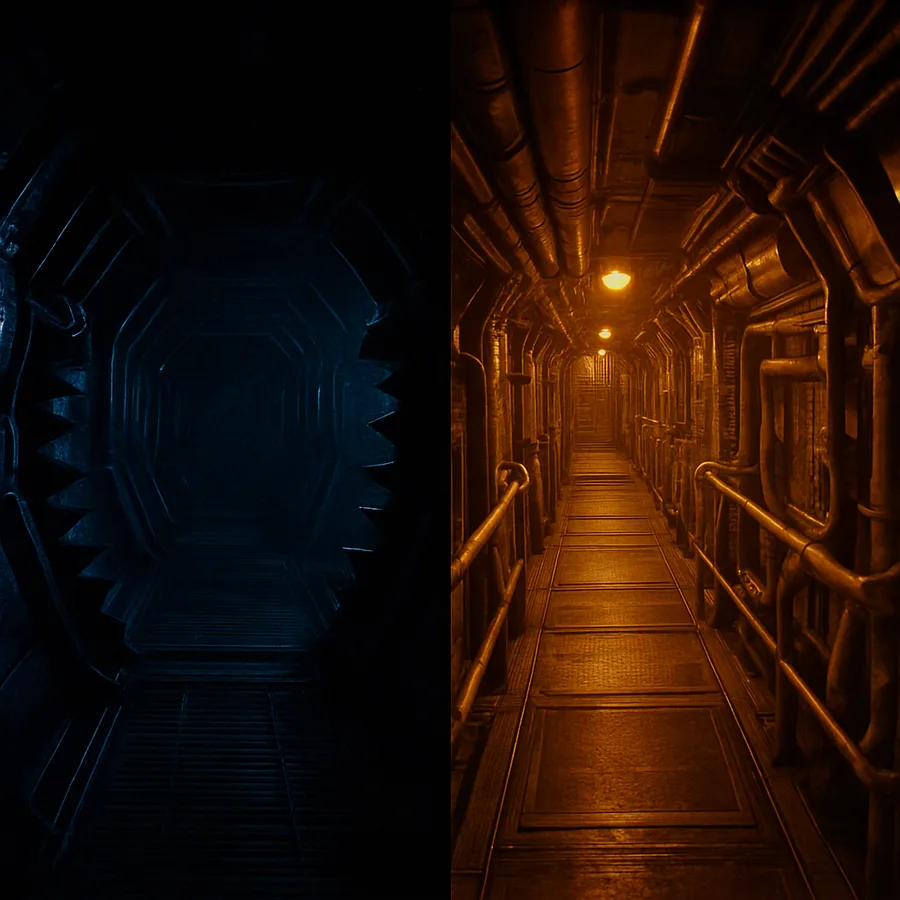
The Lewis and Clark, by contrast, is cramped and functional, full of pipes and handrails. The film cuts between the two ships to show the difference: one is a tool, the other is a trap. The best scenes are not the loud ones. They are the quiet moments when a character stands alone in a corridor, and the ship feels like it is listening.
🎭 Fishburne and Neill: Two Kinds of Authority
Fishburne plays Miller as a man who solves problems by staying calm. He does not shout. He gives orders and expects them to be followed. Neill plays Weir as a man who has already lost an argument with himself. He is not a villain. He is a true believer, and that is worse.
The film works because these two performances pull in opposite directions. Miller wants to leave. Weir wants to stay. The crew is caught between them, and the ship makes sure that no one gets to be neutral. Kathleen Quinlan and Joely Richardson do strong work with smaller roles, especially as the ship starts to affect each character differently.
✅ What Still Works
- ✅ The sound design: low hums, distant clanks, and a silence that feels intentional.
- ✅ The set design: the Event Horizon feels like a cathedral built by engineers who had stopped believing in God.
- ✅ The pacing: the first hour is patient, letting dread build before the chaos starts.
- ✅ The central idea: a machine that opens a door is a simple, effective horror premise.
⚠️ What Aged
The CGI has not held up. Some of the late-90s digital effects look like screensavers, and a few of the more ambitious shots lose their power because of it. The dialogue also has moments that feel written for a trailer rather than a scene.
But the film's biggest problem is that it sometimes mistakes volume for intensity. The quieter scenes are far more frightening than the shouting ones. When it trusts its own atmosphere, it is genuinely unsettling. When it tries to shock, it feels like a different, lesser movie.
❓ The Question Behind the Movie
The film is not really about a haunted ship. It is about the cost of curiosity. Weir is not evil. He is a scientist who believed that the next step was always worth taking. The gravity drive is his answer to the question, "What if we could go anywhere?"
The film asks a harder question: what if the universe is not empty, and not friendly, and not interested in our survival? The crew of the Lewis and Clark are not explorers. They are people who walked into a room they were not invited into. That idea still matters because we are still building doors.
ℹ️The film does not say that curiosity is wrong. It says that some doors, once opened, cannot be closed. And it never tells you which ones.
🎬 Final Thought
Event Horizon is not a perfect film. It is a film with one great idea, a strong cast, and a production design that does most of the heavy lifting. But that idea is enough. It leaves you with an image of a ship sitting in the dark, waiting for someone to come aboard. And it makes you wonder what it brought back with it.
🔗 Source
Event Horizon (film) Wikipedia

Kommentare (0)
Kommentar hinterlassen
Schreiben Sie den ersten Kommentar!