
There is a moment in Brainscan when the game asks for your name. It is not a menu option. It is a demand. And the boy playing it gives the answer without hesitating — because no one else has asked him anything in a long time. That is the quiet horror underneath the loud ones.
📋 At a glance
- Year: 1994
- Director: John Flynn
- Country: United States
- Genre: Science fiction slasher
- Main cast: Edward Furlong, Frank Langella, Amy Hargreaves
- Written by: Andrew Kevin Walker
💿 The disc that should not exist
Michael is a teenage boy with a computer, a lot of time alone, and a mother who is not home. He orders a horror game called Brainscan from a mysterious company. The disc arrives. The game asks him to perform a murder inside a virtual house. He does. Then he wakes up to news that the murder happened for real.
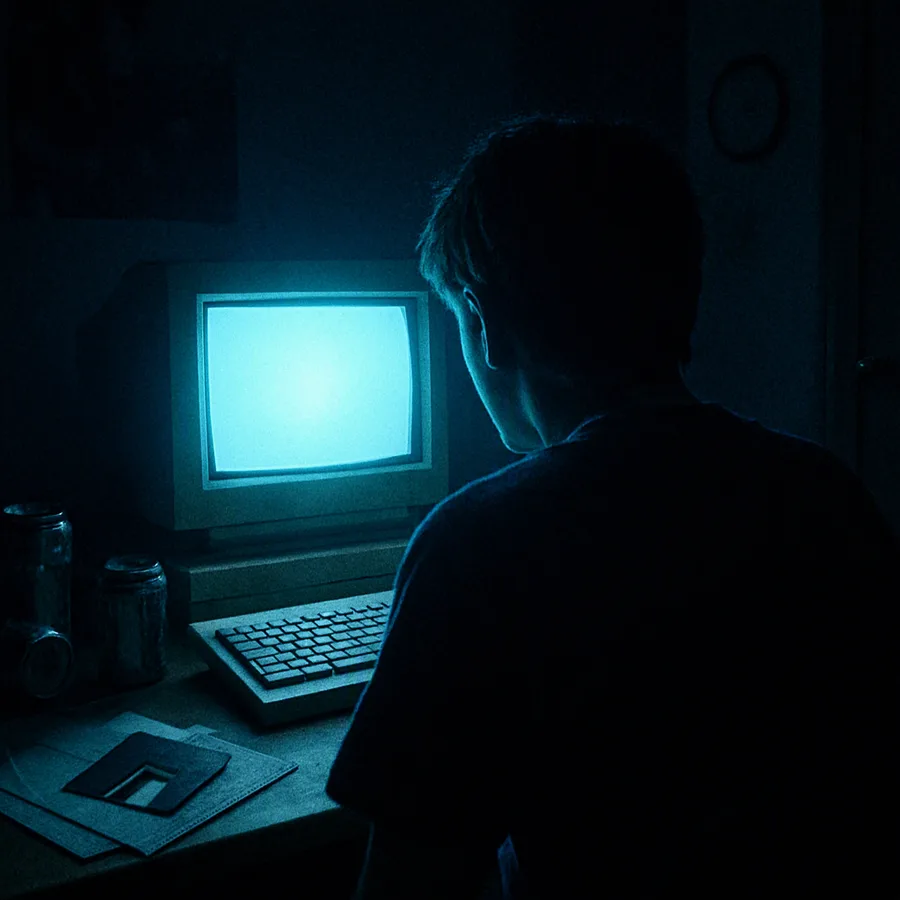
The premise is simple, and it is the best thing the film has: a boy who wanted a thrill, and a game that took him seriously.
😈 The killer is not the villain
The film gives Michael a companion — a grinning, leather-jacketed figure called Trickster who appears only to him. Trickster is not a monster from the game. He is a part of Michael, the part that enjoys the power of doing damage without consequence.
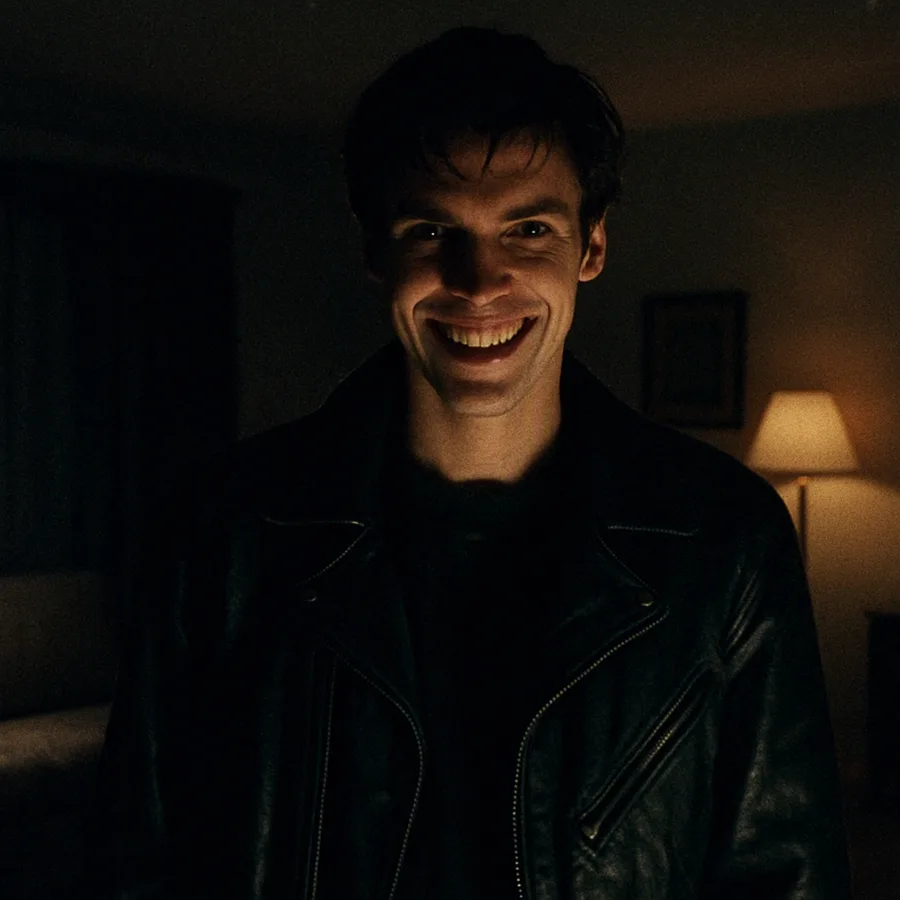
The film understands that the scariest thing in a teenager's life is not a demon. It is his own desire to be someone who matters, even if only by being dangerous. Trickster is the friend Michael never had, and that is why he is hard to shake.
🧍 Edward Furlong's lonely boy
Furlong plays Michael with a flat, guarded stillness. He does not beg for sympathy. He watches, he waits, he lies to his mother, he stares at the girl next door. The performance works because it refuses to be charming.
This is a kid who has learned that being invisible is safer than being known — until a disc offers to know him. The film's best scenes are not the killings. They are the moments when Michael sits alone in his room, and the screen glows, and he has nothing else to do.
🖥️ The fear of 1994
Brainscan arrived when home computers were still new enough to feel like doorways. The film's anxiety is not really about video games causing violence. It is about a generation of kids who were learning to live through screens, and parents who had no idea what their children were doing in the dark.
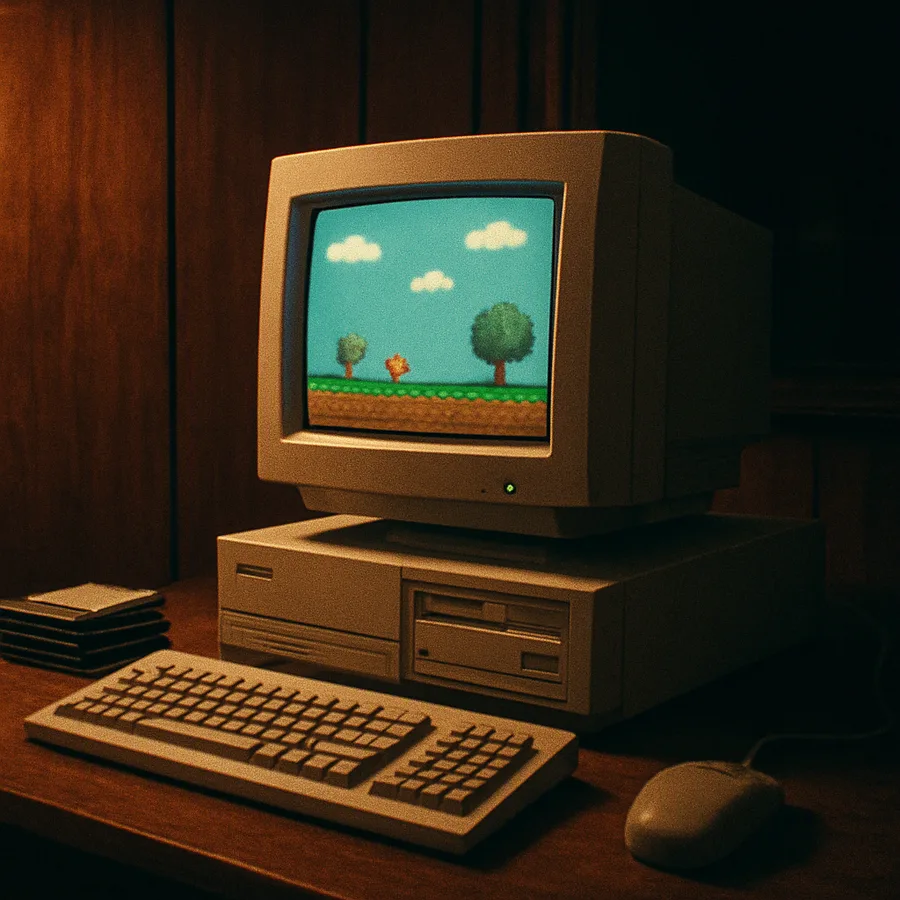
That panic looks dated now — the game interface is clunky, the technology is quaint — but the feeling underneath it has not aged at all. The disc is just a stand-in for any screen that promises to understand you better than the people in the next room.
ℹ️The disc is just a stand-in for any screen that promises to understand you better than the people in the next room.
✅ What still works
- ✅ The suburban emptiness: big houses, empty driveways, a boy with no one to talk to.
- ✅ The Trickster's design — a smile that is always slightly too wide.
- ✅ The film's refusal to make the game a simple external evil. It is a mirror.
- ✅ The pacing: it moves quickly, and it never over-explains its own rules.
⏳ What aged
The technology dates the film badly. Floppy discs, chunky monitors, and a game that looks like a screensaver from a dentist's office. The kills are also tame by modern standards, and the middle section loses momentum as Michael tries to cover his tracks. But the central idea — that a game can make you complicit — still lands.
❓ The question behind the movie
Who is responsible when violence feels like a game? Michael does not plan to hurt anyone. He clicks a button. The film keeps returning to that gap between intention and action.
It asks whether a boy who enjoys a fantasy of killing is already guilty, or whether guilt only begins when the fantasy becomes real. And it refuses to give him a clean answer. The game does not possess him. It invites him. That is the uncomfortable part. In a world where every screen asks us to participate, Brainscan asks what we become when we say yes.
The game does not possess him. It invites him.
🎬 A final thought
The film is not a great slasher. It is a good idea wearing a horror costume. But that idea — that the most dangerous thing you can do is accept an invitation — is why it stays with you. Michael wanted to be seen. The game saw him. That is the whole tragedy, and it is enough.
🔗 Source
Brainscan Wikipedia

Comentários (0)
Deixe um Comentário
Seja o primeiro a comentar!