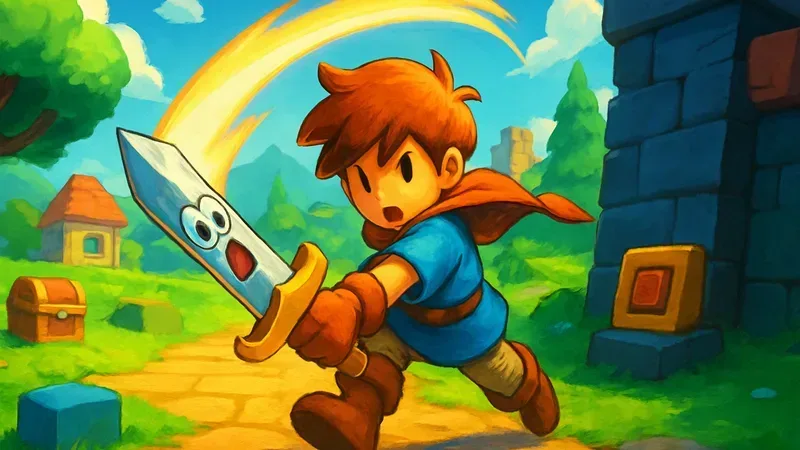
Alundra 2 follows a young pirate named Flint on a quest to lift a curse. It arrived late in the PlayStation's life, when 3D was the new normal.
🎮 About the game
- Release: 1999 (Japan), 2000 (internationally)
- Developer: Matrix Software
- Publisher: Sony Computer Entertainment / Activision
- Platform: PlayStation
- Genre: Action role-playing
🌍 The world and tone
Alundra 2 trades the moody, isometric world of its predecessor for a bright, fully 3D realm. You explore towns, forests, and dungeons as Flint, a boy with a talking sword. The atmosphere is lighter, almost cartoonish, with a sense of adventure rather than dread. The camera follows behind you, and the world feels open, if a bit empty at times.
⚔️ How it plays
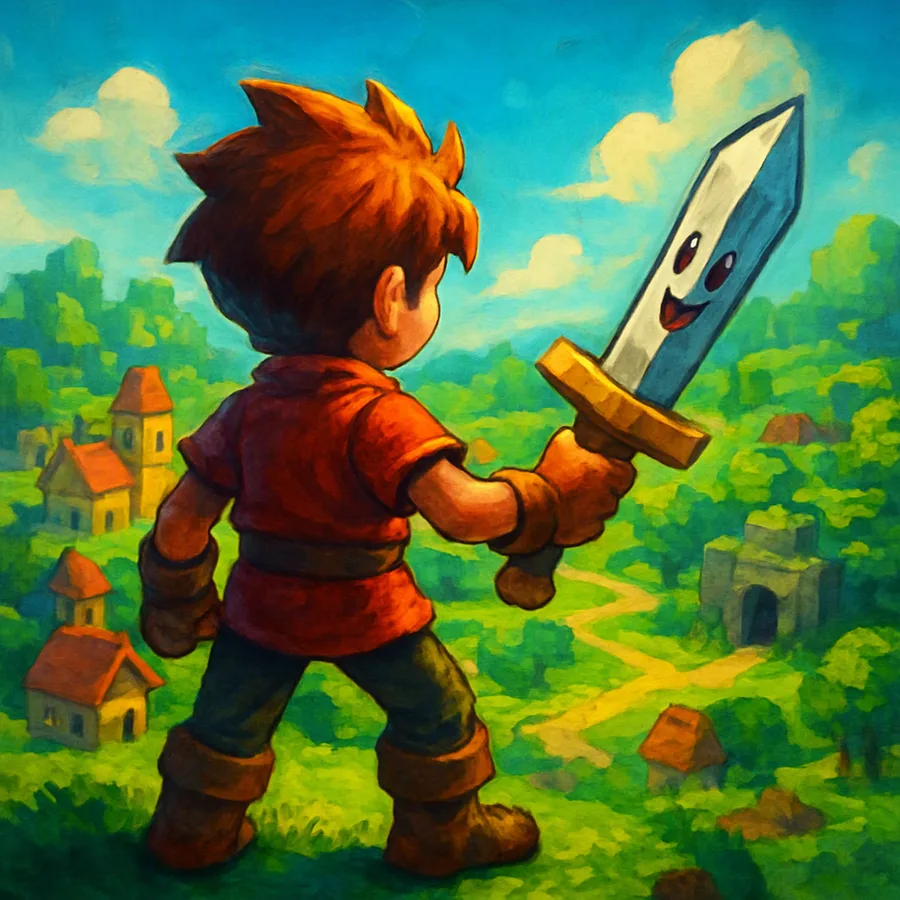
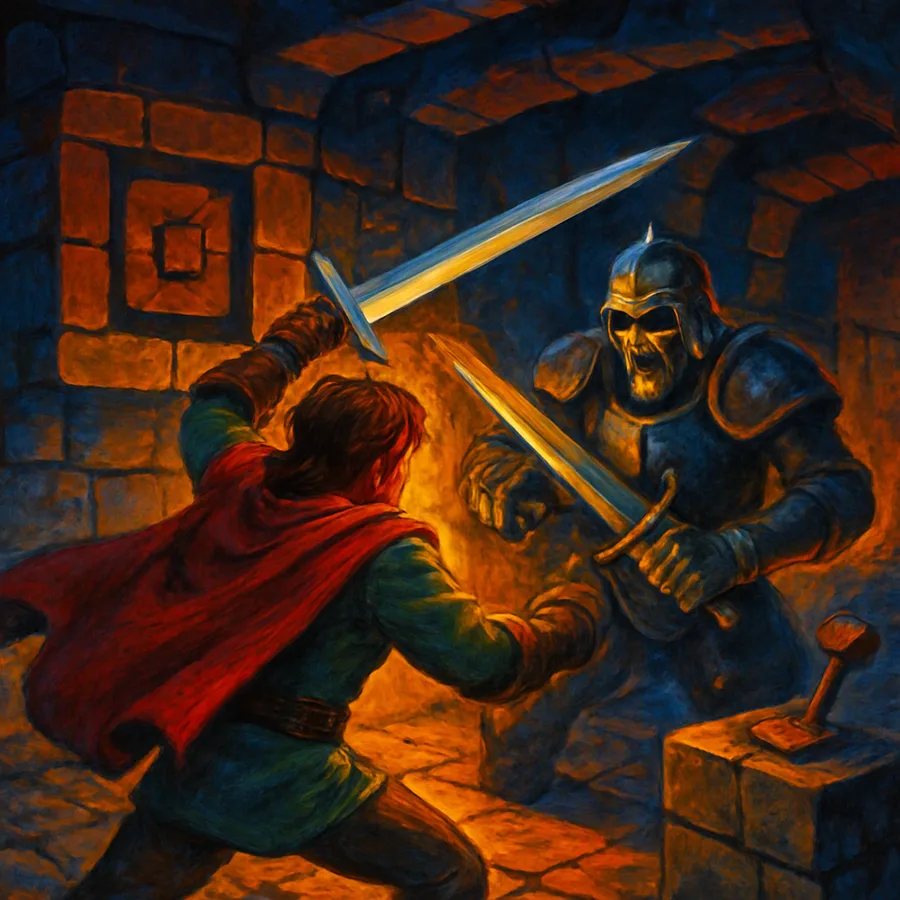
You run, jump, and slash your way through enemies in real-time combat. Dungeons are filled with simple puzzles—push blocks, hit switches—and boss fights that test your timing. You collect items and upgrade your sword as you progress. The game is linear, with each area leading to the next, and a map helps you find your way.
✨ What makes it special
- ✅ It abandoned the top-down 2D of the original Alundra for full 3D, a bold shift for a sequel.
- ✅ The protagonist Flint is a young boy, not a silent hero, giving the story a more personal, childlike feel.
- ✅ Its combat and puzzle design are straightforward, making it accessible to younger players or newcomers to action-RPGs.
🕹️ The retro charm
Early 3D on the PlayStation means blocky characters, low-poly environments, and a camera that sometimes fights you. The textures are simple, and the draw distance is short. It looks like a game from the era when 3D was still being figured out—charming in its ambition, rough in execution.
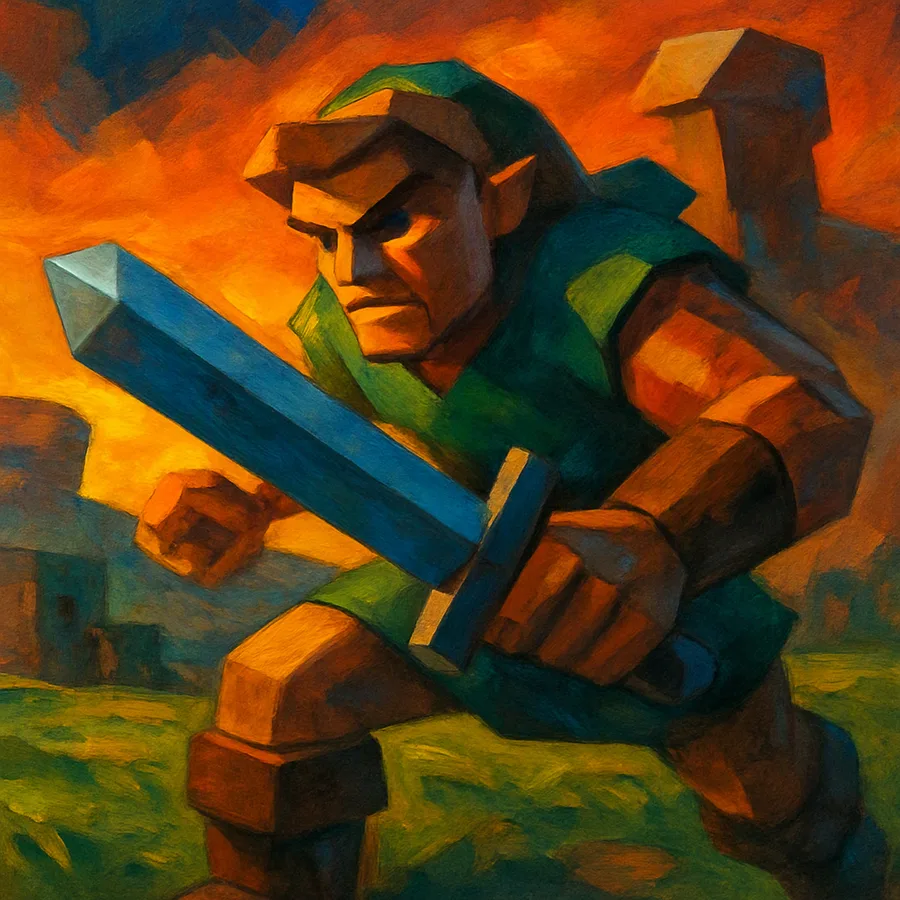
ℹ️The early 3D era on the PlayStation left many titles with dated visuals and mechanics, yet they remain fascinating historical artifacts.
🎵 Sound and atmosphere
The music is upbeat and adventurous, fitting the lighthearted tone. Sound effects are basic—clangs, slashes, and the occasional voice sample. The audio doesn't aim for immersion so much as it keeps the mood playful and energetic.
⏳ Then vs. now
- The 3D controls feel stiff by modern standards, especially the jumping.
- The straightforward puzzles and combat are easy to pick up and enjoy.
- The story and characters are simple, but that can be refreshing in an era of complex narratives.
- The camera can be frustrating, a common issue for early 3D games.
Alundra 2 is a curious sequel that dared to change everything. It's not a classic, but it's a snapshot of a time when developers were experimenting with 3D.
💭 Why remember it?
Alundra 2 is worth remembering as a curious sequel that dared to change everything. It's not a classic, but it's a snapshot of a time when developers were experimenting with 3D. If you enjoy early PlayStation action-RPGs, it's a decent, if unpolished, adventure.
📚 Sources
Alundra 2 Wikipedia
📚 Related articles
- Tobal No. 1: The Square Fighting Game That Time Forgot - Another early 3D PlayStation game from the same era, with a unique fighting system and a dungeon mode.
- Omega Boost: Polyphony Digital's Forgotten Mecha Shooter - A forgotten 3D mecha shooter from the same developer, offering a different take on early 3D action.
- R-Type Delta: The Classic Shooter Goes 3D Without Losing Its Soul - A classic shooter that transitioned to 3D on PlayStation, showing another way to adapt a 2D franchise.

Comments (0)
Leave a Comment
Be the first to comment!