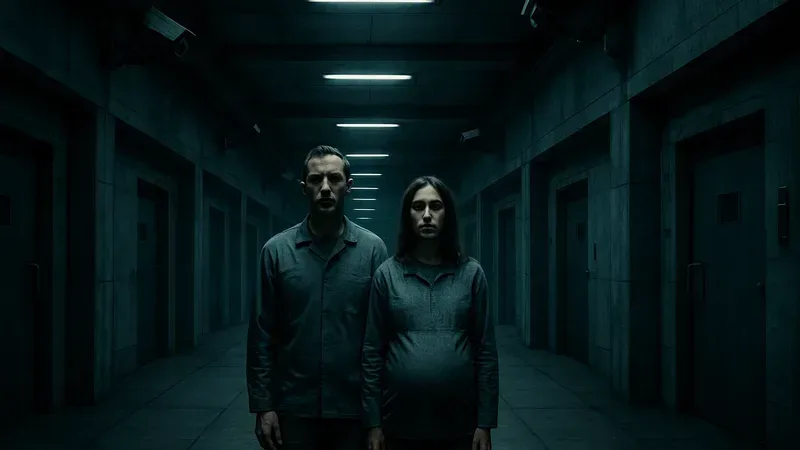
Most prison movies are about the guards. This one is about the building.
In Stuart Gordon's 1992 science fiction film, the walls watch, the doors decide, and the punishment arrives without anyone needing to lift a finger. The cruelty has been automated. Somehow that makes it worse.
📋 At a glance
- Year: 1992
- Director: Stuart Gordon
- Country: Australia (shot there)
- Genre: Science fiction action
- Main cast: Christopher Lambert, Loryn Locklin
- Setting: A dystopian future
🔢 A crime of arithmetic
John Henry Brennick and his wife Karen are sent to a maximum security prison for a simple reason: she is pregnant with their second child.
In this future, one child per family is the law. A second is a violation serious enough to bury you underground.
It is a clean, brutal premise. The film does not spend much time arguing about the policy. It uses it as a door — one that closes behind the couple and locks. What matters is not why they are inside. What matters is that the prison has been designed by people who assumed no one would ever get out.
🏢 The building is the antagonist
The fortress of the title is not a backdrop. It is a machine with opinions. Doors open only for the right faces. Cameras track every corridor. When a prisoner breaks a rule, the room itself responds — no guard has to walk over and do anything. The system handles it.
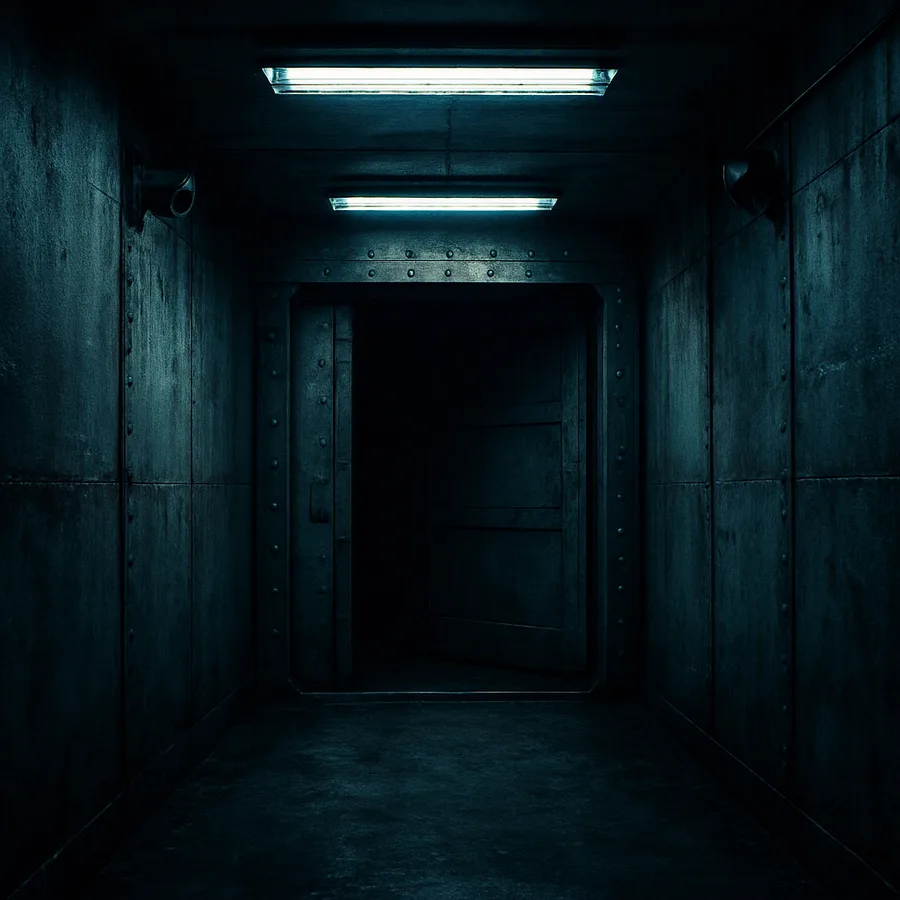
ℹ️This is the film's best idea, and it is a genuinely unsettling one. A human guard can be reasoned with, bribed, or shamed. A wall cannot.
By making the prison automatic, the movie turns punishment into weather: impersonal, constant, and impossible to negotiate with. The few human guards who do appear are almost a relief, even when they are not kind.
🩸 Gordon's mean streak
Stuart Gordon came to this material from horror, and it shows. He has little interest in the shiny, optimistic futurism that was common in early-nineties science fiction. His future is cramped, damp, and industrial. The prison looks like something built in a hurry and never cleaned.
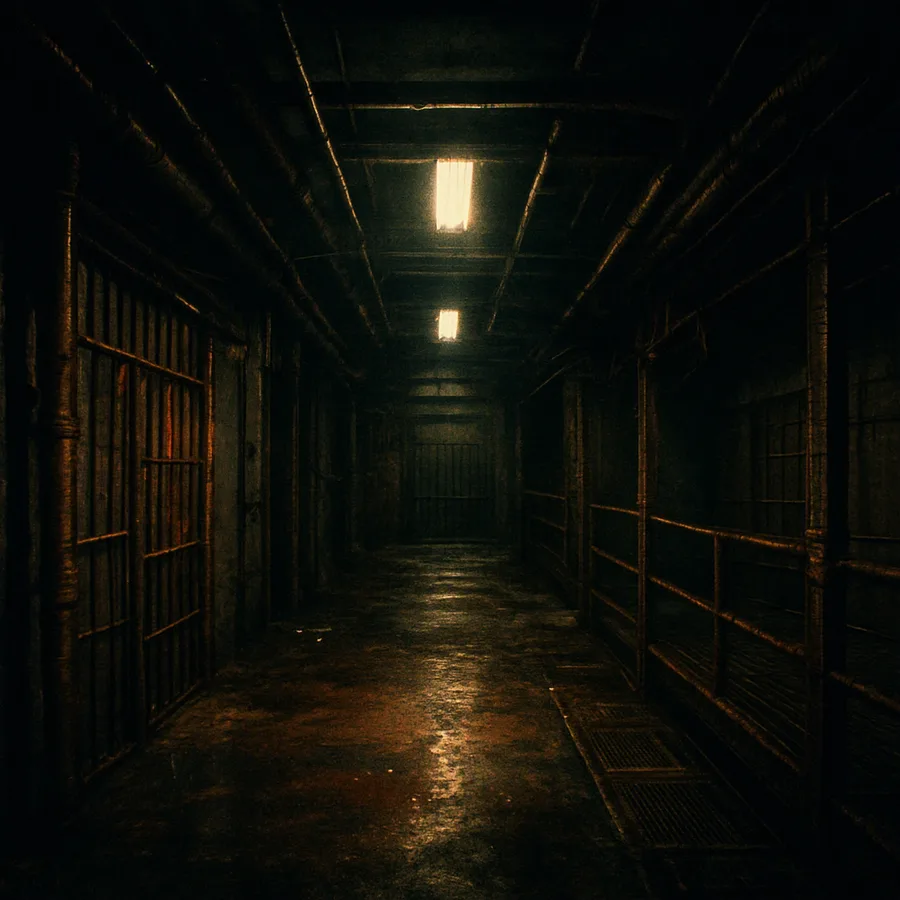
Gordon also understands that the most frightening thing in a genre film is often a small, physical detail — a hand pressed against glass, a door that will not open, a body being moved by machinery. He stages violence with a blunt practicality that keeps it from feeling like spectacle. The result is a film that feels cheaper than it is, in the best way.
🎭 Lambert's flatness works
Christopher Lambert is not an expressive actor, and this role does not ask him to be. His John Henry is a man running calculations: where are the cameras, when do the doors cycle, who can be trusted. The flatness reads as focus.
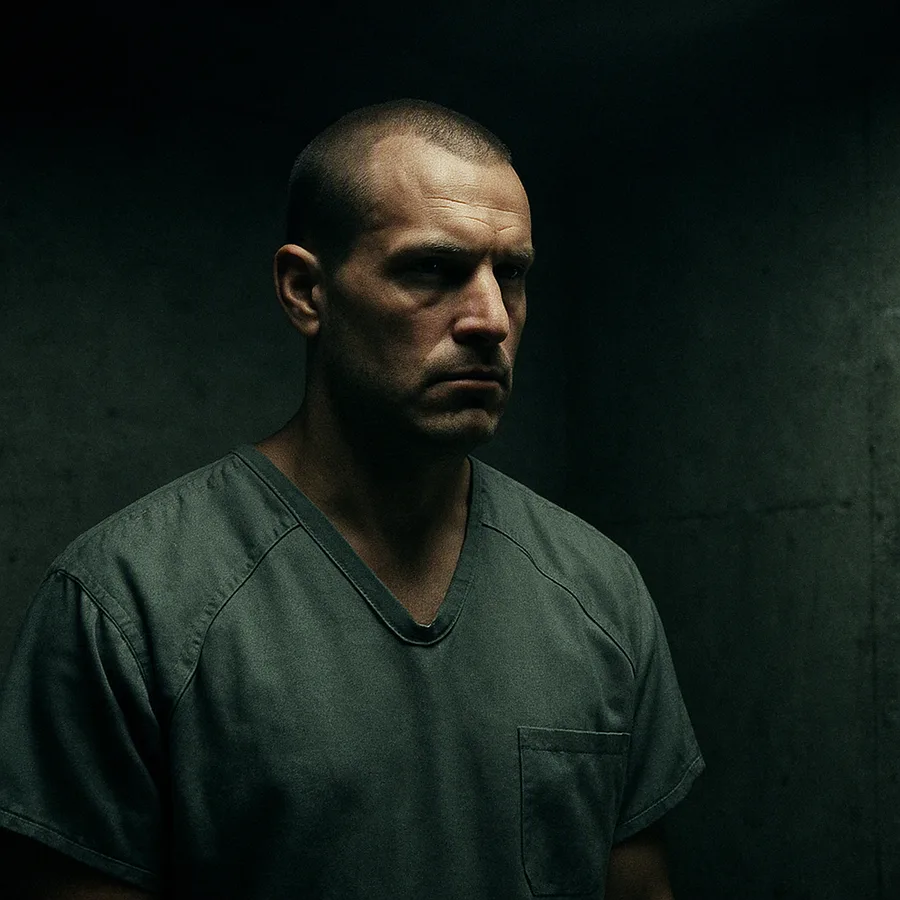
In a film where the environment is doing most of the acting, a lead who underplays keeps the tension where it belongs — in the room, not in the performance.
Loryn Locklin, as Karen, gets less to do, but she is not a passive prisoner. The film treats her pregnancy as the reason for the sentence, not as a weakness to be protected. That is a small, smart choice.
✅ What still works
- ✅ The production design: corridors that feel genuinely underground, not like a set.
- ✅ The automated punishment sequences, which are more effective than most modern CGI violence because they are physical.
- ✅ The escape logic — the film treats the prison as a puzzle with rules, and the audience can follow along.
- ✅ The tone: grim without being self-important.
🕰️ What aged
The computer interfaces look like what they are: early-nineties screens with early-nineties fonts. The film's idea of a surveillance state is prescient, but its idea of a computer is not.
Some of the future-tech props now read as charming rather than threatening. This is a minor problem. The dread comes from the architecture, and architecture does not go out of date.
❓ The question behind the movie
The film asks what happens when a society decides that cruelty can be delegated. The fortress does not hate its prisoners. It has no feelings at all. The people who built it are never really on screen.
⚠️That absence is the point: the system is designed to make punishment feel like procedure, something that simply happens, like a door closing.
It is a small, nasty idea, and the film does not over-explain it. The one-child policy is the excuse, not the subject. The real subject is the comfort of a machine that never has to justify itself. That is why the fortress still feels like a warning rather than a relic.
🏁 Final thought
Fortress is not a great film, but it has one great machine. The prison is more memorable than any character in it, and that is exactly what the movie is about.
You remember the doors. You remember the cameras. You remember what it felt like to be watched by something that did not care whether you lived.
🔗 Source
Fortress (1992 film) Wikipedia
📚 Related articles
- Gattaca: The Future Sorted People at Birth - Another dystopia where the state regulates reproduction and identity — the philosophical cousin to Fortress's one-child law.
- Hardware: The Robot in the Room - A grimy, low-budget early-nineties future where a machine becomes the threat, much like Fortress's automated prison.
- Equilibrium: The Man Who Forgot to Feel Nothing - A future where the system enforces conformity and one man pushes back — same dystopian machinery, different angle.

Comments (0)
Leave a Comment
Be the first to comment!