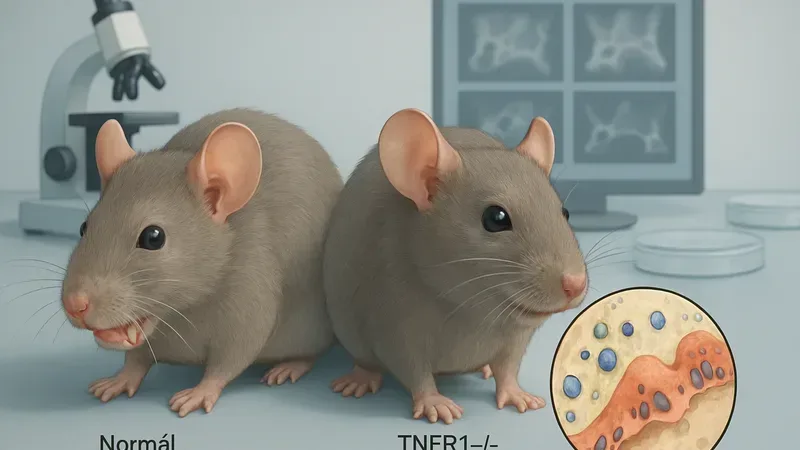
This study in mice tested whether blocking a specific inflammation pathway reduces bone damage from a root canal infection. The question matters because understanding this pathway could lead to better treatments for tooth-related bone loss.
🔬 Study overview
Researchers infected the root canals of mice to cause apical periodontitis. They compared 50 mice genetically missing the TNF-α receptor 1 (TNFR1-/-) with 50 normal mice. They measured inflammation and bone loss over 7, 14, 28, and 42 days using various lab techniques.
📊 Key findings
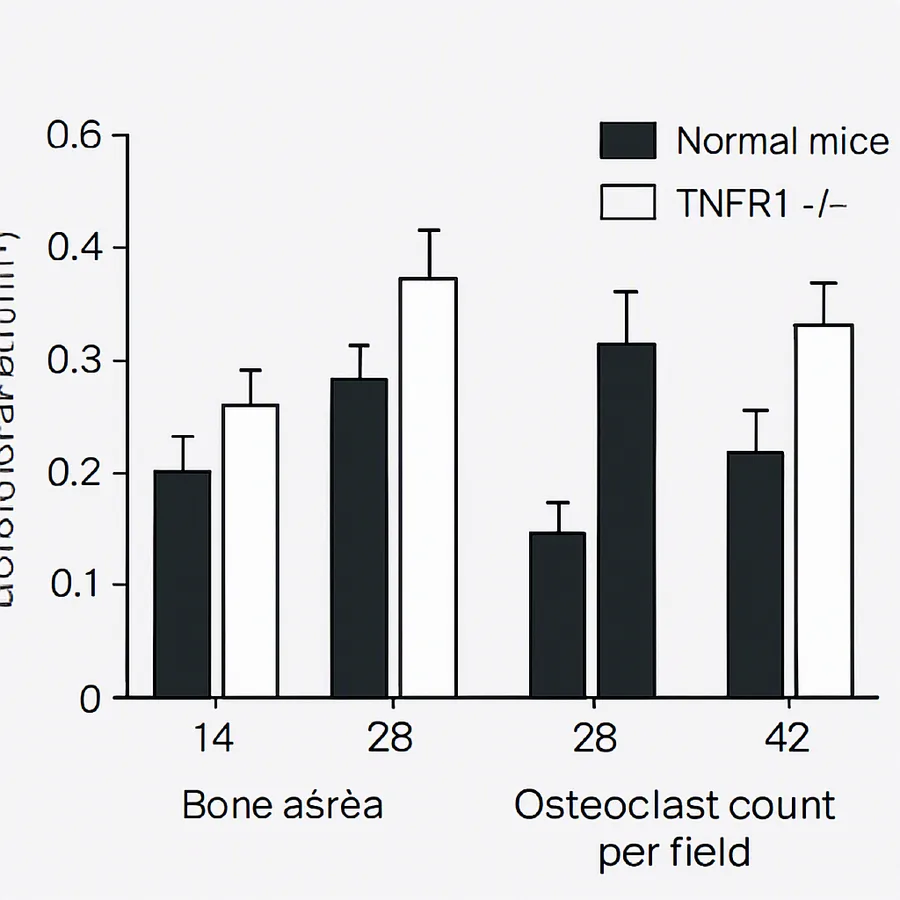
- TNFR1-/- mice had fewer immune cells (neutrophils) at 14, 28, and 42 days.
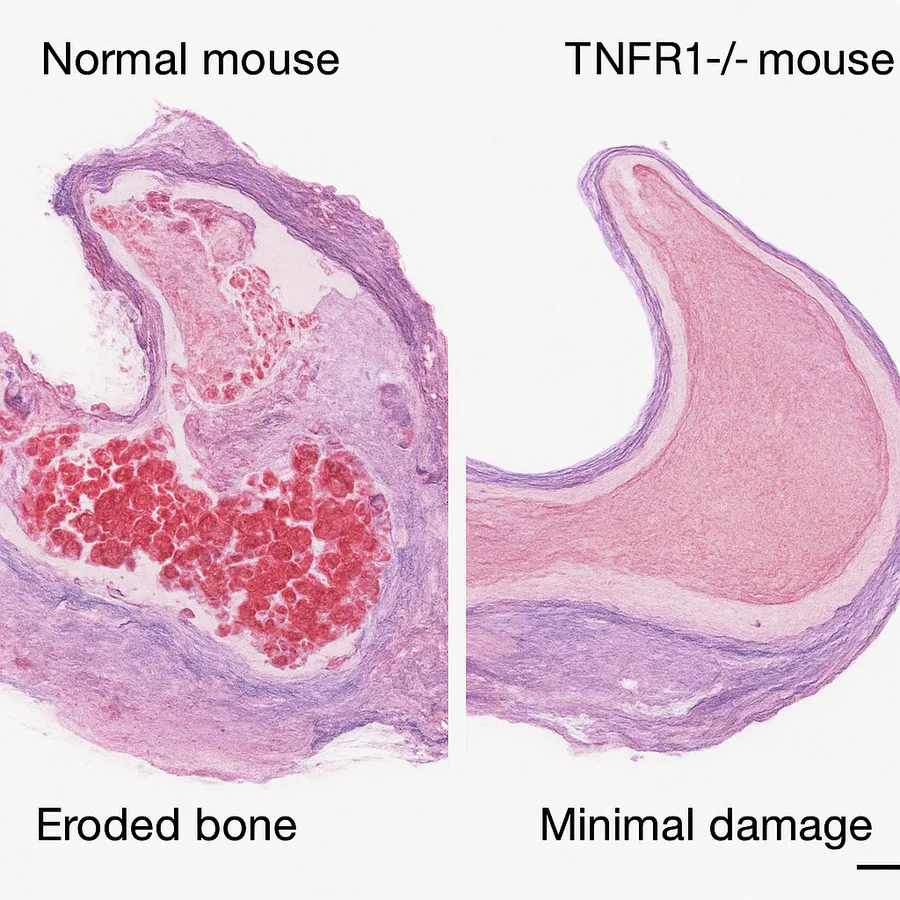
- The area and volume of bone damage were smaller in TNFR1-/- mice at 42 days.
- TNFR1-/- mice had fewer bone-destroying cells (osteoclasts) at 14 and 42 days.
- TNFR1-/- mice showed lower levels of several proteins linked to bone breakdown (CTSK, MMP-9, COX-2).
- RANKL, a signal for bone loss, was lower in TNFR1-/- mice at 14 and 42 days.
- No adverse events were reported.
ℹ️Mice missing the TNF-α receptor 1 had less inflammation and bone loss after a root canal infection. This suggests that this specific signaling pathway plays a key role in the damage. The study measured markers of bone breakdown, not whether the mice lived longer or had better overall health.
🎯 Study vs. claim
The study tested whether blocking the TNF-α-TNFR1 pathway reduces bone loss in mice with root canal infections. It does not make a broader health claim for humans.
❌ What it does NOT show
- It does not show that this applies to humans.
- It did not measure lifespan or overall health.
- It did not test treatments, only genetic deletion.
- Long-term effects beyond 42 days were not studied.
📈 Evidence level
An animal study in mice.
🚦 Confidence indicator
Confidence: Very low for people — animal studies often do not translate to humans.
🔒 Trust tier
Trust tier: Early-stage · Animal-only. This means the findings are promising but evidence in humans is not established. Results from mice often fail to replicate in people.
This is early-stage animal research, not a human treatment.
⚠️ Limitations
- Animal study — results may not apply to humans.
- Short duration of 42 days.
- Single study without replication.
- Genetic deletion is not the same as a drug treatment.
❓ Open questions
- Would blocking this pathway with a drug have the same effect?
- Does this pathway work the same way in humans?
- Are there long-term safety concerns from blocking this pathway?
📋 Your action plan
- ✅ Understand that this is early animal research, not a human treatment.
- ✅ Do not attempt to block this pathway yourself.
- ✅ Discuss any concerns about root canal infections with your dentist.
- ✅ A proven human plan does not exist yet.
💡 Takeaway
This mouse study suggests a specific inflammation pathway drives bone loss after root canal infection, but human evidence is lacking.
This summary is for general information only and is not medical advice. Talk to a qualified professional before changing anything about your health.
📄 Source
TNF-α-TNFR1 Signaling Mediates Inflammation and Bone Resorption in Apical Periodontitis. Journal of Endodontics. 2023 PubMed

Comments (0)
Leave a Comment
Be the first to comment!