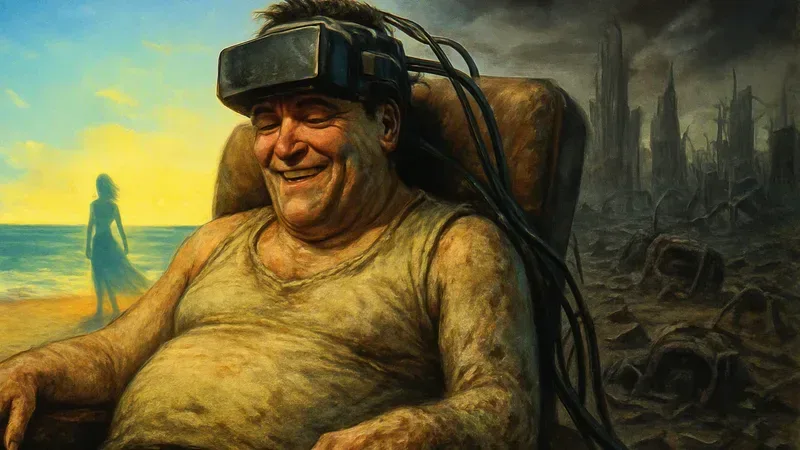
In 1992, Fangoria — the magazine that taught a generation to love fake blood — briefly became a movie studio. It made three films. One of them put Bruce Campbell in a world where the ultimate entertainment is a machine that feeds you a perfect life while your body rots. The movie is called Mindwarp, and it is smarter than its title.
📋 At a glance
- Year: 1992
- Director: Steve Barnett
- Country: United States
- Language: English
- Genre: Science fiction horror
- Main cast: Bruce Campbell, Angus Scrimm, Marta Martin
- Runtime: 91 minutes
🛋️ A hero who would rather watch
We meet Stover in a future where most people live plugged into a system called InfraWorld. It gives them a customized fantasy: a beach, a lover, a life with no friction. Stover is a fan of it. He is not a rebel or a soldier. He is a guy who likes his entertainment, and when he is forced out of the system and into the ruins outside, he spends most of the movie trying to get back in.
That is a strange and funny choice for a post-apocalyptic film. The hero's goal is not to save anyone. It is to return to the couch. The movie treats that honestly — Stover is selfish, a little cowardly, and completely recognizable. He is a fan of the thing that is killing him, and the film never lets him forget it.
🎨 Two worlds, two looks
InfraWorld is shot like a commercial: soft light, clean edges, a woman who exists only to please. It is deliberately dull. The wasteland outside is the opposite — rusted metal, dirt, tunnels carved out of junk, people in homemade armor. One world is supposed to be paradise and looks like a waiting room. The other is supposed to be hell and looks like a place where things actually happen.
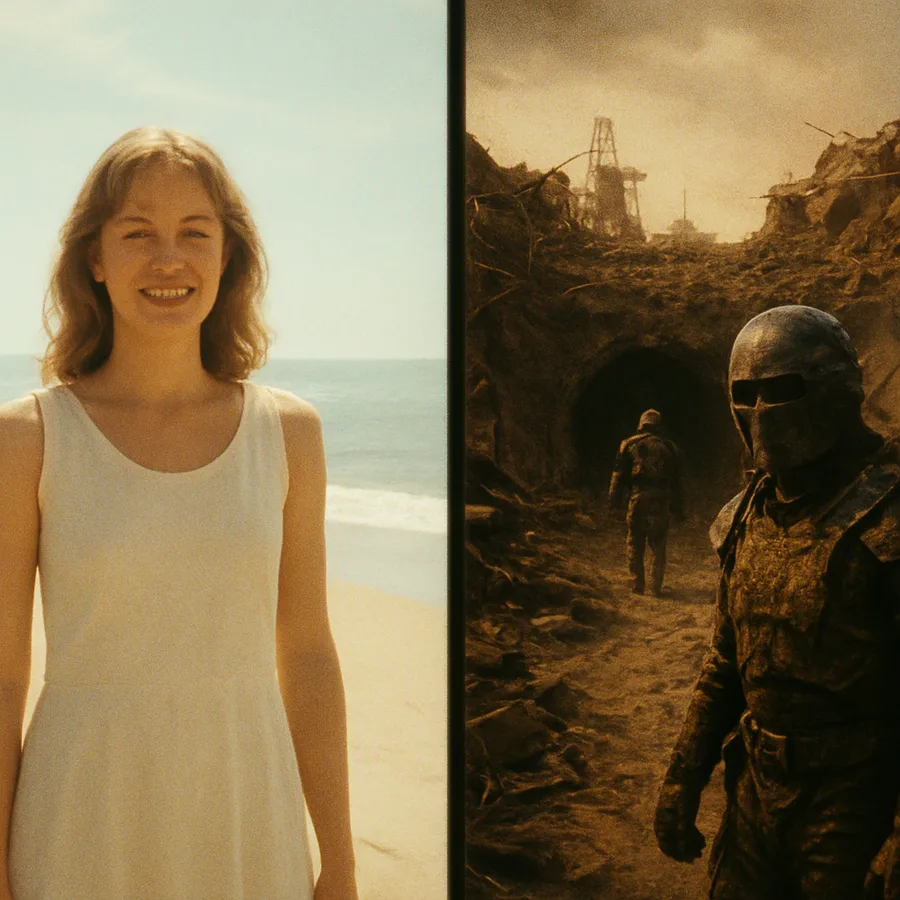
That contrast is the film's best idea. The fantasy is not tempting because it is beautiful. It is tempting because it is easy.
The movie understands that the danger of a perfect simulation is not that it looks better than reality. It is that it asks nothing of you.
🗣️ Angus Scrimm and the machine
Angus Scrimm, best known as the Tall Man in Phantasm, plays the leader of the surface dwellers. He is tall, calm, and speaks in a low voice that makes ordinary sentences sound like scripture. His character has built a religion around the machine that runs InfraWorld, and he treats it as a god that must be fed.
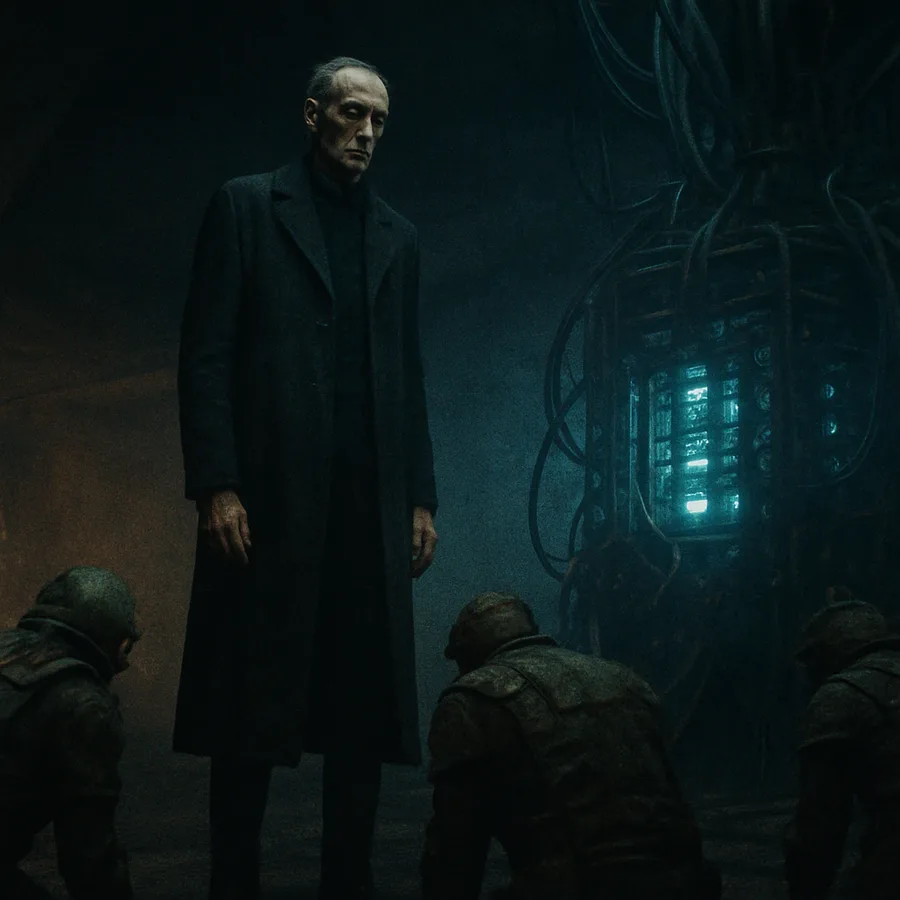
Scrimm does not chew scenery. He stands very still and lets his height do the work. When he talks about the machine, he sounds less like a villain and more like a man who has made peace with something he cannot control. It is a quiet performance in a loud movie, and it gives the film a center.
🏜️ The wasteland is the point
The surface world is full of mutants, scavengers, and makeshift societies. They are ugly, violent, and often ridiculous. But they are alive. The film keeps cutting between this messy world and the sterile fantasy, and the argument is clear: a life with no pain is not a life.
ℹ️This is not a subtle message, and the movie does not pretend it is. But it is delivered with real texture — practical gore, rubber masks, sets built from scrap. The wasteland feels like a place someone built with their hands. InfraWorld feels like a screensaver. That is the point.
👍 What still works
- ✅ The practical effects. The mutants look like costumes, and that is a compliment — they have weight.
- ✅ Scrimm's voice. He could read a grocery list and make it sound like a prophecy.
- ✅ The two-world structure. It gives the film a rhythm that most low-budget horror lacks.
- ✅ Campbell's willingness to be unlikable. He does not turn Stover into a hero too early.
⏳ What aged
The virtual-reality premise feels like a product of its time. In 1992, VR was a novelty; today it is a phone. The film's idea is still sharp, but its vocabulary — headsets, cables, a glowing chair — now looks like a museum exhibit. Some of the dialogue also lands harder than it should, especially when characters explain the machine to each other.
❓ The question behind the movie
Mindwarp asks what you become when the story you are fed is better than the life you have. Stover is not addicted to pleasure. He is addicted to being the main character. InfraWorld gives him a narrative where he matters, and the wasteland gives him a body that hurts and a role he did not choose. The film's answer is not that reality is noble. It is that reality is yours. The machine's fantasy belongs to whoever programmed it. That question has only gotten louder since 1992, and the movie asks it without flinching.
🏁 Final thought
Fangoria Films did not last. It made three movies and disappeared. But Mindwarp is the one that still has teeth, because it refuses to flatter its audience. It looks at a man who loves a fake world and says: that is you. Then it makes him crawl through the dirt to earn something real.
🔗 Source
Mindwarp (film) Wikipedia
📚 Related articles
- The Lawnmower Man: When Virtual Reality Became a Monster - Another 1992 VR horror: a mind upgraded without a soul, the same question Mindwarp asks about easy paradise.
- Virtuosity: When a Killer is Made of Code - A virtual killer escapes into reality, flipping Mindwarp's premise: what if the simulation wants out?
- Strange Days: When Memories Become a Drug - When recorded experience becomes a product, the same seduction of a life that asks nothing of you.

Comments (0)
Leave a Comment
Be the first to comment!