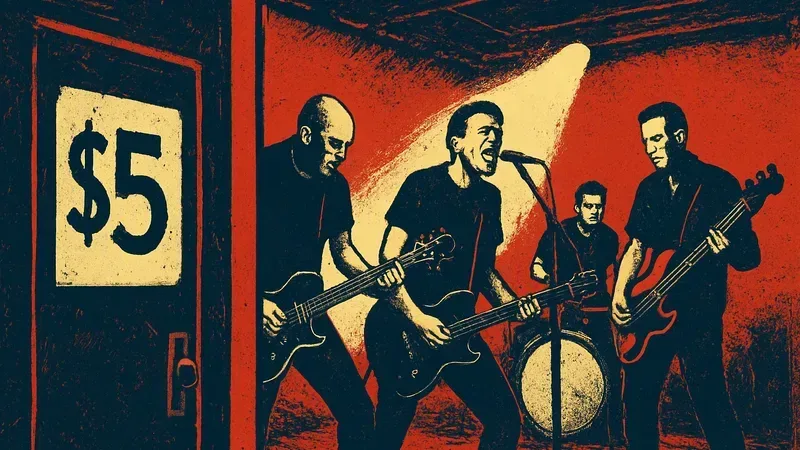
Five dollars. That was the door price for years. No service fees, no VIP tiers, no corporate sponsorship, no major label. Just four musicians in a D.C. basement scene who decided the business could be done differently. The music that came out of that decision is not polite. It is coiled, rhythmic, and often beautiful.
📋 At a glance
- Subgenre: Post-hardcore
- Years active: 1986–present (on hiatus)
- Origin: Washington, D.C.
- Core lineup: Ian MacKaye, Guy Picciotto, Joe Lally, Brendan Canty
- Label: Dischord Records
🎯 The pitch
Fugazi are the band that proved you could be fiercely independent and still make music that mattered to people far outside the punk scene. They built a model—cheap tickets, all-ages shows, no major label—that countless bands copied. And they wrote songs with real tension, swing, and space.
📜 History
Formed in Washington, D.C., in 1986 by Ian MacKaye after the end of Minor Threat, Fugazi quickly became the flagship of Dischord Records. With Guy Picciotto joining on second guitar and vocals, plus bassist Joe Lally and drummer Brendan Canty, they released a run of albums that stretched hardcore into dub, funk, and art-rock territory.
They toured relentlessly but never played the industry game. The band has been on an indefinite hiatus since the early 2000s, but their influence and their business model remain a blueprint.
⚔️ The case against them
Fugazi can be exhausting. MacKaye's bark is an acquired taste, and the band's refusal to smooth out rough edges means some records feel like endurance tests. Their mid-period albums sometimes mistake length for depth, stretching ideas past their breaking point.
And the self-imposed rules—no major label, no expensive merch—can come across as rigid, even self-righteous, to listeners who just want to hear a good song without a lecture.
🔄 The paradox
Those same constraints are what make Fugazi's best work so gripping. The lack of major-label polish forced them to rely on dynamics, space, and the interplay between two guitars. The cheap door prices meant they played to crowds who were there for the music, not the spectacle.
And the refusal to repeat themselves pushed them into weird, wonderful territory. The rules did not limit the art; they sharpened it.
The rules did not limit the art; they sharpened it.
🎸 Sonic identity: the two-guitar interlock
Fugazi's signature is the way MacKaye and Picciotto's guitars fit together. MacKaye often plays sharp, rhythmic chords, while Picciotto adds scratchy, textural lines that dart around the beat. They rarely solo. Instead, they build tension through repetition and sudden stops.
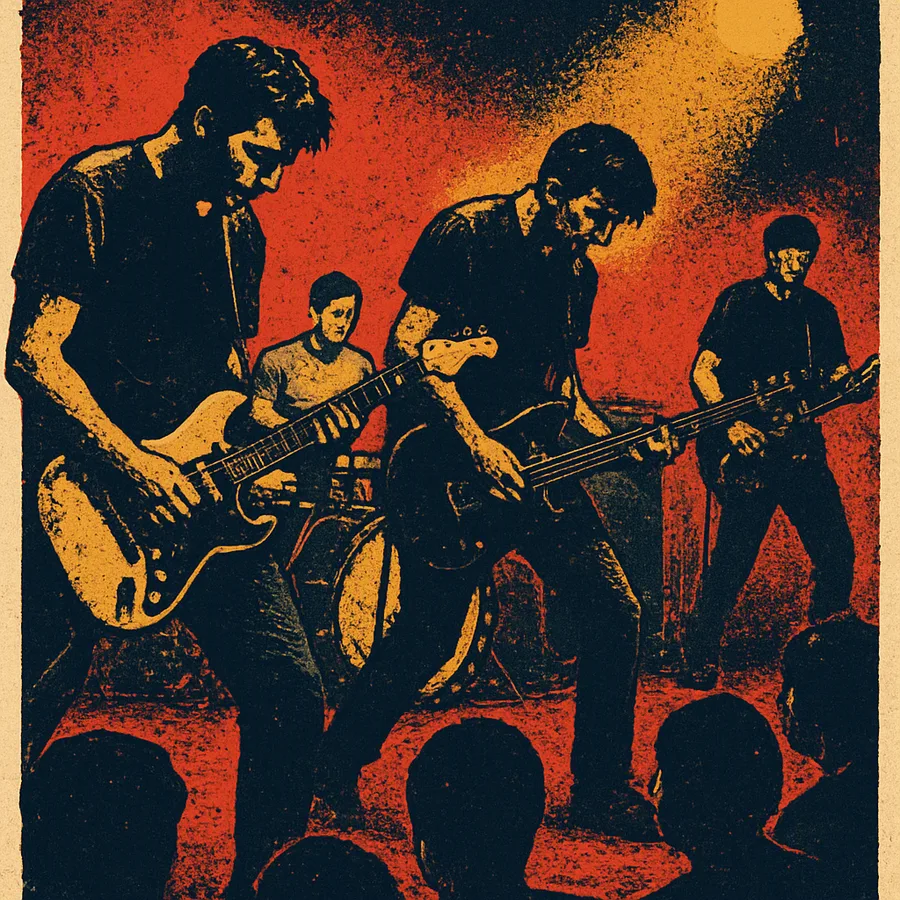
The rhythm section of Lally and Canty is the engine: Lally's bass is melodic and propulsive, Canty's drumming swings even when the tempo is furious. It is a sound that owes as much to dub and funk as to hardcore.
🔊 Sonic identity: from hardcore to dub and back
Their early records are fast and raw, but by the mid-1990s they were slowing down, adding space, and letting songs breathe. Albums like Red Medicine and End Hits bring in dub-like bass, feedback drones, and odd time signatures.
The production stays dry and unadorned—no reverb clouds, no studio tricks. That starkness makes the moments when they do open up, like the shimmering guitar in 'Promises', hit harder.
⭐ Why they last
Fugazi's influence is everywhere: in the DIY ethics of modern punk, in the all-ages movement, in the way bands think about ticket prices and merch. But their real legacy is musical. They showed that a rock band could be rhythmically adventurous without losing aggression.
Songs like 'Waiting Room' and 'Repeater' still sound urgent because they are built on tension and release, not just volume. People put them on because the music rewards close listening—there is always another layer to find.
💡 Curiosities
- The band name comes from a Vietnam War-era slang term for a chaotic situation, supposedly an acronym for 'Fucked Up, Got Ambushed, Zipped In.'
- Ian MacKaye was previously in Minor Threat and Teen Idles, two bands that helped define hardcore punk.
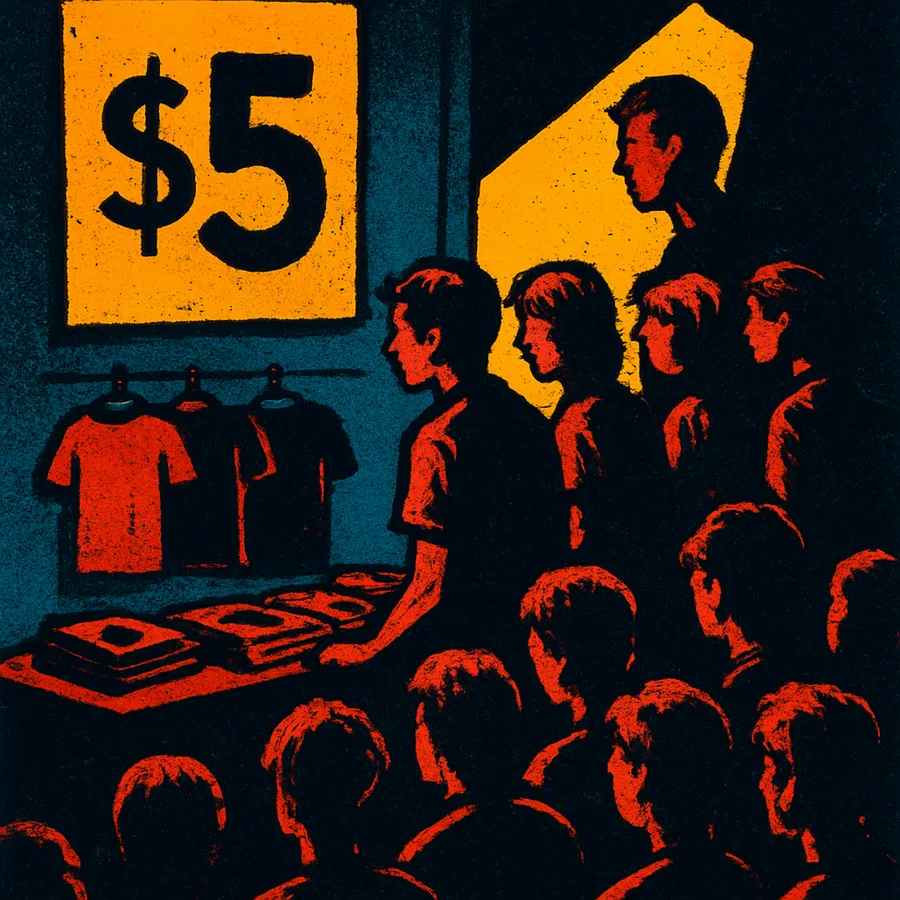
- Fugazi insisted on all-ages shows and kept ticket prices low, often around $5, even as their popularity grew.
- They refused to sell merchandise at inflated prices and never signed to a major label, turning down lucrative offers.
💡The $5 door was not a gimmick; it was a statement that music belongs to everyone.
🏁 Final note
Fugazi are not a nostalgia act. They are a reminder that a band can be principled without being preachy, and experimental without being inaccessible. The $5 door was not a gimmick; it was a statement that music belongs to everyone. And the music itself—tense, rhythmic, alive—still belongs to anyone willing to listen.
🎧 Essential tracks
Waiting Room — 1989, 13 Songs
The bass line is the hook: a simple, insistent figure that builds tension before the guitars even enter. When the full band kicks in, the release is physical. It is the sound of a band discovering its own power.
Listen: Spotify · Apple Music · YouTube
Repeater — 1990, Repeater
The title track is a masterclass in the two-guitar interlock. MacKaye's rhythmic chords and Picciotto's scratchy counterlines weave around each other while Canty's drumming pushes forward. The repetition in the riff is hypnotic, not lazy.
Listen: Spotify · Apple Music · YouTube
Blueprint — 1990, Repeater
A slower, more spacious track that shows Fugazi's dynamic range. The verses are quiet and tense, the chorus explodes. It is a blueprint for the post-hardcore bands that followed.
Listen: Spotify · Apple Music · YouTube
Merchandise — 1990, Repeater
A pointed critique of punk consumerism, delivered with a sneer. The music is tight and angular, with a stop-start structure that mirrors the song's message about commodification.
Listen: Spotify · Apple Music · YouTube
Long Division — 1995, Red Medicine
The dub influence is unmistakable here: Lally's bass is deep and melodic, Canty's drums are spacious, and the guitars are used for texture rather than riffs. It shows how far the band had traveled from hardcore.
Listen: Spotify · Apple Music · YouTube
Argument — 2001, The Argument
A late-era track that proves Fugazi never lost their edge. The guitar interplay is intricate, the rhythm section swings, and MacKaye's vocals are more measured but no less intense. It is a mature statement from a band that refused to repeat itself.
Listen: Spotify · Apple Music · YouTube
📚 Source
Fugazi Wikipedia

Comments (0)
Leave a Comment
Be the first to comment!