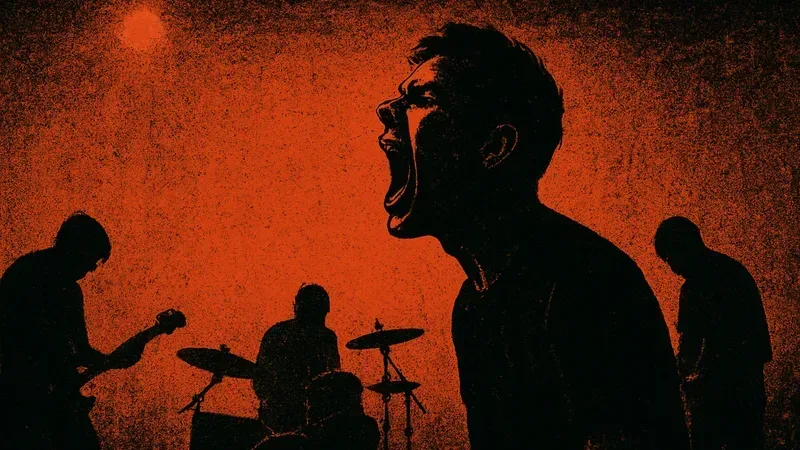
There's a moment on 'Good Morning, Captain' where Brian McMahan's voice cracks from a murmur into a full-throated scream. It's not a rock scream. It's the sound of someone finally saying the thing they've been holding back for six minutes. That's Slint in a nutshell: tension, release, and a refusal to do either one on schedule.
📋 At a glance
- Subgenre: Post-rock, math rock
- Years active: 1986–1991, 2005, 2014
- Origin: Louisville, Kentucky
- Core lineup: Brian McMahan, David Pajo, Britt Walford, Ethan Buckler
- Label: Touch and Go
🎯 Why they still matter
Slint were never famous. They played a handful of shows, released two albums, and broke up before most people heard of them. But their second record, Spiderland, became a secret handshake for musicians.
If you've ever heard a band whisper a verse and then explode into a jagged, off-time chorus, you've heard Slint's fingerprints. They didn't invent post-rock, but they gave it a vocabulary.
📖 History
Slint formed in Louisville in 1986, after the breakup of two local bands, Squirrel Bait and Maurice. The original lineup—McMahan, guitarist David Pajo, drummer Britt Walford, and bassist Ethan Buckler—recorded their debut, Tweez, in 1989. Buckler left soon after, replaced by Todd Brashear.
The band's second album, Spiderland, arrived in 1991, and then they split. A reunion tour followed in 2005, and another brief return in 2014. McMahan and Pajo have since been involved in other projects, but Slint remains a cult concern.
⚖️ The case against them
Let's be honest: Slint are not for everyone. Tweez is a difficult listen—abrasive, uneven, and often more interesting as a document of a band figuring itself out than as a collection of songs. The vocals are spoken more than sung, and McMahan's delivery can sound like a man reading a grocery list with menace.
If you need a chorus, a hook, or a resolution, you'll be waiting. And with only two albums, there's not much to dig into. The band's influence often outstrips the actual pleasure of listening to them.
🔁 The paradox
That inaccessibility is exactly why Spiderland works. The album doesn't try to meet you halfway. It builds tension through repetition, then releases it in bursts that feel earned.
The quiet parts aren't just quiet—they're coiled. The loud parts aren't just loud—they're inevitable. Slint's flaws are inseparable from their power. They made music that rewards patience, and in doing so, they made patience feel like a virtue.
🎸 The sound: guitars like fault lines
David Pajo's guitar playing is the band's most recognizable signature. He favors clean, trebly tones that sit slightly behind the beat, then switches to distorted, angular riffs that sound like they're falling down stairs.
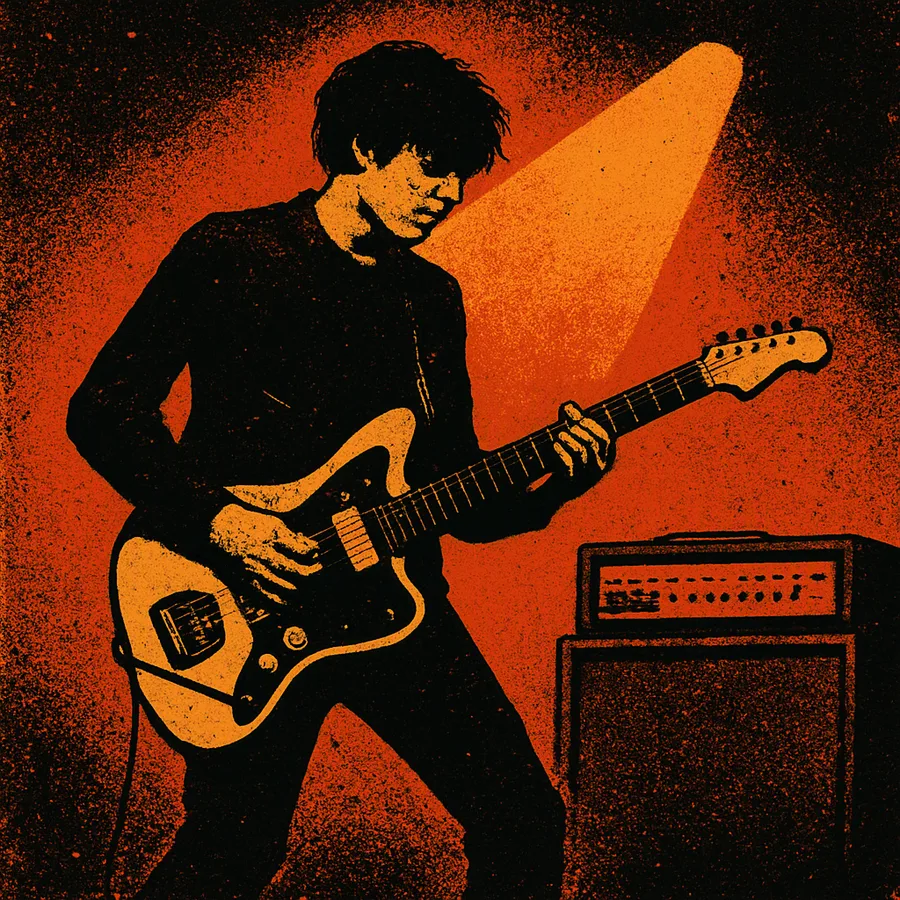
On 'Breadcrumb Trail,' the guitar line stops and starts, never settling into a groove. On 'Nosferatu Man,' it gallops. Pajo rarely plays chords; he plays intervals, letting the space between notes do the work. It's a style that influenced a generation of guitarists who learned that what you don't play matters as much as what you do.
🥁 The sound: drums that breathe
Britt Walford's drumming is the secret engine of Slint. He plays with a jazz drummer's sense of touch, using brushes and light cymbal work in the quiet sections, then shifting to a heavy, tom-driven attack when the songs explode.
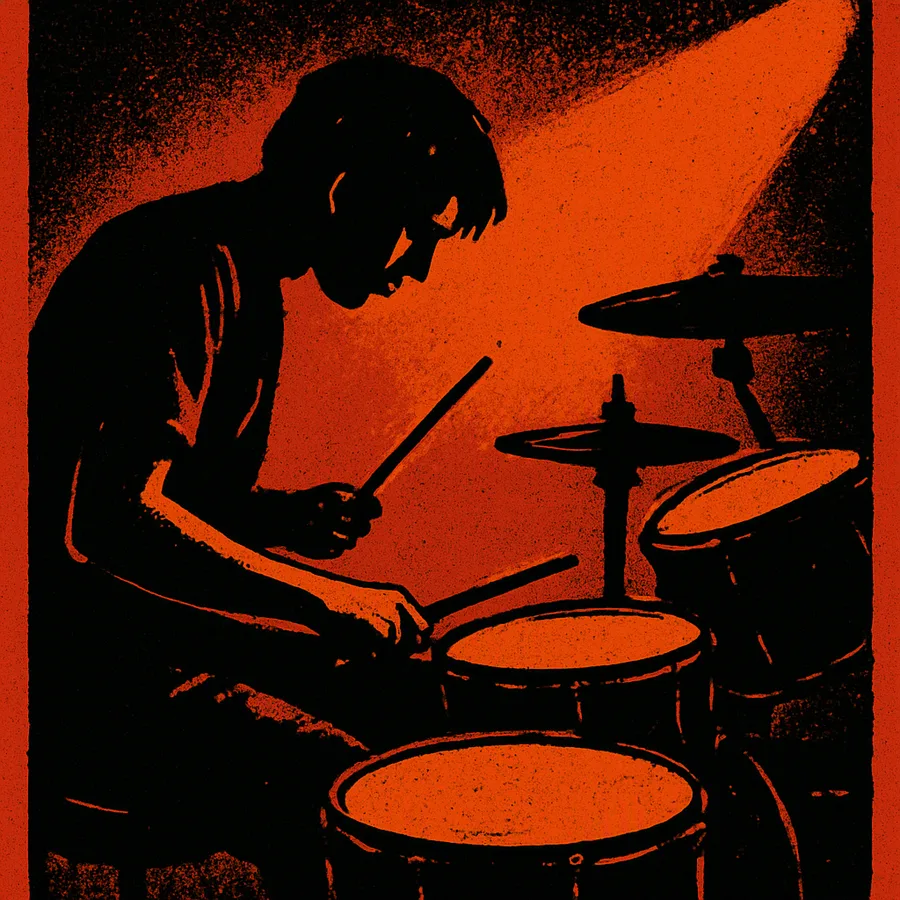
His patterns are often asymmetrical—he'll accent the off-beat, or drop a beat entirely, keeping the listener off balance. On 'Washer,' his playing is almost gentle, a steady pulse under McMahan's murmured vocals. On 'Good Morning, Captain,' he builds to a crashing, cathartic finish. Walford makes the dynamics feel organic, not forced.
🕰️ Why they last
Slint's influence is everywhere in modern rock, from the post-rock of Godspeed You! Black Emperor to the math-rock of Don Caballero to the emo of Mineral. But their real legacy is a songwriting mechanic: the slow build.
They understood that a payoff means nothing without a setup. Their songs often start with a single repeated figure, add layers, then strip everything away before the final release. It's a structural trick that countless bands have copied, but few have executed with Slint's restraint.
People still put on Spiderland because it feels like a secret, and secrets are worth keeping.
🔍 Curiosities
- The band's name is often said to come from a friend's nickname for a dog, though no one has ever confirmed it.
- Spiderland was recorded in a single weekend, with the band tracking most of the songs live in the studio.
- Despite their cult status, Slint rarely gave interviews and played few shows during their original run, adding to their mystique.
- The 2005 reunion tour was their first live appearance in over a decade, and they reportedly turned down a lucrative offer to headline a major festival.
💭 A final thought
Slint never asked to be loved. They made music that was difficult, insular, and often unsettling. But that's precisely why it sticks. In a world of bands desperate for your attention, Slint demanded your patience—and then rewarded it.
Put on Spiderland late at night, with the lights off. You'll hear something you didn't know you were missing.
🎧 Essential tracks
Breadcrumb Trail 1991 - Spiderland
The opening guitar line stops and starts like a conversation you're not sure you're part of. McMahan's spoken vocals sound like a warning. When the band finally locks into a groove, it's a relief and a threat at the same time.
Listen: Spotify · Apple Music · YouTube
Nosferatu Man 1991 - Spiderland
The rhythm section gallops while the guitar plays a slashing, repetitive figure. McMahan's delivery is almost conversational, which makes the sudden shifts into noise feel like a betrayal. It's the most aggressive song on the album.
Listen: Spotify · Apple Music · YouTube
Don't Get Too Close to That 1989 - Tweez
A bassline that feels like it's walking on eggshells. The song is tense and claustrophobic, with Walford's drums providing a nervous pulse. It's a reminder that Slint's early sound was more abrasive and less atmospheric.
Listen: Spotify · Apple Music · YouTube
Washer 1991 - Spiderland
The cleanest, most melodic moment in Slint's catalogue. Pajo's guitar is almost pretty, and McMahan's vocals are at their most vulnerable. The song builds to a quiet, devastating climax that never quite resolves.
Listen: Spotify · Apple Music · YouTube
Good Morning, Captain 1991 - Spiderland
The final track on Spiderland and the band's definitive statement. It's a slow burn that erupts into McMahan's iconic scream. The release is cathartic, but it's also the sound of a band walking away from everything they've built.
Listen: Spotify · Apple Music · YouTube
🔗 Source
Slint Wikipedia

Comments (0)
Leave a Comment
Be the first to comment!