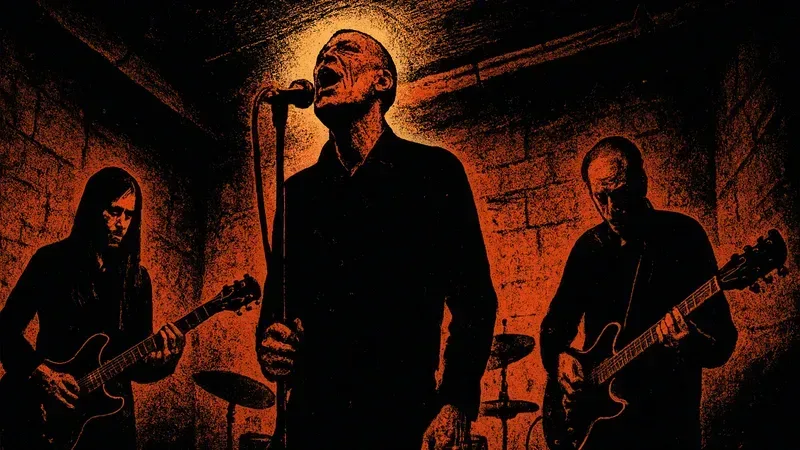
Put on Filth and the first thing you notice is not a riff. It is a physical pressure. The guitars are tuned low and played slow, the drums hit like someone kicking a door, and Michael Gira does not sing so much as intone from the back of a very dark room. It is ugly on purpose. And it is the beginning of one of the strangest arcs in American underground music.
👀 At a Glance
- Subgenre: Experimental rock, noise rock, post-punk
- Years active: 1981–1997, 2010–present
- Origin: New York City
- Core lineup: Michael Gira, Jarboe, Norman Westberg
- Key label: Young God
Swans are the rare band that started at the extreme and then moved inward. They came out of the no wave scene, survived it, and spent the next three decades dismantling their own sound.
ℹ️If you know them only as the loudest band in New York, you know half the story. The other half is quiet, melodic, and just as unsettling.
🎸 History
Michael Gira formed Swans in 1981, drawing on the wreckage of no wave and his own misanthropic streak. The early records were brutal and repetitive.
In 1986, Jarboe joined, and the band began folding melody and structure into the noise. She and guitarist Norman Westberg became Gira's steadiest collaborators.
Swans dissolved in 1997, then returned in 2010 with a new lineup and a slower, heavier, more patient sound. They have remained active since, with Gira as the only constant.
🚧 The Case Against Them
The early albums are genuinely hard to sit through. That is the point, but it is also a real barrier. The band's first decade can feel like one long test of endurance, with little variation in tempo or texture.
Later, the reunion era risks the opposite problem: songs stretched past ten minutes, building so slowly that the payoff can feel like a reward for patience rather than a musical event. And Gira's lyrics, always bleak, can tip into self-seriousness.
⚠️None of this is a reason to dismiss them. It is a reason to know what you are getting into.
⚖️ The Paradox
Swans are at their best when they are not being loud. The early brutality exists so that the later quiet feels earned. When Gira whispers over a single repeating guitar figure, the absence of noise becomes the loudest thing in the room.
The band's whole career is a study in contrast, and the contrast only works because they went so far in one direction first.
🔊 Sonic Identity: The Early Years
The early Swans sound is built on repetition and weight. Guitars are tuned down, played with a slow, mechanical attack. The drums are dry and forward in the mix. Gira's voice is a bark, a growl, a chant. There is almost no melody.
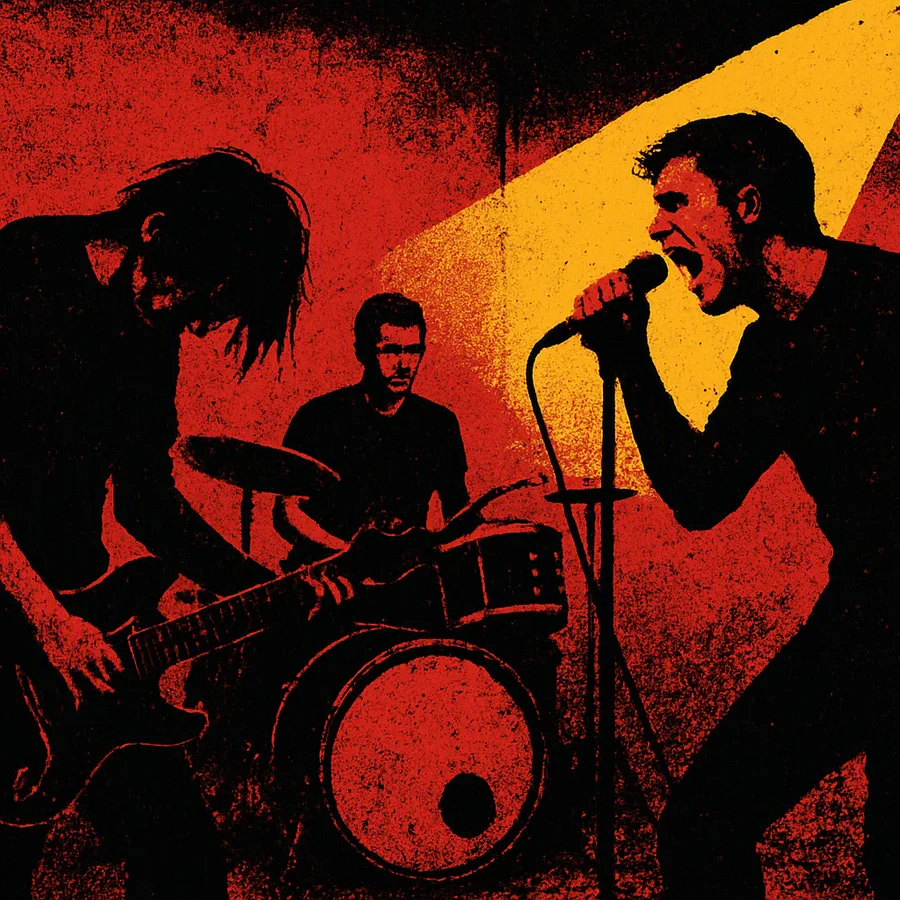
The songs do not develop so much as they accumulate. A single chord can last for minutes, and the tension comes from waiting for something that never quite arrives. It is music as endurance, and it is remarkably effective.
🎹 Sonic Identity: The Jarboe Era
When Jarboe joined, the band gained a second voice and a new palette. Her keyboards and vocals introduced a gothic, almost hymnal quality. Songs like Love Will Save You show how far they could move from the early noise without losing their unease.
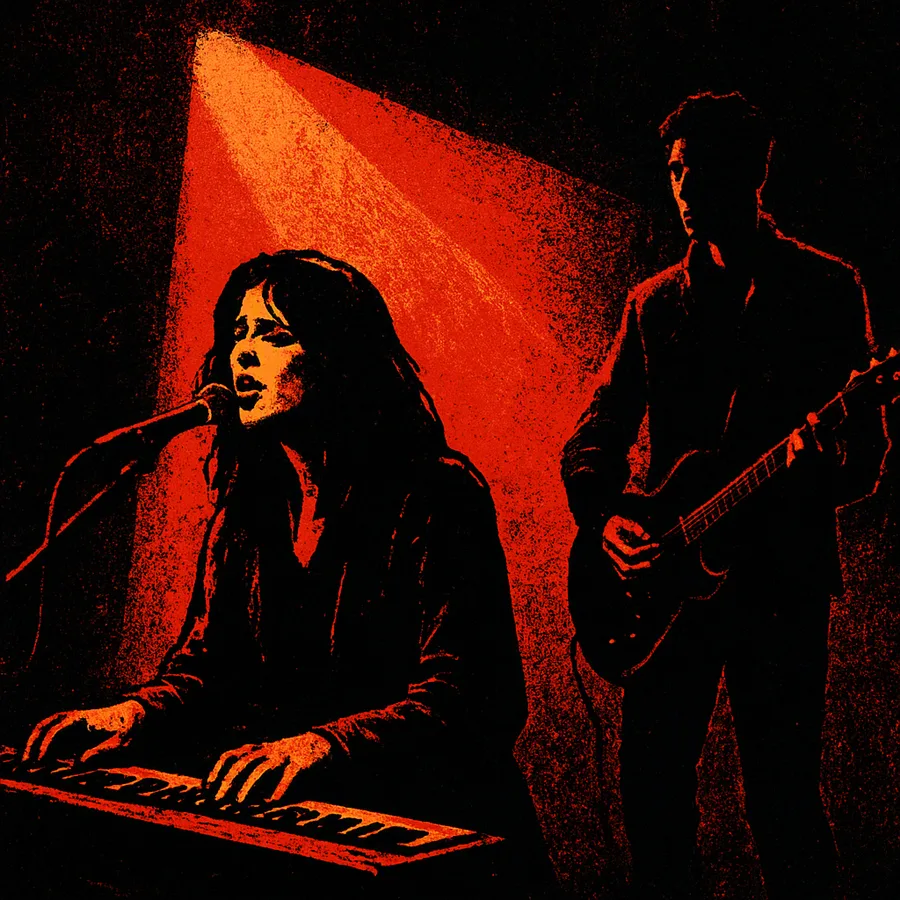
The production became cleaner, the arrangements more spacious. Gira still growled, but now there was something to growl against. This is the era that made Swans more than a noise band.
🧱 Why They Last
Swans influenced a generation of bands who understood that volume is an instrument, not a genre. But their real legacy is structural. Gira writes songs that build through repetition, adding one element at a time until the whole thing feels inevitable.
It is a trick borrowed from minimalism and applied to rock. That is why their music still sounds like nothing else: it is not about riffs or hooks, but about the slow accumulation of pressure.
💡When it finally breaks, it feels like a release you earned.
💡 Curiosities
- The band name came from a job Gira held as a young man, though he has never said exactly what it was.
- Jarboe released a series of solo albums during her time in Swans, exploring similar dark, experimental territory.
- Gira founded Young God Records, which has released much of Swans' later work as well as albums by other experimental artists.
- The reunion in 2010 was not a nostalgia trip. The new lineup played mostly new material, and the old songs were radically reworked.
🎧 Essential Tracks
Stay Here 1984 - Cop
A single bass figure repeats for nearly five minutes while Gira chants over it. The drums are mixed so dry they sound like someone hitting a cardboard box. It is hypnotic and unpleasant at the same time, which is exactly the point.
Listen: Spotify · Apple Music · YouTube
Time Is Money (Bastard) 1986 - Greed
The closest early Swans came to a hook. A distorted guitar riff repeats while Gira screams about money and sex. The rhythm section locks into a groove that is almost danceable, then refuses to resolve. It is noise you can nod your head to.
Listen: Spotify · Apple Music · YouTube
Love Will Save You 1991 - White Light from the Mouth of Infinity
Jarboe's vocal is the center here, clear and almost gentle. The arrangement is sparse, with acoustic guitar and a slow, deliberate build. It shows how far the band had moved from the early noise without losing their sense of dread.
Listen: Spotify · Apple Music · YouTube
Celebrity Lifestyle 1995 - The Great Annihilator
A relatively straightforward rock song, with a driving beat and a chorus that actually lands. Gira's lyrics are at their most sardonic. It is the sound of a band that had learned to write songs without abandoning their weirdness.
Listen: Spotify · Apple Music · YouTube
Oxygen 2014 - To Be Kind
The reunion era in one track. A single riff repeats for minutes, gradually adding layers of guitar and percussion until the whole thing feels like it might collapse. The payoff, when it comes, is not a chorus but a release of tension.
Listen: Spotify · Apple Music · YouTube
Screen Shot 2016 - The Glowing Man
A late-career highlight that builds from a quiet, almost folk-like opening into a wall of sound. The transition is seamless, and Gira's voice moves from whisper to roar without ever feeling forced. It is a masterclass in dynamics.
Listen: Spotify · Apple Music · YouTube
🏁 Final Note
Swans are not for every mood. They are for the mood when you want music to feel like weather. The early records are a storm. The later ones are the silence after. Both are necessary.
💡Start with the quiet ones, then go back and hear where the quiet came from.
📝 Source
Swans (band) Wikipedia

Comments (0)
Leave a Comment
Be the first to comment!