🤖 Introduction
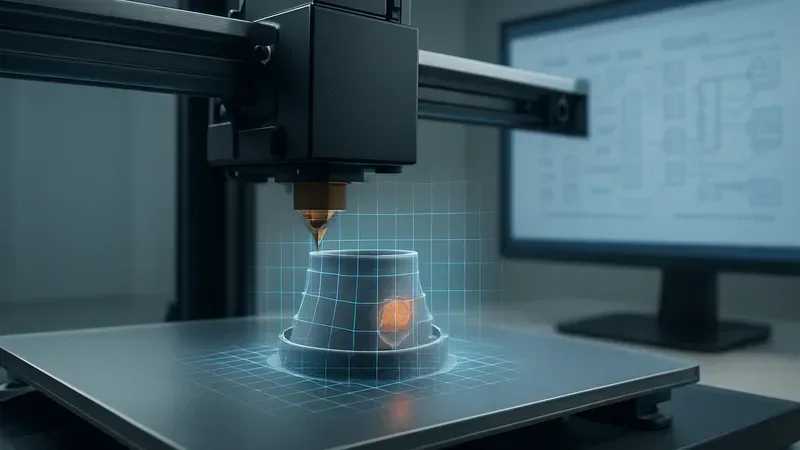
This study tested whether artificial intelligence (AI) could inspect the quality of 3D-printed objects. The goal was to catch defects during printing to save time and materials.
🔬 What the study did
The researchers used transfer learning, a technique where pre-trained AI models are adapted for a new task, combined with ensemble learning, which combines multiple models. They tested these AI models on images of 3D-printed objects to classify them as good or defective.
The study did not specify how many objects or people were involved.
📊 What it found
- ✅ Model combinations using
VGG16andVGG19had the highest accuracy in most situations. - ✅ Classification accuracy was not significantly affected by differences in object color.
- ✅ The method reduced time and material wastage by catching defects early.
✅ What it means
The AI approach effectively identified printing defects. The VGG16 and VGG19 models performed best, and color did not hinder accuracy. This suggests a practical tool for improving 3D printing quality.
⚡ Study vs. claim
The study tested AI for quality inspection of 3D-printed objects. It does not make a broader health or longevity claim.
🚫 What it does NOT show
- It did not test this method on human health or aging.
- It did not compare AI to human inspection.
- It did not assess long-term reliability of the method.
📋 Evidence level
Study type: not reported.
📈 Confidence indicator
Confidence: Low to moderate — because the study type is not clearly specified.
🔒 How much to trust it
Trust tier: Moderate. The study type is not clearly specified, so treat the findings with healthy caution.
⚠️ Limitations
- Study type not clearly specified.
- Sample size and details of objects not reported.
- No comparison to other inspection methods.
❓ Open questions
- How well does this method work on different 3D printers?
- Can it detect all types of defects?
- Is it cost-effective for real-world use?
📝 Your action plan
- If you use 3D printing, consider exploring AI-based inspection tools.
- Discuss with a professional about integrating quality control systems.
- Stay updated on research as this technology evolves.
💡 Takeaway
AI models, especially VGG16 and VGG19, can effectively inspect 3D printing quality, but more research is needed.
This summary is for general information only and is not medical advice. Talk to a qualified professional before changing anything about your health.
📄 Source
Three-Dimensional Printing Quality Inspection Based on Transfer Learning with Convolutional Neural Networks.. Sensors (Basel, Switzerland). 2023 PubMed
📚 Related Articles
- Which Exercise Helps Older Adults With Cognitive Impairment Most? - Explore how mind-body exercise benefits older adults with cognitive impairment, a different application of AI in health.

Comments (0)
Leave a Comment
Be the first to comment!