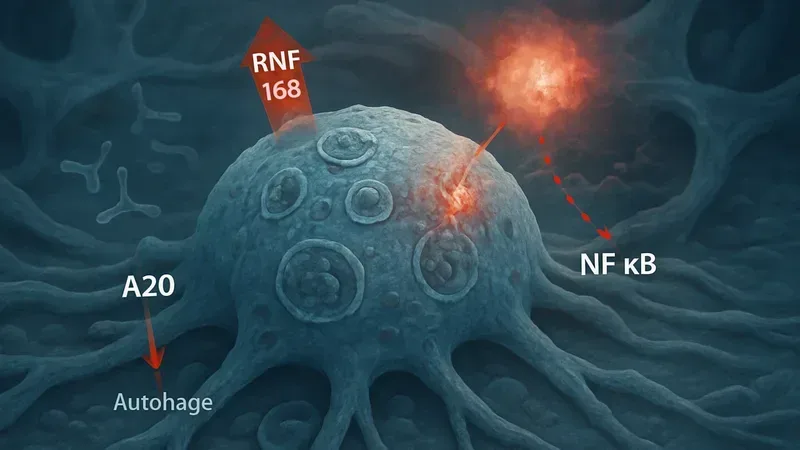
This study looked at how a process called autophagy (a cell cleanup system) and two proteins, A20 and RNF168, interact in lupus nephritis (LN), a kidney complication of lupus. The research used human cells and mouse cells.
🔬 What the study did
The study measured A20 and RNF168 levels in podocytes (kidney cells) from lupus-prone mice and people with LN. It also used lab-grown podocytes where RNF168 was silenced, A20 was overexpressed, or autophagy-related gene Atg5 was altered. The goal was to see how these changes affect DNA repair and NF-κB activation.
📊 Key findings
- ✅ Podocyte autophagy was overactive in LN.
- ✅ Overactive autophagy led to lower A20 and higher RNF168 levels.
- ✅ Silencing RNF168 or restoring A20 reduced NF-κB activation and improved DNA repair.
- ✅ Autophagy levels did not change when RNF168 was silenced or A20 restored.
- ✅ Activated A20 weakened the effect of autophagy on RNF168.
ℹ️Biomarker study: This research measured protein changes and cell behavior, not whether people lived longer or had fewer symptoms.
🧠 What it means
The findings suggest that in lupus nephritis, too much autophagy reduces A20, which then allows RNF168 to increase and activate inflammation.
⚖️ Study vs. claim
The study tested the role of autophagy, A20, and RNF168 in LN cells. It does not make a broader health claim about treating lupus or preventing kidney disease in people.
🚫 What it does NOT show
- It did not test whether these changes cause LN in humans.
- It did not measure long-term health outcomes like kidney function.
- It did not test treatments in people.
- It did not establish safety or effectiveness of targeting these pathways.
📈 Evidence level
An observational study in human and mouse cells.
🎯 Confidence indicator
Confidence: Low to moderate — observational cell study with limited direct human data.
🛡️ How much to trust it
Trust tier: Moderate. This is an observational human study—it shows association, not proof of cause. Evidence in people is limited to cell measurements, not whole-body outcomes.
This is early-stage research, not a proven treatment.
⚠️ Limitations
- Cell-based and animal model, not a human trial.
- Small sample of human cells from LN patients.
- No direct test of disease progression or symptoms.
- Safety and long-term effects not assessed.
❓ Open questions
- Do these protein changes actually cause LN in people?
- Can targeting autophagy or RNF168 improve kidney health?
- Are these findings consistent across different patient groups?
📋 Your action plan
- ✅ Understand that this is early-stage research, not a proven treatment.
- ✅ Discuss any questions about lupus or kidney health with a doctor.
- ✅ Do not attempt to change autophagy or protein levels on your own.
- ✅ Watch for future human studies on these targets.
- ✅ A proven human plan does not exist yet.
💡 Takeaway
This cell study links overactive autophagy to inflammatory changes in lupus nephritis, but human evidence is not established.
⚠️This summary is for general information only and is not medical advice. Talk to a qualified professional before changing anything about your health.
📝 Source
Degradation of Ubiquitin-Editing Enzyme A20 following Autophagy Activation Promotes RNF168 Nuclear Translocation and NF-κB Activation in Lupus Nephritis.. Journal of Innate Immunity. 2023 PubMed

Comments (0)
Leave a Comment
Be the first to comment!