📜 About the Game
- Release: 1998
- Developer: Tecmo
- Publisher: Tecmo
- Platform: PlayStation
- Genre: Tactical role-playing game
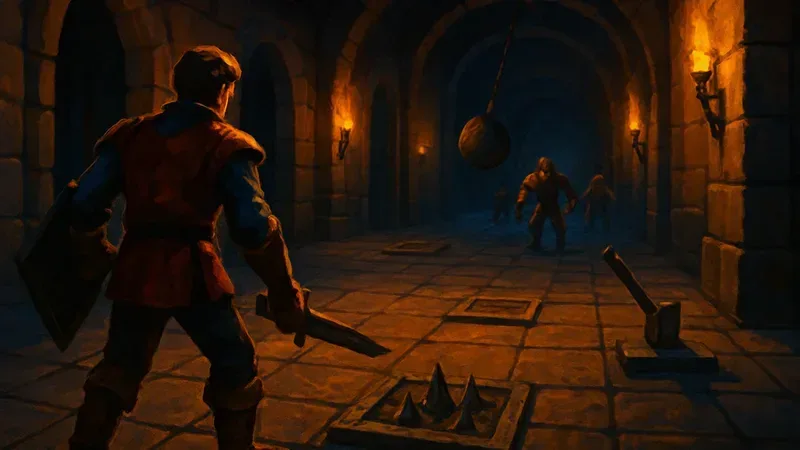
You play as a character who must survive by luring enemies into elaborate traps. It arrived in the late 90s, when most RPGs focused on direct combat.
🎭 The Experience
Deception feels like being the villain in your own story. Instead of charging into battle, you wait in a dark castle, setting up spike traps, swinging pendulums, and rolling boulders. The mood is tense and methodical—every step of an enemy is a chance to spring a deadly surprise.
🎮 How It Plays
You place traps on a grid-based floor before enemies enter. Each trap has a cost and a trigger zone. The core loop is luring foes into your kill zone, then watching them get crushed, impaled, or burned. You earn points to buy better traps, unlocking new ways to destroy.
💡Core mechanic: You never attack directly—only set traps and wait. This passive combat approach is what makes the game stand out.
✨ What Makes It Special
- ✅ Passive combat: you never attack directly—only set traps and wait.
- ✅ Traps chain together: a rolling boulder can knock an enemy into a pit.
- ✅ You control the battlefield layout, not just your character's stats.
- ✅ The game scores your kills with style bonuses for creative trap combos.
🕹️ The Retro Charm
Low-poly 3D characters move stiffly over pre-rendered backgrounds. The camera is fixed, giving each room a diorama feel. Textures are blocky, and the interface uses chunky menus. It looks like a PlayStation tech demo that grew into a full game.
🔊 Sound & Atmosphere
The music is sparse and eerie—mostly ambient drones and the occasional sting when a trap hits. Sound effects are crunchy: the thud of a falling block, the scream of an impaled enemy. It makes every kill feel brutal and final.
The game turns the RPG formula on its head by making you the trapper, not the warrior.
⚖️ Then vs. Now
- Still works: the trap-placement strategy feels fresh and unique.
- Feels dated: the camera can hide enemies, making planning frustrating.
- Still works: chaining traps for high scores is addictive.
- Feels dated: slow movement and long load times test patience.
- Still interesting: the passive combat idea is unlike anything modern.
🔍 Curiosities
- The series was known as "Trap Gunner" in some early development materials.
- Each game in the series adds a new trap type, like explosives or gravity wells.
- The protagonist of the first game is a woman seeking revenge, rare for 1998.
🏁 Why Remember It?
Deception turned the RPG formula on its head by making you the trapper, not the warrior. It's worth remembering for anyone who likes creative strategy and dark, quiet tension. A game that let you be the monster.
📖 Sources
Deception (video game series) Wikipedia
📚 Related Articles
- Carnage Heart: Program Your Own War Machines - Another PlayStation game where you control indirectly—programming mechs to fight autonomously instead of direct combat.
- Vandal Hearts: Konami's Tactical RPG With a Bloody Secret - A tactical RPG from the same era with a darker tone and strategic battles, but with direct combat and a bloody story.
- Koudelka: The Haunted Monastery RPG You Probably Missed - A gothic horror RPG with turn-based grid combat and a haunting atmosphere, similar to Deception's dark, methodical tension.

Comments (0)
Leave a Comment
Be the first to comment!