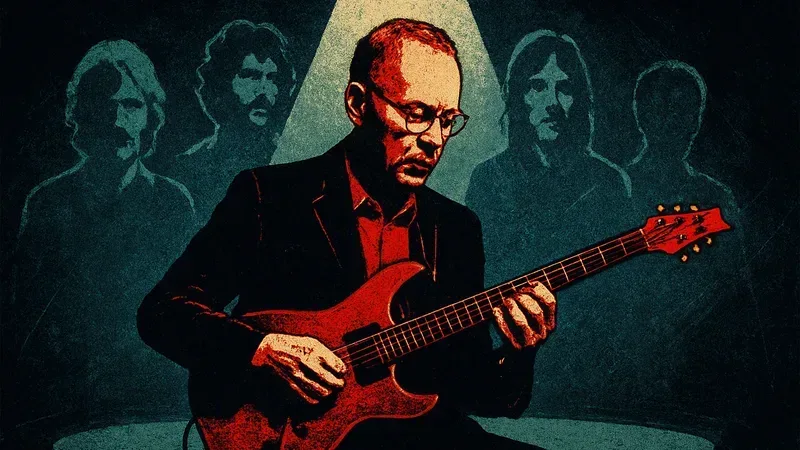
King Crimson were an English progressive rock band formed in London in 1968 by Robert Fripp, Michael Giles, Greg Lake, Ian McDonald, and Peter Sinfield. Guitarist and leader Fripp remained the only constant member throughout the band's history. The band drew inspiration from a wide variety of music, incorporating elements of classical, jazz, folk, heavy metal, gamelan, blues, industrial, electronic, and experimental music. They also exerted a strong influence on the early 1970s progressive rock movement, including on contemporaries such as Yes and Genesis, and continue to inspire subsequent generations of artists across multiple genres. The band has earned a large cult following, especially in the 21st century.
🎸 At a Glance
- Style: Progressive rock with jazz, classical, and industrial elements
- Years active: 1968–2021
- Origin: London, England
- Core lineup: Robert Fripp (guitar, leader)
- Key era: Early 1970s, 1980s, 1990s–2000s
📜 History
King Crimson formed in London in 1968, the brainchild of guitarist Robert Fripp. The original lineup released a debut that immediately set them apart from the rock mainstream. Over the next five decades, the band dissolved and reformed multiple times, with Fripp as the sole constant. Each incarnation brought a new sound—early prog, then a more experimental period, then a leaner, more rhythmic 1980s lineup, and finally a double-trio configuration that explored industrial textures. The band officially ended in 2021.
ℹ️Note: The band's name was chosen by lyricist Peter Sinfield, who liked the sound of "King Crimson" as a synonym for Beelzebub.
⚖️ The Case Against Them
King Crimson's music can feel cerebral to the point of coldness. The intricate compositions sometimes lack emotional warmth, and the band's frequent personnel changes meant that no single lineup ever fully settled. Some listeners find the later albums overly dense or academic, prioritizing structure over feeling.
🔄 The Constant Reinvention
The band's greatest strength—constant reinvention—is also its most confusing feature. A listener who loves the early 1970s material may find the 1980s work jarring, and vice versa. Yet this restlessness is what kept King Crimson alive. Fripp's refusal to repeat himself meant that each era had its own identity, even if that identity sometimes alienated fans of the previous one.
“The band's greatest strength—constant reinvention—is also its most confusing feature.”
🥁 The Rhythm Section
King Crimson's rhythm sections were never just timekeepers. From the early days, the drums and bass worked in complex, interlocking patterns that gave the music a nervous, propulsive energy. In the 1980s, the addition of a second drummer (or, later, a second bassist) created a layered, polyrhythmic foundation that few rock bands attempted.
🎸 The Guitar
Robert Fripp's guitar playing is the band's most recognizable element. He favored a clean, attacking tone, often using a technique called Frippertronics—tape loops that allowed him to layer sounds in real time. His solos were less about flashy speed and more about building tension through repetition and unexpected intervals. This approach gave the music a sense of controlled chaos.
💡Did you know? Fripp developed his own guitar tuning, which he used for many recordings, giving the instrument a distinctive, bell-like tone.
🌟 Why They Matter
King Crimson's influence extends far beyond progressive rock. Their willingness to blend classical structure with rock energy, jazz improvisation, and industrial noise opened doors for countless musicians. The band's approach to rhythm—especially the use of odd time signatures and polyrhythms—became a template for math rock and experimental metal. Their cult following remains strong, and their music continues to challenge listeners decades later.
🧐 Curiosities
- The band's name was chosen by lyricist Peter Sinfield, who liked the sound of "King Crimson" as a synonym for Beelzebub.
- Fripp developed his own guitar tuning, which he used for many recordings, giving the instrument a distinctive, bell-like tone.
- The 1980s lineup featured two guitarists, two bassists, and two drummers, creating a dense, layered sound that was both rhythmic and textural.
- The band's debut album was famously recorded in just a few days, capturing the raw energy of the original lineup.
💭 One Last Thing
King Crimson's music rewards patience. The first listen might feel like a puzzle, but the pieces fit together over time. The band's best work doesn't explain itself—it simply exists, daring you to keep up.
🎧 Essential Tracks
21st Century Schizoid Man
The opening track of the debut album, it established the band's signature blend of heavy rock riffs, jazz-influenced saxophone, and apocalyptic lyrics. The distorted vocal and abrupt tempo changes remain startling.
Listen: Spotify · Apple Music · YouTube
Epitaph
A haunting ballad that showcases the band's ability to create emotional depth through orchestral arrangements and Mellotron. The song's melancholy melody and Lake's vocal delivery are central to its power.
Listen: Spotify · Apple Music · YouTube
The Court of the Crimson King
The closing track of the debut, it combines medieval imagery with a driving rock beat. The interplay between the Mellotron and guitar creates a sense of grandeur that defined the band's early sound.
Listen: Spotify · Apple Music · YouTube
Red
The title track of the final album before the band's first hiatus, it is a brutal, instrumental piece that foreshadows the heavier, more aggressive direction of later incarnations. The bass and drums lock into a relentless groove.
Listen: Spotify · Apple Music · YouTube
Starless
A long, multi-section piece that builds from a melancholic opening to a powerful, saxophone-led climax. It is often considered the band's masterpiece, encapsulating their ability to combine beauty and intensity.
Listen: Spotify · Apple Music · YouTube
Frame by Frame
A standout from the 1980s era, this track features Fripp and Adrian Belew playing intertwined guitar lines at breakneck speed. The rhythmic complexity and tight interplay define the band's later sound.
Listen: Spotify · Apple Music · YouTube
📚 Sources
King Crimson Wikipedia
📖 Related Articles
- Godspeed You! Black Emperor: The Band That Waits - Another band that builds patient, instrumental epics — a natural next step if you love Crimson's long-form tension.
- Swans: The Band That Made Volume a Weapon - Swans share King Crimson's appetite for punishing volume and structural reinvention across decades.
- Sonic Youth: Guitars That Refused to Behave - Like Fripp, Sonic Youth turned unconventional guitar techniques into a band's entire identity.

Comments (0)
Leave a Comment
Be the first to comment!