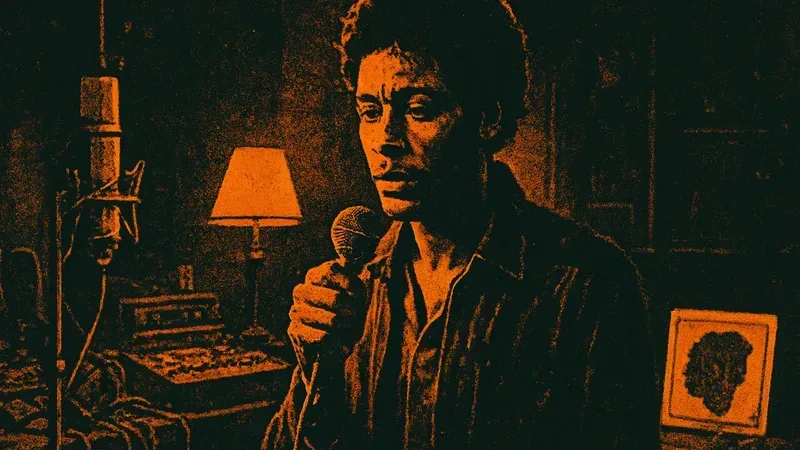
Arthur Lee wrote songs that sounded like they were being whispered from a different room. The arrangements were precise but the feeling was loose. Love made one album that people still argue about, and the rest of their catalogue lives in the long shadow of that record.
📋 At a Glance
- Style: Psychedelic rock, folk rock, garage
- Years active: 1965–1975, occasional reunions
- Origin: Los Angeles, California
- Core lineup: Arthur Lee, Bryan MacLean, Johnny Echols, Ken Forssi, Michael Stuart
- Key era: 1965–1967
- Label: Elektra
🎵 The Pitch
Love was one of the first racially integrated rock bands in America, but that fact mattered less than the music. Lee wrote folk-rock songs that drifted into psychedelic territory, often dressed with orchestral flourishes. The band never sold many records, but their third album became a touchstone for anyone who cared about what rock could do when it stopped trying to be rock.
📜 History
Love formed in Los Angeles in 1965. Lee was the frontman and primary writer. The band signed with Elektra and scored a local hit with "My Little Red Book".
Their first two albums were solid but uneven. Then came Forever Changes in 1967, recorded under chaotic conditions with session musicians filling in for band members who had quit or been fired. The album flopped commercially. Love continued through lineup changes until 1975, then sporadically reformed. Lee died in 2006.
⚠️ The Case Against Them
Love is a one-album band. After Forever Changes, the records lost direction. Lee's control over the material became stifling. The later albums have moments but no sustained vision. Even the early work, while energetic, sounds like a band still figuring out what it wanted to be.
⚠️Caution: The later albums lack the sustained vision of Forever Changes. Even the early work sounds like a band still figuring out its identity.
🎯 The One-Album Trap
Few bands have been so completely defined by a single record. Forever Changes is so good that it makes everything else sound like a footnote. That is not entirely fair—the first two albums have worthwhile songs—but it is close to the truth.
The tension is that the album's perfection came from chaos: session players, a producer who let Lee experiment, and a deadline that forced decisions. Love never recaptured that accident.
🎼 How the Arrangements Worked
The key to Love's sound was contrast. Lee's vocals stayed calm and slightly detached, even when the lyrics turned dark. The rhythm section played straight, almost stiff, while the guitars and horns floated around them.
On Forever Changes, the orchestration was not decorative—it was structural. Trumpets and strings carried melodies that the guitars might have played on a different record. The result was music that felt both intimate and cinematic.
ℹ️Key insight: The orchestration on Forever Changes wasn't decorative—it was structural. Trumpets and strings carried melodies that guitars might have played on a different record.
💡 Why Love Still Matters
Forever Changes remains a reference point for songwriters who want to combine folk simplicity with psychedelic complexity. The album proved that rock did not need to be loud or aggressive to be intense.
Lee's refusal to follow trends—he rejected the harder sound that was taking over in 1967—meant the record aged better than most of its contemporaries. It sounds like nothing else from its year.
Curiosities
- ✅
"My Little Red Book"was the first hit single released by Elektra Records. - ✅ Lee refused to tour for most of Love's career, which limited the band's exposure.
- ✅ The cover of Forever Changes shows the band in a graveyard, but the photo was taken in a Los Angeles park.
🏁 What Remains
Love made one record that does not need defending. The rest of the catalogue is for completists and historians. But that one record is enough. It still sounds like a band that knew exactly what it was doing, even if nobody else did.
🎶 Essential Tracks
My Little Red Book
The band's first hit, built on a simple garage-rock riff and Lee's cool vocal delivery. It shows the early sound before the psychedelic turn.
Listen: Spotify · Apple Music · YouTube
7 and 7 Is
A burst of raw energy with a frantic drum part and a sudden tempo shift. It hints at the aggression Love could summon when they wanted.
Listen: Spotify · Apple Music · YouTube
Alone Again Or
The album's opener, driven by a flamenco-tinged guitar line and a trumpet hook that carries the chorus. Lee's vocal stays relaxed against the ornate arrangement.
Listen: Spotify · Apple Music · YouTube
A House Is Not a Motel
Darker and more politically charged. The strings create tension rather than sweetness, and the rhythm section locks into a heavy groove.
Listen: Spotify · Apple Music · YouTube
The Red Telephone
A strange, drifting song with multiple sections that never quite resolve. The vocal harmonies and orchestral swells make it feel like a dream that turns sour.
Listen: Spotify · Apple Music · YouTube
You Set the Scene
The album's closing epic, stretching past six minutes with shifting dynamics and a triumphant brass section. It sums up the album's ambition in one track.
Listen: Spotify · Apple Music · YouTube
📖 Sources
Love (band) Wikipedia
📚 Related Articles
- The Pretty Things: Raw R&B Roots and a Psychedelic Leap - Another 60s band with a single ambitious album that overshadowed the rest of their uneven career.
- Nick Drake: The Quiet Guitar That Finally Got Heard - A cult artist whose small, perfect catalogue was only appreciated long after release.
- Television: The Band That Made Punk a Conversation - A band defined by two albums, with a similar story of influence far exceeding commercial success.

Comments (0)
Leave a Comment
Be the first to comment!