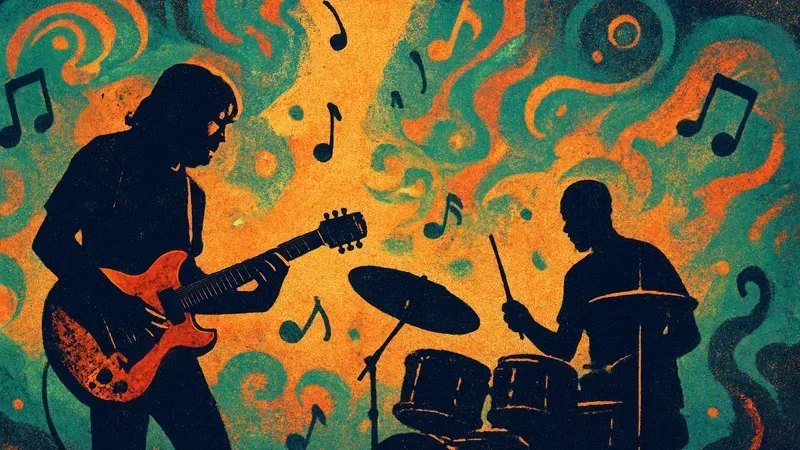
Spirit is the rare band whose best-known song is one of their least representative. 'I Got a Line on You' is a tight, driving rock single that got them on the radio. But the rest of their catalogue moves differently — looser, stranger, more willing to let a jam breathe or a melody drift into something unexpected. They were a pop band that kept wandering off the path.
📊 At a Glance
- Style: Rock, psychedelic rock, jazz-rock
- Years active: 1967–2000 (intermittent)
- Origin: Los Angeles, California
- Core lineup: Randy California, Ed Cassidy, Jay Ferguson, Mark Andes
- Key era: 1968–1970
🎸 The Band That Couldn't Stay Put
Spirit formed in Los Angeles in 1967, built around stepfather-and-son duo Ed Cassidy (drums) and Randy California (guitar). They added Jay Ferguson (vocals, keys) and Mark Andes (bass). Their early sound was a mix of pop hooks and extended improvisation, drawing from psychedelia and jazz.
They scored a hit with 'I Got a Line on You' in 1968, but their albums leaned toward the experimental. Personnel shifted over the years, and the band never recaptured that early momentum.
Spirit formed in Los Angeles in 1967, built around stepfather-and-son duo Ed Cassidy (drums) and Randy California (guitar).
⚠️ The Case Against Them
Spirit's catalogue is uneven. The same willingness to stretch out that made their best work interesting also produced tracks that feel aimless. Their later records, after key members left, lack the tension of the original lineup.
And for all their ambition, they never fully escaped the shadow of that one single. The casual listener knows them for a three-minute rock song; the deeper cuts require more patience than some are willing to give.
🎵 A Hit That Misleads
Here is the tension: Spirit made a perfect pop single, but that is not what they were. 'I Got a Line on You' is tight, efficient, and built for radio. The albums that followed — particularly their early run — are anything but. They let songs stretch, shifted tempos, and layered instruments in ways that rewarded attention but resisted easy consumption.
The single made them famous. The albums made them interesting. Those two things never quite aligned.
🎶 What They Sounded Like
Spirit's rhythm section was the foundation. Ed Cassidy played drums with a jazz feel — loose but precise, never rushing. Mark Andes held the bass down with a melodic touch, often stepping out of the pocket to follow Randy California's guitar.
That guitar was the band's signature: clean, trebly, and prone to long, winding lines that sounded more like a keyboard than a rock instrument. The vocals, usually Jay Ferguson, were straightforward and unadorned, leaving room for the instruments to carry the weight.
ℹ️Spirit's rhythm section was the foundation — Ed Cassidy on drums (jazz feel — loose but precise), Mark Andes on bass (melodic touch). The guitar was clean, trebly, with long winding lines.
🌟 Why They Stick Around
Spirit's best work holds up because it refuses to settle. Songs like 'Fresh Garbage' and 'Mechanical World' move through sections the way a good jazz tune does — not because they are showing off, but because the material demands it. The band had a pop instinct but no interest in staying inside the lines.
That combination made them hard to market but easy to admire. Decades later, their early albums still sound like a band figuring out what they could get away with, and enjoying the process.
🧐 Curiosities
- The band took its name from a book about the human spirit.
- Randy California's stage name came from a trip to California; his real name was Randy Wolfe.
- The band's manager also worked with Led Zeppelin, leading to occasional comparisons.
🏁 What Remains
Spirit made one undeniable single and a handful of albums that reward the effort. Their legacy is not in influence or sales but in the simple fact that they tried to make rock music that moved like jazz and thought like pop. That is a rare thing, and worth hearing.
🎧 Essential Tracks
I Got a Line on You
The hit single that made them famous. It is tight, efficient, and built for radio — a clear example of their pop side.
Listen: Spotify · Apple Music · YouTube
Fresh Garbage
Opens with a locked-in rhythm section. The bass and drums work together to create a groove that carries the entire track.
Listen: Spotify · Apple Music · YouTube
Mechanical World
Showcases Randy California's guitar work. The lines are clean, melodic, and wander without losing direction.
Listen: Spotify · Apple Music · YouTube
Uncle Jack
A deep cut with a distinctive bassline. The arrangement leaves space for each instrument to breathe, typical of their best work.
Listen: Spotify · Apple Music · YouTube
Nature's Way
A ballad with layered vocals and a restrained arrangement. It shows the band's softer side without losing their identity.
Listen: Spotify · Apple Music · YouTube
📚 Related Articles
- John Fahey: The Lonely Architecture of American Primitive Guitar - Like Spirit, Fahey rewards patient listening with intricate, genre-blending guitar work that defies easy categorization.
- The Meters: The Pocket Before the Flash - Another band whose best-known single doesn't capture their deep, improvisational groove—perfect for Spirit fans.
- King Crimson: The Band That Reinvented Itself by Staying the Same - A band that, like Spirit, balanced pop moments with sprawling experimentation and constant lineup changes.

Comments (0)
Leave a Comment
Be the first to comment!