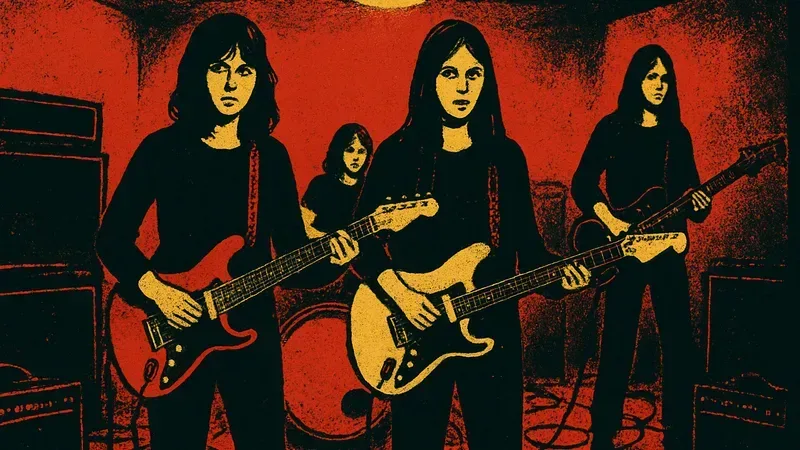
The guitars arrive first, clean and chiming, then the second guitar answers an octave up, and two voices trade the same line back and forth until you can't tell where one ends. That was Lush's whole trick, and it worked so well that most people missed the songs underneath.
📋 At a Glance
- Subgenre: Shoegaze, dream pop
- Years active: 1987–1996
- Origin: London, England
- Core lineup: Miki Berenyi, Emma Anderson, Chris Acland, Phil King
- Label: 4AD
⭐ Why They Matter
Lush were two women with guitars and a drummer who hit hard, which in late-80s London was already unusual. They got filed under shoegaze alongside their peers, but their songs were closer to pop — bright, melodic, and built on the tension between Miki Berenyi and Emma Anderson's voices. Their cultural footprint is smaller than it should be, partly because they stopped.
📖 History
Formed in London in 1987, Lush settled quickly into a lineup of Berenyi, Anderson, Steve Rippon and drummer Chris Acland. They were among the first bands the press called shoegaze, and their early EPs made that label stick. Phil King replaced Rippon on bass in 1991. They released several albums across the decade, moving from dense guitar noise toward sharper pop. Then Acland died, and in 1996 the band disbanded. That was the end of the original run.
⚠️ The Case Against Them
The shoegaze tag did them few favors. It flattened two distinct songwriters into one scene, and it let critics ignore how much of the catalogue is just well-built pop. Their middle records also sag under 90s production — reverb doing work that the arrangements should have done. And the band's later, poppier turn split the audience: some heard growth, others heard a group chasing a chart that was never going to have them.
🎭 The Paradox
The prettiest Lush songs are the ones with the most teeth. Anderson's guitar lines are sweet, but they sit against Berenyi's harder edge and Acland's stubborn backbeat. The noise isn't decoration — it's what makes the melody land. Strip it back and you'd have ordinary indie pop. Keep it and you get something that sounds like a fight happening inside a lullaby.
🎤 Two Voices, One Song
Berenyi and Anderson wrote separately and sang together, which is why the records never settle into one mood. Berenyi's voice is lower, drier, more conversational. Anderson's is brighter and more clipped. When they harmonize, the blend is slightly off — not perfect, and better for it. That friction is the band's signature, more than any pedal or amp.

🥁 The Drums That Hold It Up
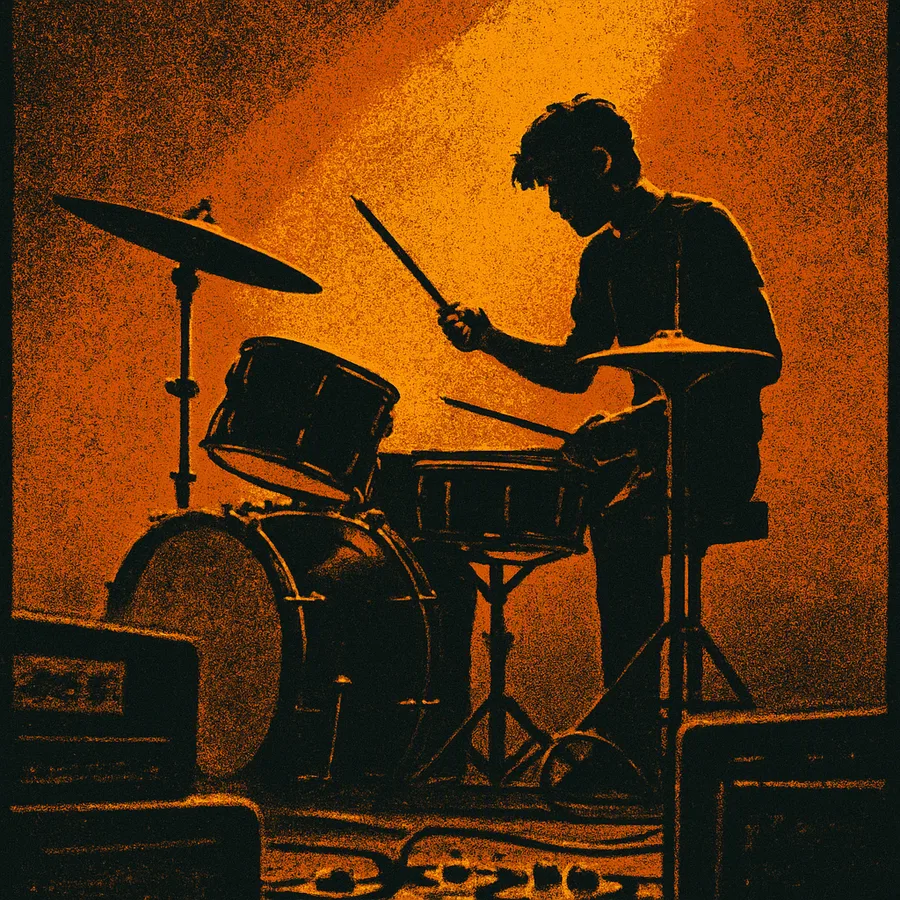
Chris Acland is the reason the early records don't float away. He played simple patterns with a heavy snare, pushing against the wash of guitars instead of joining it. On the faster songs he's almost punk; on the slow ones he leaves space. When people say Lush had a rock band hiding inside a dream-pop band, they mean him.
💫 Why They Last
Lush understood that a key change can do more than a guitar solo. Their best songs build to a moment where the harmony lifts and the second voice enters, and that release is the payoff. It's a structural trick, not a texture. That's why the songs survive the era's production: the mechanics are solid. Put one on and you hear songwriting, not a mood board.
🔍 Curiosities
- The band name came from a magazine — a short, soft word that fit the sound and the era.
- Phil King joined on bass in 1991, replacing original member Steve Rippon.
- They were among the first acts the music press labeled shoegaze, a tag the band never fully escaped.
- After Chris Acland's death, the group disbanded in 1996 rather than continue with a replacement.
🏁 Final Note
Most bands get remembered for a sound. Lush get remembered for a partnership — two writers, two voices, one rhythm section that refused to drift. The catalogue is uneven, and the story ends badly. But the good songs still do exactly what they did the first time: they hide a hook inside a wall of guitar and dare you to find it.
🎧 Essential Tracks

Sweetness and Light (1990 - Gala)
The template: a clean guitar figure, then the second guitar doubles it an octave up while the voices trade the melody. The drums stay dry and forward, which keeps the reverb from swallowing the song. It sounds like a band discovering its own formula in real time.
Listen: Spotify · Apple Music · YouTube
De-Luxe (1990 - Gala)
Built on a single repeated guitar line that never resolves, with Berenyi and Anderson singing almost in unison. The tension comes from what the song refuses to do — no big chorus, no release. It's the early sound at its most stubborn.
Listen: Spotify · Apple Music · YouTube
For Love (1991 - Spooky)
The arrangement opens up here, with more space between the guitars and a vocal that sits higher in the mix. The bridge is the moment: the drums drop out, the voices stack, and the song rebuilds itself. Proof the band could be patient.
Listen: Spotify · Apple Music · YouTube
Ladykillers (1996 - Lovelife)
A sharp left turn — fast, sneering, almost new wave. Berenyi's vocal is clipped and dry, and the guitars are trebly and close. It's the sound of a band deciding the shoegaze tag was a cage, and it works because the song is genuinely funny and mean.
Listen: Spotify · Apple Music · YouTube
Single Girl (1996 - Lovelife)
The pop turn at its best: a bright, almost chirpy melody over a rhythm section that keeps pushing. Anderson's guitar line is the hook, not the vocal. It sounds effortless, which is the hardest thing to fake.
Listen: Spotify · Apple Music · YouTube
Hypocrite (1994 - Split)
The middle-period sound at its most interesting — heavier, slower, with a guitar tone that verges on distortion. The payoff comes after the second chorus, when the harmony shifts and the song briefly opens up. It's the band at their most dramatic without being precious.
Listen: Spotify · Apple Music · YouTube
📚 Source
Lush (band) Wikipedia
📚 Related Articles
- Talk Talk: The Quiet After the Synth-Pop Storm - Another British band that traded an early sound for radical reinvention, then fell silent — a natural companion to Lush's arc.
- Slint: The Band That Whispered Until It Screamed - A band with a tiny catalogue and an outsized influence, cut short — the same question of what might have come next.
- Sonic Youth: Guitars That Refused to Behave - Guitar texture as the main event rather than decoration, the approach Lush built their wall of noise around.

Comments (0)
Leave a Comment
Be the first to comment!