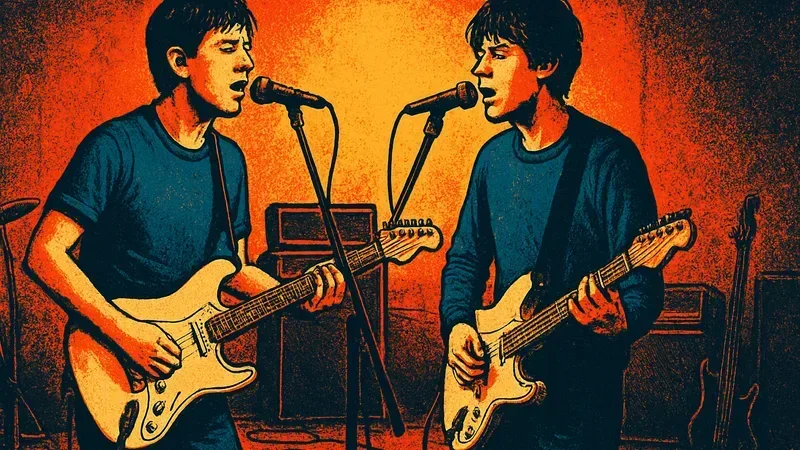
Listen to the first thirty seconds of 'Dreams Burn Down' and you hear the whole band's problem and its gift at once. Two guitars, both clean, both playing something that could be the lead. A bass that moves like a melody. Drums that push rather than pound. And somewhere above it, two voices, neither quite taking charge. Ride never resolved that argument. They just kept playing it.
📋 At a glance
- Subgenre: Shoegaze, alternative rock
- Years active: 1988–1996, 2014–present
- Origin: Oxford, England
- Core lineup: Andy Bell, Mark Gardener, Loz Colbert, Steve Queralt
- Label: Creation
🎤 Two singers, no leader
Most bands have a frontman. Ride had two songwriters who both sang, both played guitar, and both wrote in the same key of restless. Andy Bell's songs tend to lean forward — brighter, more driving, more likely to break into a sprint. Mark Gardener's tend to float, hazier, more willing to let a chord hang.
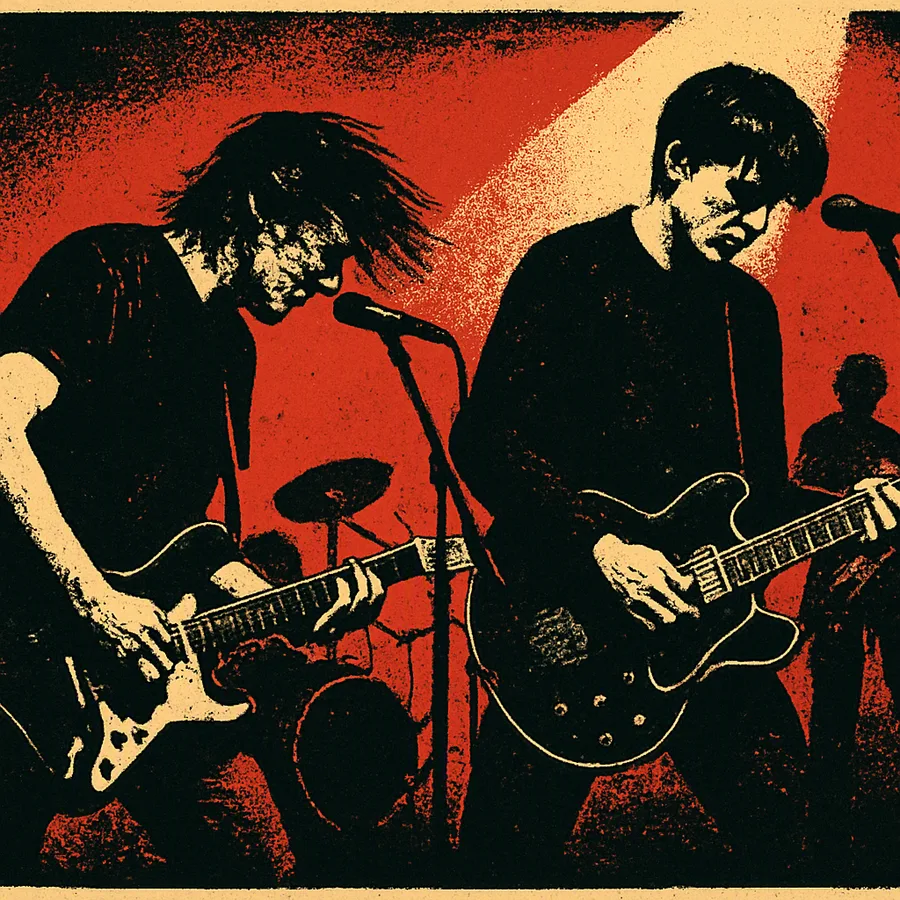
Put them in the same band and you get a group that sounds like it's politely disagreeing with itself, which is a stranger and more interesting thing than agreement.
📜 History
Formed in Oxford in 1988, Ride arrived on Creation Records just as the British music press was looking for something new to name. Their early EPs were fast and bright; their 1990 debut album was slower, wider, and more ambitious.
By 1992 they had swerved hard into a denser, more psychedelic sound, and by the middle of the decade the band had run out of road. They split in 1996, reunited in 2014, and have been playing and recording again since — a rare reunion that didn't feel like a cash-in.
⚖️ The case against them
The second album is the one to argue about. It's longer, murkier, and often sounds like a band trying to outgrow its own strengths before it had finished using them. Some of the later records coast on texture where earlier ones had momentum.
And the shoegaze tag, fairly or not, has always made them sound more passive than they are — as if the pedals were doing the work. They weren't. The songs were.
ℹ️Ride's career is best understood as an argument the band never settled — between two songwriters, and between ambition and restraint.
💡 Why the flaws are the point
The same instinct that made the second album bloated is the instinct that made the debut so good: a refusal to settle for the obvious version of a song. When it works, you get 'Leave Them All Behind' building for eight minutes and earning every one of them. When it doesn't, you get a mix where the guitars swallow the vocals.
The ambition is constant. The results vary. That's a more honest career than a tidy one.
🥁 The rhythm section is the melody
Steve Queralt's bass doesn't sit under the guitars — it runs alongside them, often playing a line you could hum on its own. Loz Colbert's drumming is the other half of that. He plays busy but never cluttered, pushing the beat just enough to keep the clean parts from floating away.
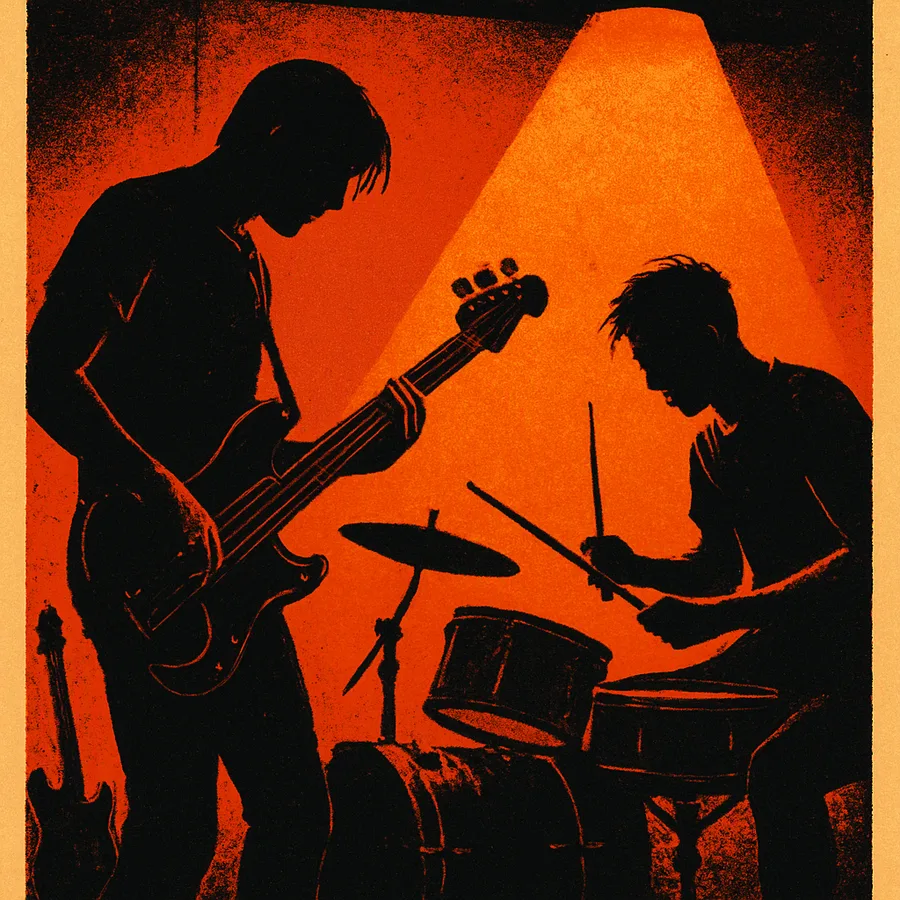
On the early singles, that rhythm section is what stops the band from sounding like a wash. It gives the haze a spine.
🔊 Clean, then loud, then clean again
Ride's signature move is dynamic whiplash. A verse will be almost fragile — two guitars picking, voices close and unadorned — and then the chorus opens up without warning, not with distortion but with volume and space.
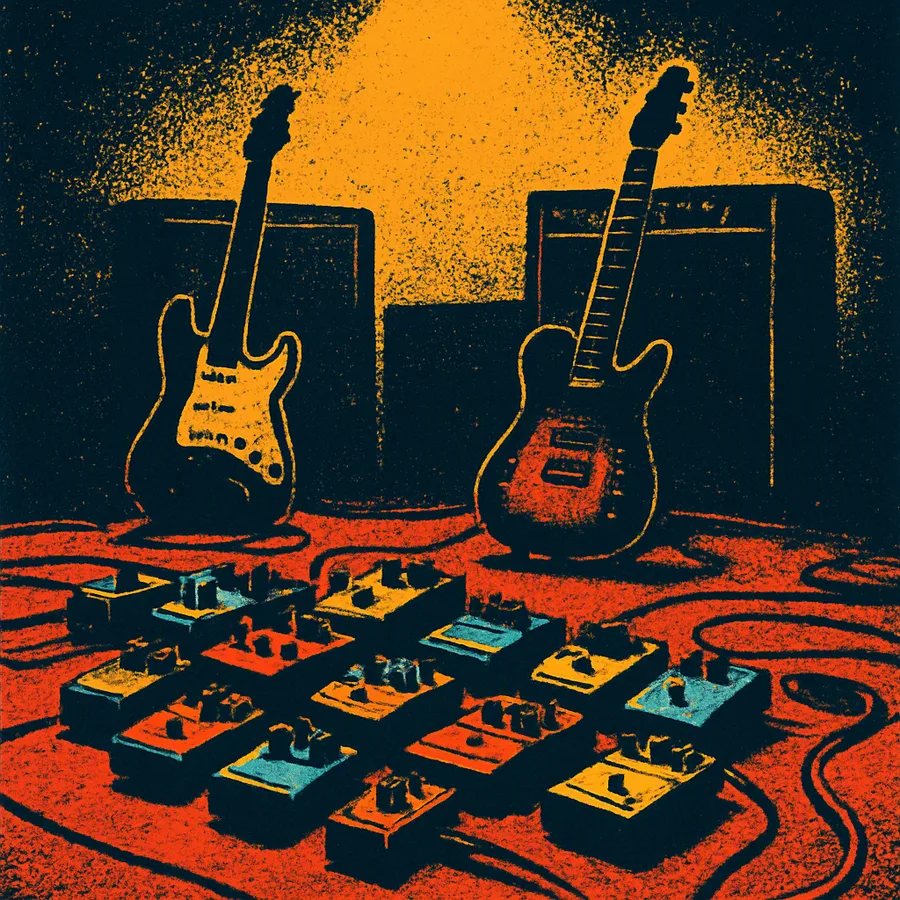
They rarely used fuzz as a crutch. The loud parts are loud because everything is suddenly allowed to ring. That's harder to pull off than it sounds, and it's why their best songs still feel like they're breathing.
🧩 Why they last
Ride's real influence isn't the pedals. It's the songwriting mechanic: two guitars that function as two voices, neither subordinate, plus a rhythm section that treats the bass as a second melody. Bands that came later borrowed the texture but often missed the counterpoint.
Listen to how 'Vapour Trail' ends — a string section arrives and the song doesn't collapse, it lifts. That's arrangement, not atmosphere. People still put these records on because the tunes survive the noise.
🔍 Curiosities
- The band name has nothing to do with the cymbal. It was chosen, like a lot of Creation Records names, because it sounded good and looked good on a sleeve.
- Andy Bell later joined Oasis as a bassist, which remains one of the strangest career moves in British guitar music — the co-leader of a shoegaze band playing sideman to Britpop's biggest name.
- Their reunion in 2014 was announced quietly and played loudly. No nostalgia tour, no reissue-first strategy — they simply started writing again.
🎵 Essential tracks
Chelsea Girl — 1990, Ride (EP)
The early Ride in miniature: a bright, jangling guitar figure that sounds almost folk-rock until the chorus opens up. The vocal is double-tracked but not blended, so you hear two slightly different performances at once. It's the band's whole idea in under three minutes.
Listen: Spotify · Apple Music · YouTube
Dreams Burn Down — 1990, Nowhere
The bass line is the hook. Queralt plays a descending figure that keeps the song moving while the guitars drift above it. When the chorus arrives, nothing gets louder in the mix — it just gets wider. That restraint is the point.
Listen: Spotify · Apple Music · YouTube
Vapour Trail — 1990, Nowhere
The string section at the end is the payoff. It arrives after a song that has been all guitars and voices, and instead of feeling bolted on, it feels like the natural next chord. One of the few times a shoegaze band used orchestration without smothering the band.
Listen: Spotify · Apple Music · YouTube
Leave Them All Behind — 1992, Going Blank Again
Eight minutes that justify themselves. The build is patient — guitars layer in one at a time, the drums hold back, and the vocal doesn't arrive until you've stopped waiting for it. It's the band's ambition working instead of overworking.
Listen: Spotify · Apple Music · YouTube
Twisterella — 1992, Going Blank Again
The most unabashedly pop thing they ever did, and it works because the rhythm section plays it straight. Colbert's drumming is crisp and unadorned, which lets the vocal harmonies carry the lift. A reminder that Ride could write a chorus when they wanted to.
Listen: Spotify · Apple Music · YouTube
Black Nite Crash — 2017, Weather Diaries
The reunion record's best argument for itself. It sounds like the same band, not a tribute to it — the guitars still trade off, the bass still runs, and the chorus still opens up without warning. Proof the argument was never really over.
Listen: Spotify · Apple Music · YouTube
🏁 Final note
Ride are often filed as a mood. They're better heard as an argument between two guitarists who never quite agreed and never quite fell out. That unresolved tension is the sound. It's also why a band with no frontman managed to make records that still feel like they're talking to you.
📚 Source
Ride (band) Wikipedia

Comments (0)
Leave a Comment
Be the first to comment!