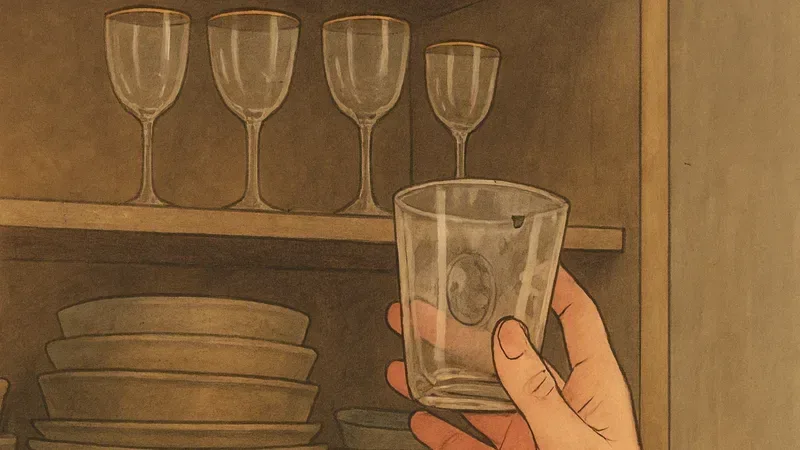
My mother has a set of glasses she got as a wedding present. Thin stems, a gold rim, heavy in a way that makes you hold them differently. For thirty years they lived on the top shelf behind the mixing bowls. We drank water from jam jars and mismatched tumblers with faded logos. Once a year she'd take the good ones down, wash them, and put them back.
🤔 What are we saving them for?
The answer is always a dinner. A dinner where everyone is there, where nothing is burnt, where the conversation doesn't drift into the usual arguments. That dinner keeps getting postponed. Someone is sick, someone is working, someone isn't speaking to someone.
So the glasses stay up there, and the everyday ones keep chipping, and we keep drinking from them because they're already chipped and it doesn't matter.
I used to think this was sad. Now I think it's just how people handle time. We hold a small reserve of good things against a day we can't name.
🥂 The object knows nothing of its own worth
A glass doesn't care if it's holding tap water or champagne. It has no opinion about the occasion. The worth is entirely in the hand holding it, in the person who decided this moment counts.
That's the strange part: the glass is the same glass on a Tuesday night as it is at a birthday. What changes is whether we've agreed to call the evening special.
And we rarely agree. Most evenings are just evenings. So the good glasses wait for a verdict that never comes.
🕯️ The day they finally come down
In my experience, the good glasses get used for two kinds of occasion.
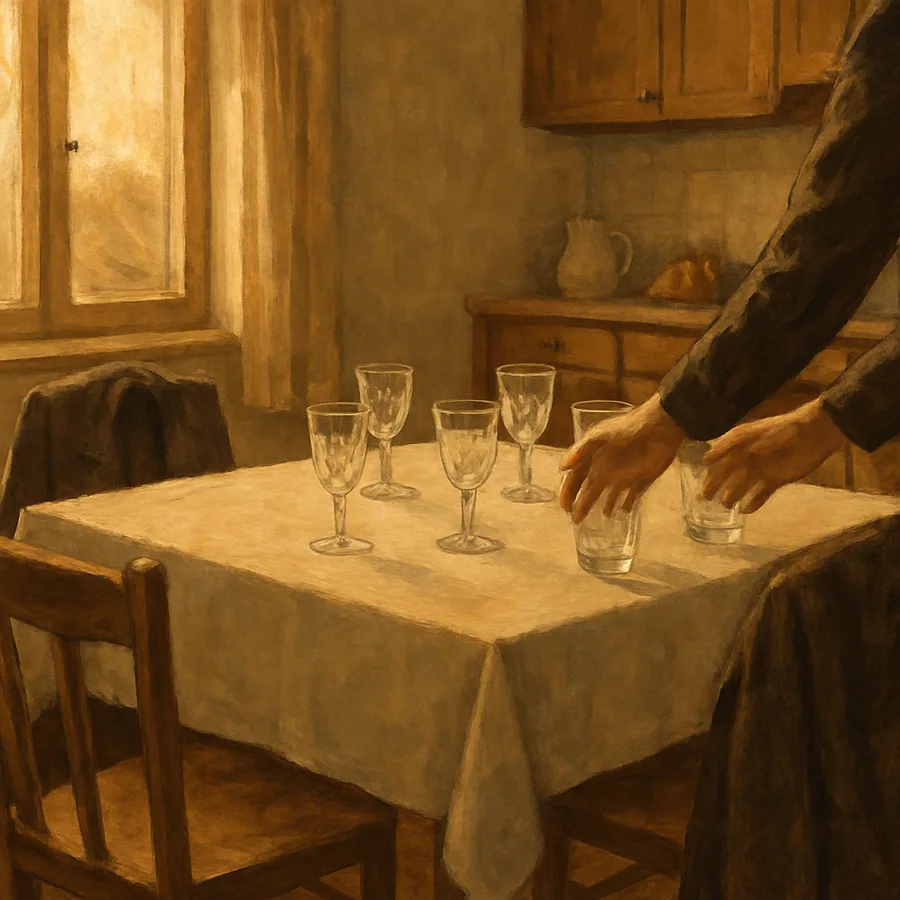
- The one we planned — a big anniversary, a graduation, a table pushed out into the yard.
- The one nobody planned: the night after a funeral, when people come back to the house and someone says, get the good glasses out, and nobody argues.
That second kind happens more than you'd think. Grief makes us generous with the things we were hoarding.
Which makes me wonder if the glasses were never really for celebration. Maybe they were for the moment we finally stop keeping score.
📦 Maybe the saving is the point
Here's where I might be wrong. I've been treating the top shelf as a small tragedy, a life deferred. But there's another reading. The glasses being there, unused, is its own pleasure.
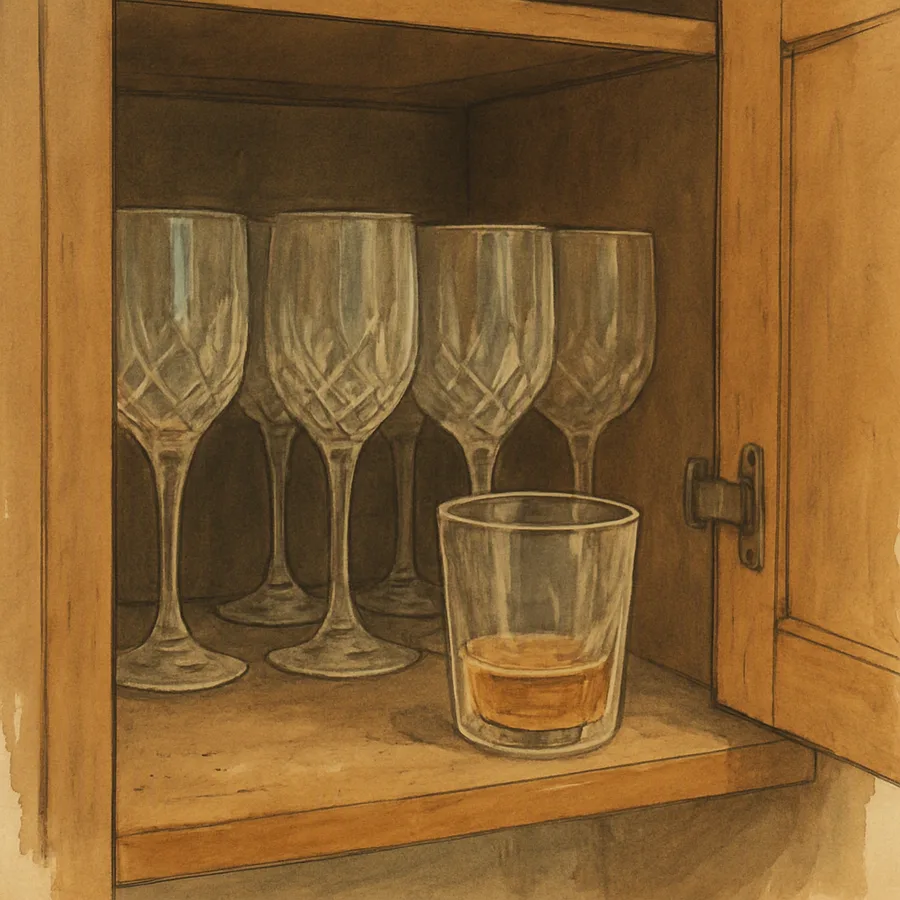
You know they're up there. Every time you reach past them for a tumbler, you're aware of a version of your life that's still possible — a fuller table, a calmer evening, people you love in one room. The reserve isn't wasted. It's doing quiet work, keeping a door open.
Use them every day and you lose that. They become ordinary. The gold rim dulls in the dishwasher. There's nothing left to reach past.
So maybe my mother wasn't saving them for a dinner. Maybe she was saving the idea of one.
🏠 The cabinet stays full
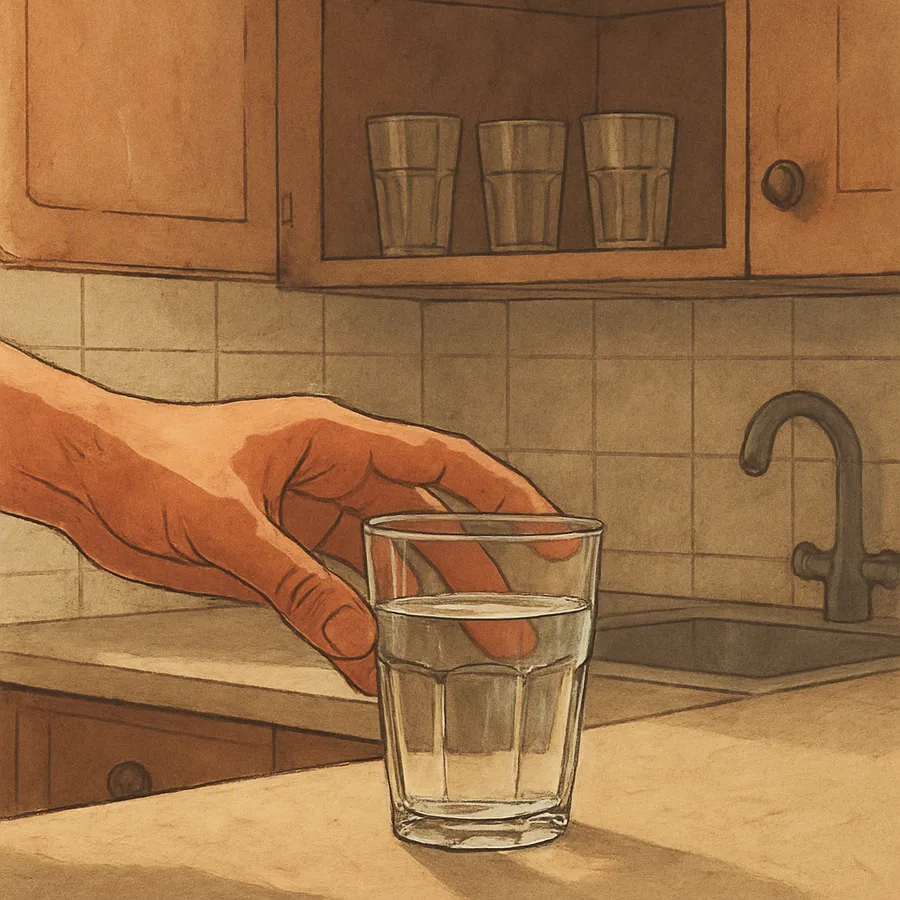
I have a set now, inherited, still mostly on the shelf. Last week I poured a glass of water into one for no reason at all. It felt slightly ridiculous. It also felt like something. The rest are still up there, waiting, and I'm in no hurry to bring them down.

Comments (0)
Leave a Comment
Be the first to comment!