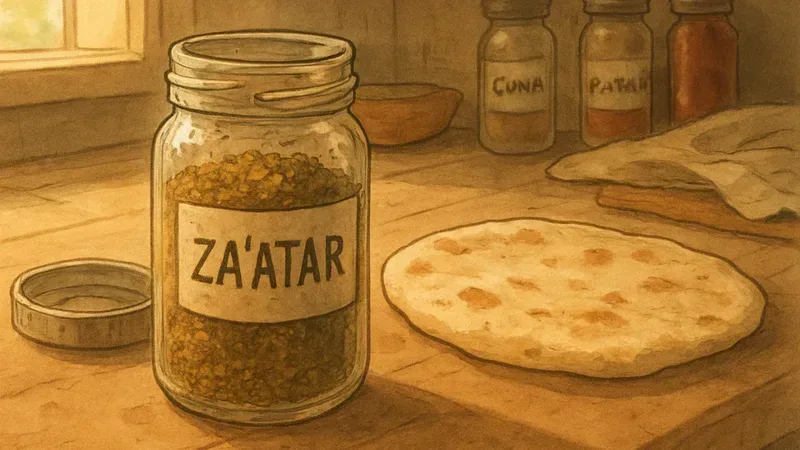
There is a small jar of za'atar in my cupboard. It has been there for two years. I bought it at a market stall where the woman let me smell it first. It smelled like thyme and sesame and something I could not name. I imagined flatbread and olive oil. I have never made flatbread. The jar sits behind the cumin, which I also use less than I should.
❓ The Question
Why do we keep buying spice blends we know we will not use? Not the basics — salt, pepper, paprika, those get used. I mean the ones that require a recipe: garam masala, ras el hanout, berbere. They arrive home in a little bag or jar, full of promise. Then they sit.
Months pass. The colour fades. We buy another one on a trip, or because a friend recommended it, or because the label was beautiful. The old one stays.
ℹ️This phenomenon is not about laziness — it is about aspiration. The jar holds the fantasy of a more adventurous cook.
🧑🍳 The Fantasy of the Cook We Want to Be
I think the purchase is not about dinner. It is about the person who would make dinner. That person has time. They soak chickpeas overnight. They toast the spices in a dry pan before grinding them. They know what berbere tastes like because they have been to Ethiopia, or at least they have a friend who taught them.
That person is not me on a Tuesday night after work, staring at the fridge and deciding on pasta again. But the jar says that person could exist. It is a small, affordable promise.
The jar is not an ingredient. It is a promise to a future self who has more time and energy.
🎨 The Visual Appeal of the Jar
Spice jars look good. They have colours: turmeric yellow, sumac red, cumin brown. On a shelf they are a kind of decoration. They say something about the kitchen, about the person who owns it. A jar of za'atar suggests worldliness. A jar of smoked paprika suggests depth.
We arrange them by height or by colour. We leave them visible. They are not ingredients. They are props for a life we are performing.
😣 The Guilt of the Unused
But the guilt is real. Every time I open the cupboard, the za'atar is there. I think: I should use that. I should find a recipe. I should invite people over and make something impressive. Then I close the door and make scrambled eggs.
The guilt builds. It becomes easier to ignore. Eventually the jar gets pushed to the back. It becomes part of the background noise of the kitchen, like the blender I never use or the bread machine I bought during lockdown.
⚠️This spiral of guilt and avoidance is a trap. The jar was never meant to be a burden — it was meant to be an inspiration.
🤔 The Honest Complication
Maybe the jar is not a failure. Maybe it serves a purpose even when it stays closed. It reminds me that there is a wider world of food than the one I cook. It holds a memory of the market, of the woman who smiled when I smelled it. It is a bookmark in a life that could be different.
And sometimes, after a long enough time, I do open it. I sprinkle it on something simple — roasted vegetables, a piece of fish. It tastes good. Not because I made flatbread, but because I finally stopped waiting for the perfect moment.
The jar is patient. It does not judge. It is just a jar of dried herbs and a question about who we think we are.
🏁 The Close
The za'atar is still there. I might use it this week. Or I might not. Either way, it will stay in the cupboard, waiting. It is patient. It does not judge. It is just a jar of dried herbs and a question about who we think we are.
📚 Related Articles
- The Shirt That Hangs in the Closet - A parallel reflection on the clothes we keep but never wear, and the identity they represent.
- The Good Jam at the Back of the Fridge - Why we save special food for a day that never comes, and what that says about our hopes.
- The Food You Stop Seeing in Your Own Fridge - The shelf where good intentions go to soften quietly in the dark, much like that spice jar.

Comments (0)
Leave a Comment
Be the first to comment!