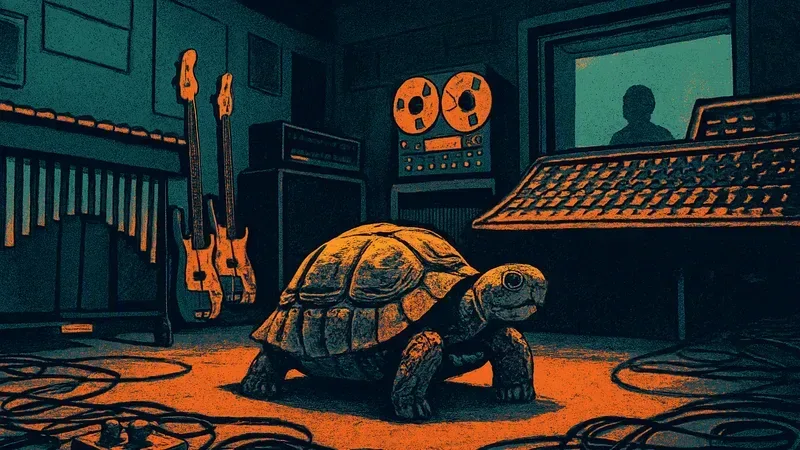
The bassline of "Djed" doesn't groove so much as it breathes. It's a low, patient pulse, and for the first few minutes nothing else happens. Then a vibraphone enters, then a guitar, then a second bass. Tortoise built a career on that patience — and on the tension between a rhythm section that wants to lock in and a set of ideas that keep pulling it apart.
📌 At a Glance
- Subgenre: Post-rock, krautrock, dub, minimalism
- Years active: 1990–present
- Origin: Chicago, Illinois
- Core lineup: Multi-instrumentalists, rotating cast
- Label: Thrill Jockey
🎯 The Pitch
Tortoise are the reason post-rock became a usable word. Formed in Chicago in 1990, they took the repetition of krautrock, the space of dub, the patience of minimalism and the vocabulary of jazz, and fed it all through a recording studio.
They didn't write songs so much as build rooms and let you walk around in them. Their influence is everywhere in instrumental music that followed.
📜 History
The band formed in Chicago in 1990, growing out of the city's tight-knit experimental scene. Their early records established a template: long, patient pieces that owed as much to studio editing as to live performance.
As part of the so-called Chicago school of post-rock, they helped define a sound that spread far beyond the Midwest. The lineup has shifted over the years, but the core approach — collective composition, heavy studio work, a rhythm section that leads — has stayed remarkably consistent. They remain active, though their releases are infrequent.
⚖️ The Case Against Them
There's a real argument that Tortoise can be cold. The music is often more interested in texture and process than in melody, and some records feel like exercises in problem-solving rather than invitations.
The dub and electronic elements can smother the tunes, and the band's self-seriousness — no vocals, no obvious hooks, no stage banter — can make them feel like a seminar. If you want a chorus, look elsewhere.
🔁 The Paradox
That coldness is exactly what makes the best work interesting. Tortoise aren't trying to warm you up; they're showing you how five players negotiate a shared space.
The pleasure is in the mechanics: a bassline that refuses to resolve, a vibraphone that answers a guitar, a drum pattern that shifts under your feet. When it clicks, you're not listening to a song — you're watching a group think.
🥁 The Rhythm Section as Lead Voice
Most bands use the rhythm section as a foundation. Tortoise use it as the melody. The bass often carries the main hook, played with a clean, round tone that sits high in the mix.
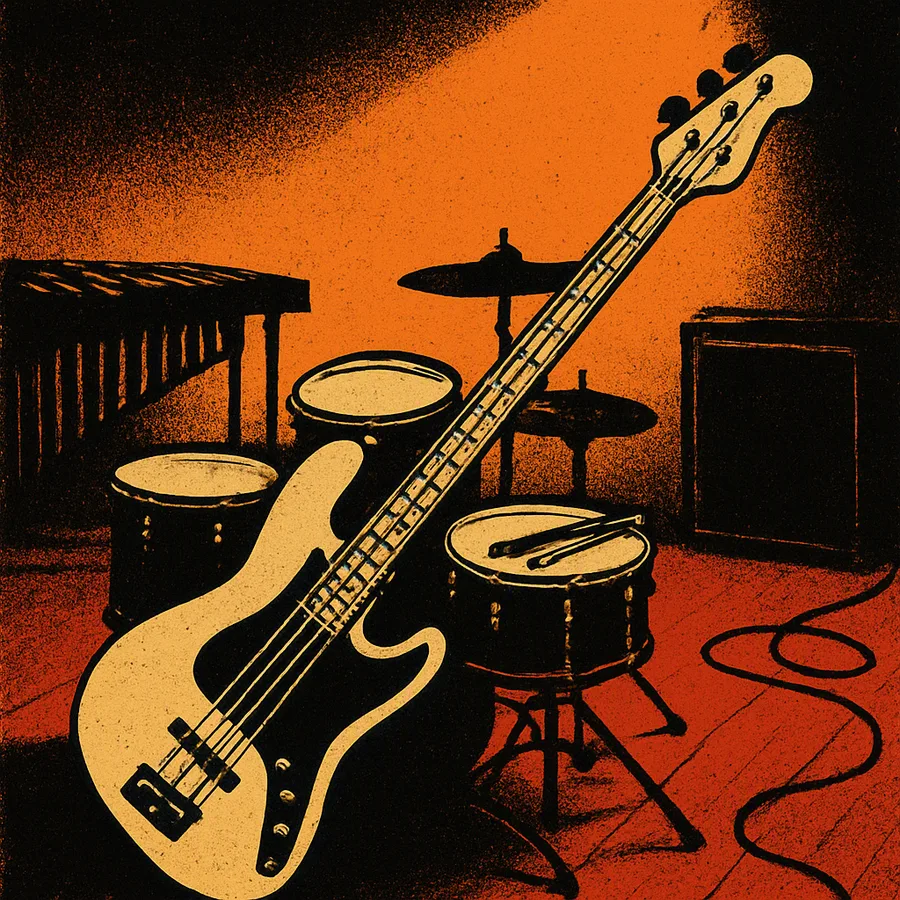
The drums are dry and precise, rarely busy, but always shifting — a hi-hat pattern here, a tom fill there. The guitars and keyboards are colour, not structure. That inversion is the band's signature, and it's why their music can feel both static and constantly moving.
🎛️ From Warmth to Abstraction
Their early records had a warmth — analog keyboards, live-sounding drums, a sense of a room. Later work grew more abstract, leaning harder on editing, processing and electronic textures.
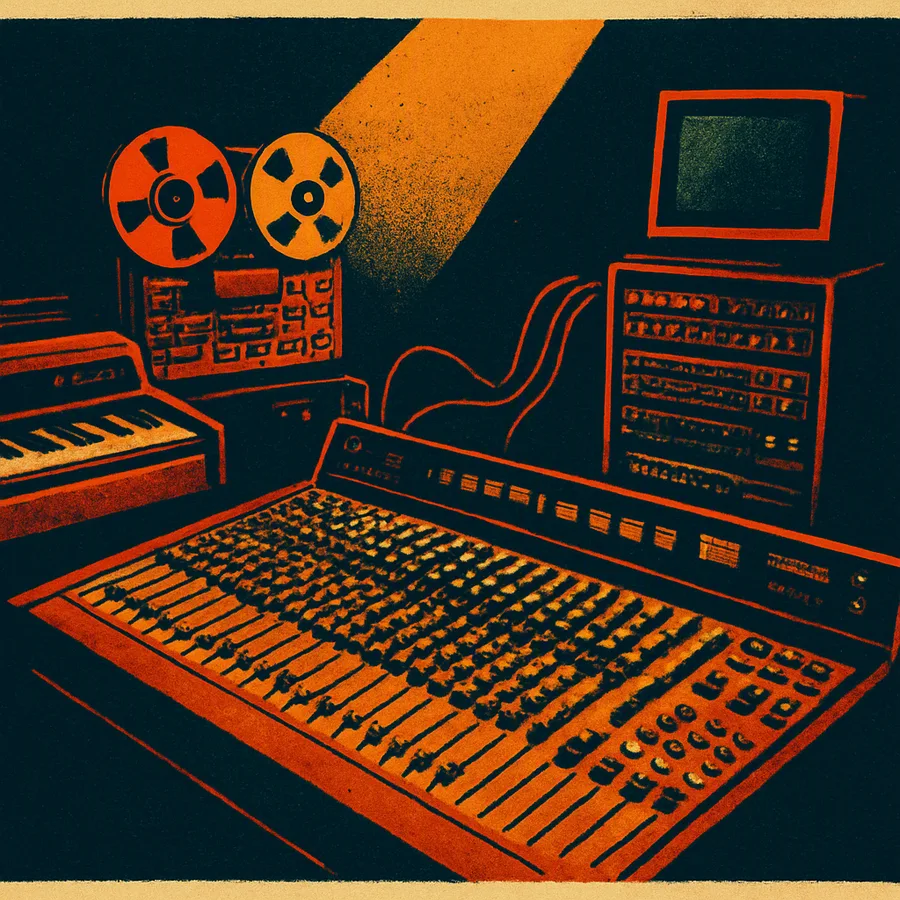
That shift divided listeners. Some heard evolution; others heard a band disappearing into its own methodology. Both are fair.
ℹ️The best moments come when the two approaches meet: a warm organ line against a cold, programmed beat, or a live drum groove that suddenly gets sliced and reassembled.
⏳ Why They Last
Tortoise changed what a rock band could be. They proved you could be instrumental, experimental and still reach an audience without a singer or a slogan.
Their songwriting mechanic is simple but rare: they treat repetition as a tool, not a limitation. A figure repeats until it becomes a character, then the band adds one small change — a key shift, a new instrument, a dropped beat — and the whole thing tilts.
💡That's why people still put it on. It rewards attention.
🔍 Curiosities
- The band's name reflects their slow, deliberate approach to making music — a wry nod to the pace of their compositions.
- They were central to the Chicago post-rock scene, alongside peers like Gastr del Sol and The Sea and Cake.
- Their album titles are often as abstract as the music: Millions Now Living Will Never Die, TNT, Standards.
- They've collaborated with and remixed a wide range of artists, extending their influence beyond the genre.
🎧 Essential Tracks
Djed 1996 - Millions Now Living Will Never Die
The opening bassline is a masterclass in restraint — it repeats for minutes before anything else arrives. When the vibraphone finally enters, it feels like a reward. The piece builds without ever exploding, proving that tension can be its own payoff.
Listen: Spotify · Apple Music · YouTube
Glass Museum 1996 - Millions Now Living Will Never Die
The vibraphone hook is the closest thing Tortoise have to a pop chorus. It's bright, repetitive and slightly off-kilter, riding a drum pattern that keeps shifting underneath. The track shows how the band can be melodic without ever being obvious.
Listen: Spotify · Apple Music · YouTube
The Equator 1998 - TNT
A bass groove leads the whole track, clean and round, while guitars and keyboards drift around it. The drums are dry and understated, but their subtle shifts are what keep the piece alive. It's the band's rhythm-first philosophy in miniature.
Listen: Spotify · Apple Music · YouTube
Seneca 1998 - TNT
The dub influence is front and centre here — echo, space, and a bassline that seems to float. The track is patient even by Tortoise standards, but the payoff comes in the way small details emerge on repeat listens. It's music that rewards headphones.
Listen: Spotify · Apple Music · YouTube
I Set My Face to the Hillside 2001 - Standards
One of their most melodic moments, built on a simple keyboard figure that repeats and gradually accumulates weight. The arrangement is sparse, but the emotional pull is real. It shows what happens when Tortoise let a tune breathe without overthinking it.
Listen: Spotify · Apple Music · YouTube
🧩 Final Note
Tortoise don't ask you to feel something specific. They ask you to notice. A bass note held a beat longer than expected, a vibraphone that enters from the left, a drum pattern that resolves in a way you didn't predict.
💡That's the whole trick, and it's enough.
🔗 Source
Tortoise (band) Wikipedia
📚 Related Articles
- Slint: The Band That Whispered Until It Screamed - The other Chicago-school touchstone: how a two-album band built the quiet-then-loud blueprint Tortoise's scene grew from.
- The Band That Never Stood Still - A rotating lineup as a creative engine — the same collective-composition logic Tortoise use, pushed to its extreme.
- Mission of Burma: Tape Loops and Loud Guitars - Studio-as-instrument and tape manipulation from the generation just before Tortoise made it a method.

Comments (0)
Leave a Comment
Be the first to comment!