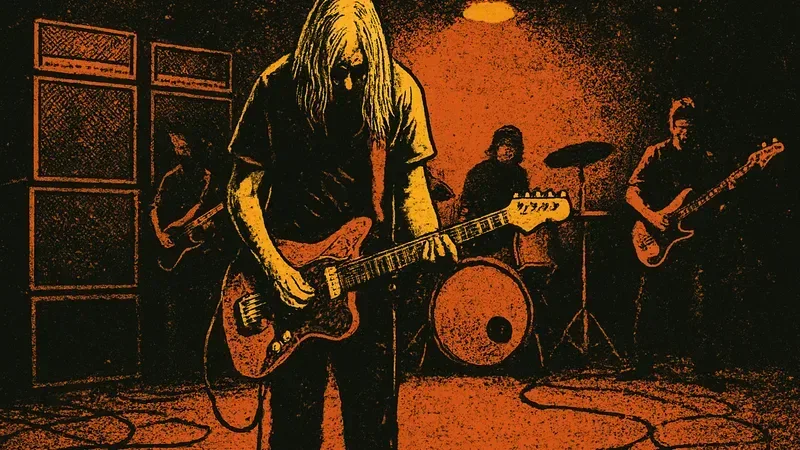
J Mascis sings like a man who has just been woken up and is not happy about it. The voice is a nasal, half-spoken whine, buried under a wall of guitar fuzz, and it should not work. It works because the guitar is doing the singing anyway.
That is the whole trick of Dinosaur Jr.: the voice is a texture, the guitar is the melody, and the rhythm section is there to keep the whole thing from floating away.
📋 At a glance
- Subgenre: Alternative rock, indie rock, noise pop
- Years active: 1984–1997, 2005–present
- Origin: Amherst, Massachusetts
- Core lineup: J Mascis, Lou Barlow, Murph
- Key producer: J Mascis
- Label: SST, Sire, Blanco y Negro, Jagjaguwar
🎤 The pitch
Dinosaur Jr. are the band that made loud guitars safe for people who couldn't play loud guitars. They took the speed of hardcore, the melody of pop, and the volume of a jet engine, and they did it without a single ounce of showmanship.
Mascis stands still. He looks at his shoes. He plays a solo that sounds like a bee trapped in a jar. And somehow, it is one of the most emotionally direct sounds in American rock.
📜 History
Formed in Amherst in 1984 by J Mascis, Lou Barlow and Murph, the band released three albums on independent labels before signing to a major. Creative tension led Mascis to fire Barlow, who went on to form Sebadoh and Folk Implosion.
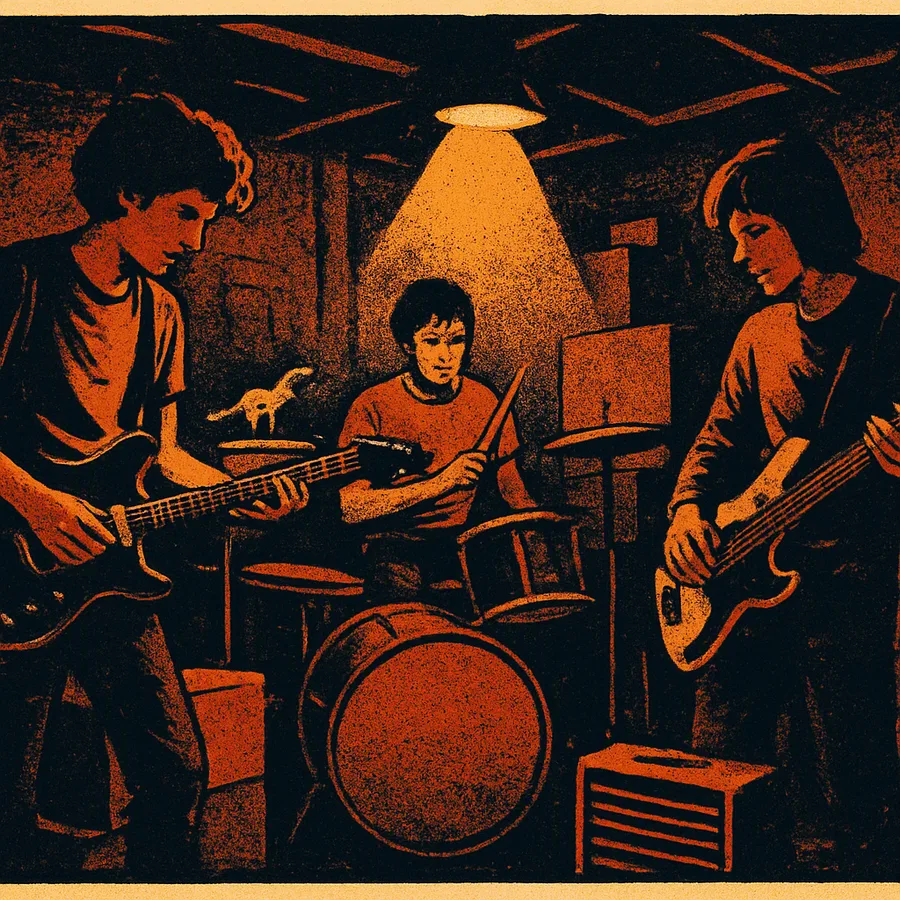
Mike Johnson replaced him for three major-label records. Murph eventually quit, and Mascis played drums on the band's later albums before they disbanded in 1997. The original lineup reformed in 2005 and has released six albums since, still touring and still loud.
⚖️ The case against
The case is simple: Dinosaur Jr. have been making the same record for forty years. The tempo is almost always the same. The solo is always a fuzz-drenched melody that sounds like it was played through a broken amp.
The production, especially in the major-label years, is often muddy and compressed, as if the band were fighting the studio. And Mascis's voice is an acquired taste that he has never tried to improve.
⚠️If you don't like one song, you probably won't like the next twenty.
🔁 The paradox
That sameness is the point. Dinosaur Jr. are not a band that evolves; they are a band that perfects. Every record is a slight adjustment to a formula that was already working.
The joy is in the details: the way Murph's drums push a fraction ahead of the beat, the way Barlow's bass adds a second melody underneath the fuzz, the way Mascis's solos are not technical displays but emotional outbursts.
The flaws are the sound.
🎸 Sonic identity: the guitar
Mascis plays a Fender Jazzmaster through a stack of amps turned up until they distort. The tone is thick, trebly and slightly behind the beat, with a warm, clean core buried under the fuzz.
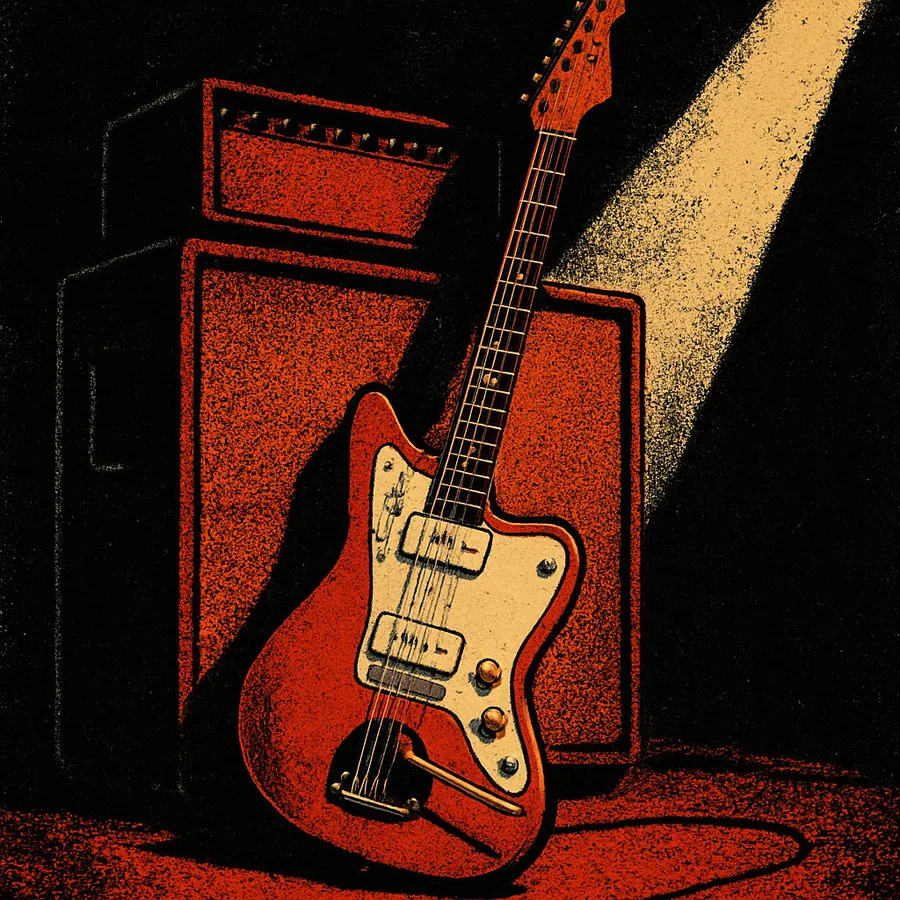
He rarely plays chords; he plays riffs that sound like chords, letting the low strings ring while the high strings carry the melody. The result is a sound that is simultaneously heavy and fragile, like a wall of glass that somehow doesn't break.
🥁 Sonic identity: the rhythm section
Murph is the secret weapon. His drumming is simple but propulsive, always pushing forward without ever rushing. He plays the hi-hat like a metronome and the snare like a punch.
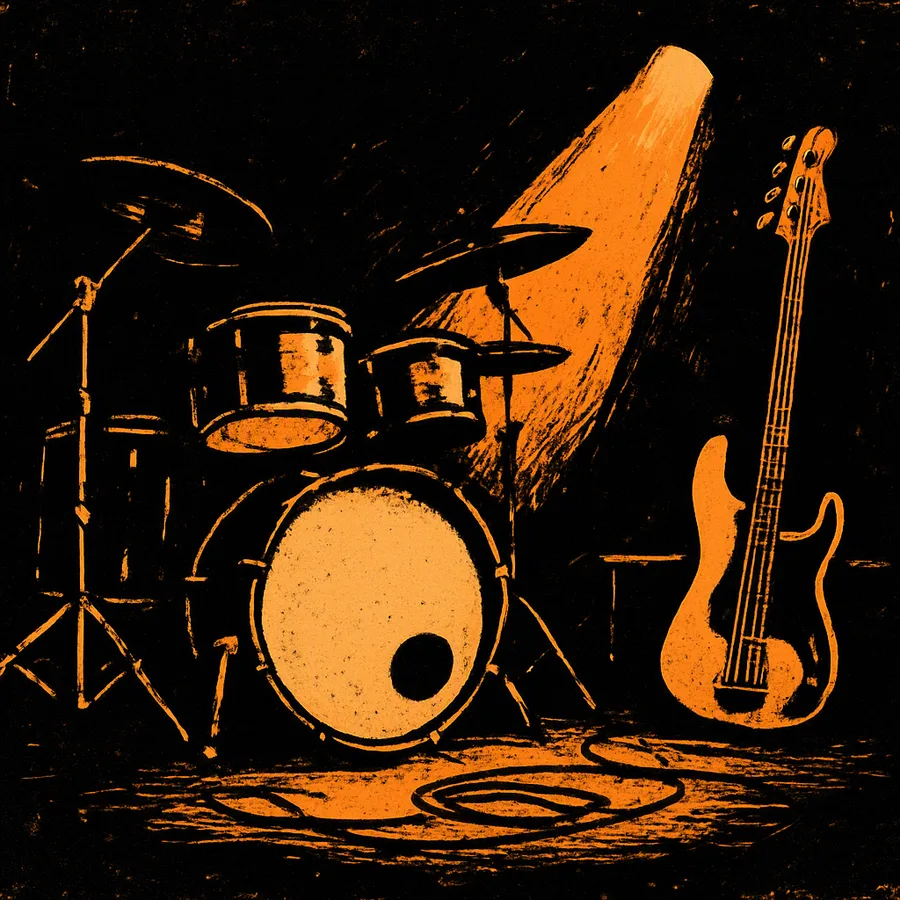
Lou Barlow's bass, when he was in the band, was melodic and restless, often playing a counterpoint to the guitar rather than just holding down the root. Together, they give Mascis the space to be as loud and as weird as he wants.
💥 Why they last
Dinosaur Jr. influenced a generation of bands who realized you could be loud and melodic at the same time. But their real legacy is a songwriting mechanic: the way a quiet verse explodes into a loud chorus, not as a dynamic trick but as an emotional release.
Mascis writes pop songs and then buries them in noise, and the tension between the two is what keeps people listening. It is the sound of a shy person screaming, and it still works.
🔍 Curiosities
- The band name came from a childhood toy of Mascis's, a dinosaur figurine he called "Dinosaur Jr."
- Lou Barlow was fired from the band by Mascis over the phone, a moment that fueled Sebadoh's early anger.
- Murph worked as a computer programmer during the band's early years, a day job that kept him grounded while the band toured.
- The original lineup reformed in 2005 after years of silence, and the first thing they did was play a show in front of a crowd that had waited a decade.
🏁 Final note
Dinosaur Jr. are not a band you discover; they are a band you submit to. The voice is a whine, the guitar is a wall, and the songs are pop.
Once you stop waiting for them to change, you realize they already did the only thing that matters: they found a sound that no one else could make, and they never let it go.
🎧 Essential tracks
Repulsion — 1985, Dinosaur
The first great Dinosaur Jr. song. Murph's drums are a relentless push, and Mascis's guitar is already fully formed: a fuzz-drenched riff that sounds like it is being played through a broken speaker. The vocal is buried so deep you barely notice it, which is exactly the point.
Listen: Spotify · Apple Music · YouTube
Little Fury Things — 1987, You're Living All Over Me
The riff is simple, almost stupid, but the way the band locks into it is hypnotic. The solo is a masterclass in noise as melody, and the moment the whole thing collapses into feedback at the end is pure catharsis.
Listen: Spotify · Apple Music · YouTube
Freak Scene — 1988, Bug
The closest thing to a hit. The chorus is a perfect pop hook, but the verses are tense and wiry, and Mascis's voice sounds like he is singing through a clenched jaw. It is the sound of a band that could have been huge and didn't care.
Listen: Spotify · Apple Music · YouTube
Feel the Pain — 1994, Without a Sound
The major-label move that worked. The song is built on a single, circular guitar figure that never resolves, and the solo is one of Mascis's most melodic. It is the sound of a band trying to be accessible without losing their edge.
Listen: Spotify · Apple Music · YouTube
Out There — 1993, Where You Been
Lou Barlow's bass is the star here, playing a restless countermelody under Mascis's fuzz. The song builds slowly, almost patiently, before exploding into a chorus that feels earned. It is the sound of a band at their peak.
Listen: Spotify · Apple Music · YouTube
Over It — 2007, Beyond
The reunion record, and the best song on it. The original lineup sounds like they never left, with Murph's drums and Barlow's bass locking in behind Mascis's guitar. The chorus is pure pop, and the solo is a reminder that Mascis never lost it.
Listen: Spotify · Apple Music · YouTube
🔗 Source
Dinosaur Jr. Wikipedia

Kommentare (0)
Kommentar hinterlassen
Schreiben Sie den ersten Kommentar!