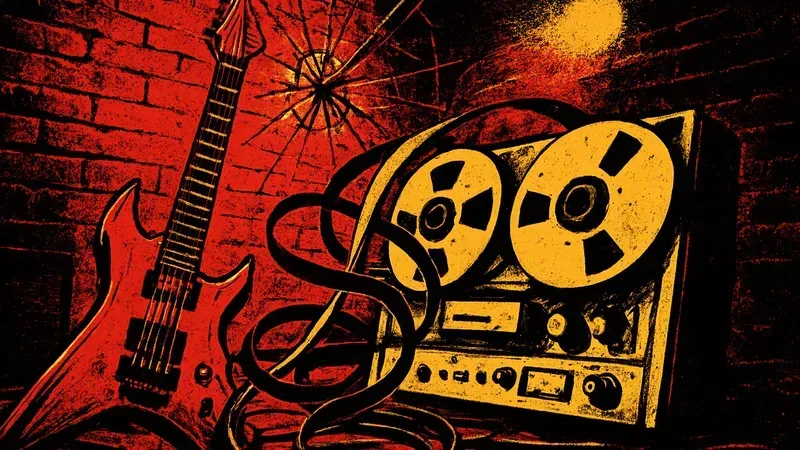
Mission of Burma hit like a brick through a windshield. The guitars are jagged and trebly, the drums slam hard, and somewhere in the mix a tape loop spools out of control. It's the sound of a band that wanted to be heard, even if it meant breaking a few windows.
🎯 At a Glance
- Subgenre: Post-punk
- Years active: 1979-1983, 2002-present
- Origin: Boston, Massachusetts
- Core lineup: Roger Miller, Clint Conley, Peter Prescott, Martin Swope
- Label: Ace of Hearts
📝 The Pitch
Mission of Burma were a Boston quartet who took punk's energy and stretched it through art-school brains. They made three albums in their first run, each one a knot of noise and melody that still sounds fresh. They didn't sell much, but they changed how a lot of people thought about what a rock band could do.
📜 History
Mission of Burma formed in Boston in 1979. Roger Miller played guitar, Clint Conley played bass, Peter Prescott drummed, and Martin Swope worked the tape machines and ran sound. All three frontmen wrote and sang. They released a handful of singles and two albums before calling it quits in 1983, partly due to Miller's tinnitus. They reunited in 2002 and have kept going, though Swope did not return.
⚔️ The Case Against Them
Their catalogue is small, and some of it is uneven. The reunion records don't have the same snap as the early stuff. The band can also be a lot to take — the noise, the dissonance, the sheer volume. If you're not in the mood, it just sounds like a mess.
ℹ️A warning for new listeners: If you're unfamiliar with their sound, start with the quieter tracks like "Forget" before diving into the full chaos.
🔍 The Paradox
That mess is the point. Mission of Burma's chaos is carefully built. The tape loops are placed, the feedback is shaped. They sound like they're falling apart, but they're actually in control. That tension is what makes the best songs so thrilling.
🎸 Sonic Identity
Guitars are clean and angular, with a sharp, trebly tone that cuts through. The rhythm section is tight but loose, Conley's bass often carrying the melody while Prescott's drums bash and swing. The vocals are shouted, spoken, or sung, often layering three voices at once.
The signature is Martin Swope's tape manipulation. He'd record the band, then play the tapes back through the mix, adding loops, flanges, and otherworldly sounds. It gave the music a sense of space and unpredictability that few punk bands dared.
🏆 Why They Last
Mission of Burma influenced a generation of post-hardcore and indie rock bands, from Sonic Youth to Fugazi. Their songwriting mechanic is simple but effective: take a catchy hook and bury it under noise, then let it surface. That push and pull keeps listeners coming back. People still put on their records because they feel alive, like a live wire.
They made art that punched, and they never let the thinking get in the way of the feeling.
✨ Curiosities
- ✅ The band's name came from a sign on a wall in Burma, spotted by a friend. It sounded exotic and strange, and it stuck.
- ✅ Martin Swope left the band in 1983 and moved to Hawaii, then New Zealand, where he became a farmer. He never returned to music.
- ✅ Roger Miller's tinnitus was so bad that he had to wear earplugs on stage, and the band often played at deafening volumes anyway.
- ✅ Their song "That's When I Reach for My Revolver" was later covered by many artists, including a version by Moby that became a hit.
💿 Essential Tracks
Academy Fight Song 1980 - Signals, Calls, and Marches
The opening guitar riff is a knotty, angular thing that sets the tone. The song builds to a shout-along chorus, and the tape loops add a layer of unease. It's a perfect introduction to their sound.
Listen: Spotify · Apple Music · YouTube
That's When I Reach for My Revolver 1981 - Signals, Calls, and Marches
The bassline is the star here, driving the song with a relentless pulse. The lyrics are cryptic and political, and the chorus is anthemic without being obvious. It's their most famous song for a reason.
Listen: Spotify · Apple Music · YouTube
Forget 1982 - Vs.
A slower, more brooding track that shows their dynamics. The verses are tense and quiet, then the chorus explodes with distorted guitars and desperate vocals. It's a masterclass in building and releasing pressure.
Listen: Spotify · Apple Music · YouTube
This Is Not a Photograph 1979 - Signals, Calls, and Marches
An early single that captures their raw energy. The guitar is all over the place, the drums are frantic, and the vocals are pushed to the edge. It's a statement of intent from a band that had just formed.
Listen: Spotify · Apple Music · YouTube
Red 1982 - Vs.
The tape loops are front and center here, creating a swirling, disorienting backdrop. The song is a relentless assault, with Miller's guitar and Conley's bass locked in a tense dance. It's a deep cut that rewards repeated listens.
Listen: Spotify · Apple Music · YouTube
Fame 1983 - The Horrible Truth About Burma
A cover of David Bowie's song, but they make it their own. The guitars are heavier, the tempo is faster, and the vocals are more urgent. It's a fun, noisy take on a pop classic.
Listen: Spotify · Apple Music · YouTube
📚 Source
Mission of Burma Wikipedia

Comentários (0)
Deixe um Comentário
Seja o primeiro a comentar!