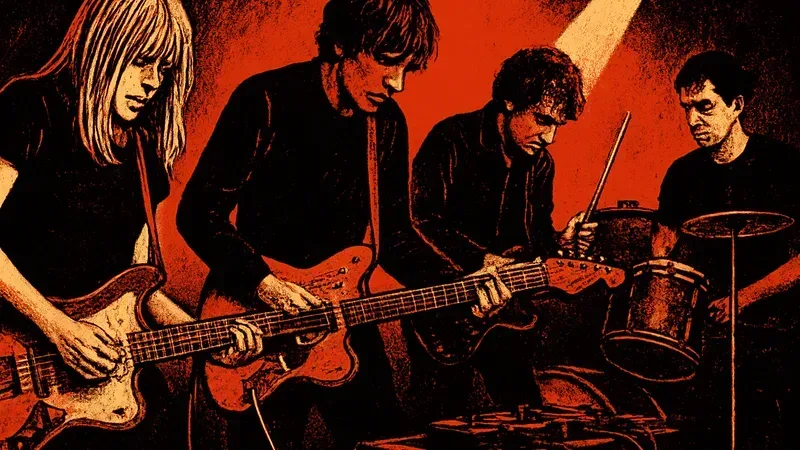
The first thing you notice is that the guitars sound broken. Not sloppy — deliberate. Strings scraped with screwdrivers, drumsticks dragged across pickups, chords that ring in intervals your ear can't quite name. Sonic Youth made a language out of that, and then, strangely, wrote some of the prettiest songs of their era with it.
📋 At a glance
- Subgenre: Noise rock, art punk, alternative rock
- Years active: 1981–2011
- Origin: New York City
- Core lineup: Gordon, Moore, Ranaldo, Shelley
- Later members: Jim O'Rourke, Mark Ibold
- Label: Independent and major-label eras
💡 Why they matter
They were the band that made the underground legible to the mainstream without ever softening. For three decades they sat at the exact point where art-school experimentation meets actual songs, and they dragged a whole generation of listeners toward the noise instead of away from it.
📖 History
Formed in New York in 1981, the group kept its founding trio — Kim Gordon, Thurston Moore and Lee Ranaldo — intact for the entire run, a rarity in any band. Drummer Steve Shelley joined in 1985 and locked the core in place.
Jim O'Rourke was a member from 1999 to 2005, and Mark Ibold of Pavement came aboard in 2006. They split in 2011, ending thirty years without a single founding departure.
⚠️ The case against them
There are records where the experiment wins and the song loses. Stretches of the catalogue are texture without destination — interesting for four minutes, tedious by eight. The band could also be self-serious in a way that aged badly, treating every gesture as significant. And once the alternate-tuning formula settled, some later albums coast on it rather than push it.
🎸 The noise is the melody
Those flaws are also the point. When the band let a piece sprawl, they were testing whether a listener would stay without a chorus to hold onto — and when they finally delivered one, it landed harder. The self-seriousness came with actual rigor. The formula worked because the tunings kept generating chords nobody else had, so even a familiar song arrived in a key you'd never heard.
Most bands use noise as a threat. Sonic Youth used it as a chord voicing — something to build a verse on.
🎛 Alternate tunings as a language
The signature isn't distortion; it's tuning. Moore and Ranaldo restrung guitars into intervals that made standard chord shapes useless, then played them clean, trebly and slightly behind the beat. The result is a shimmer that sits between harmony and dissonance.
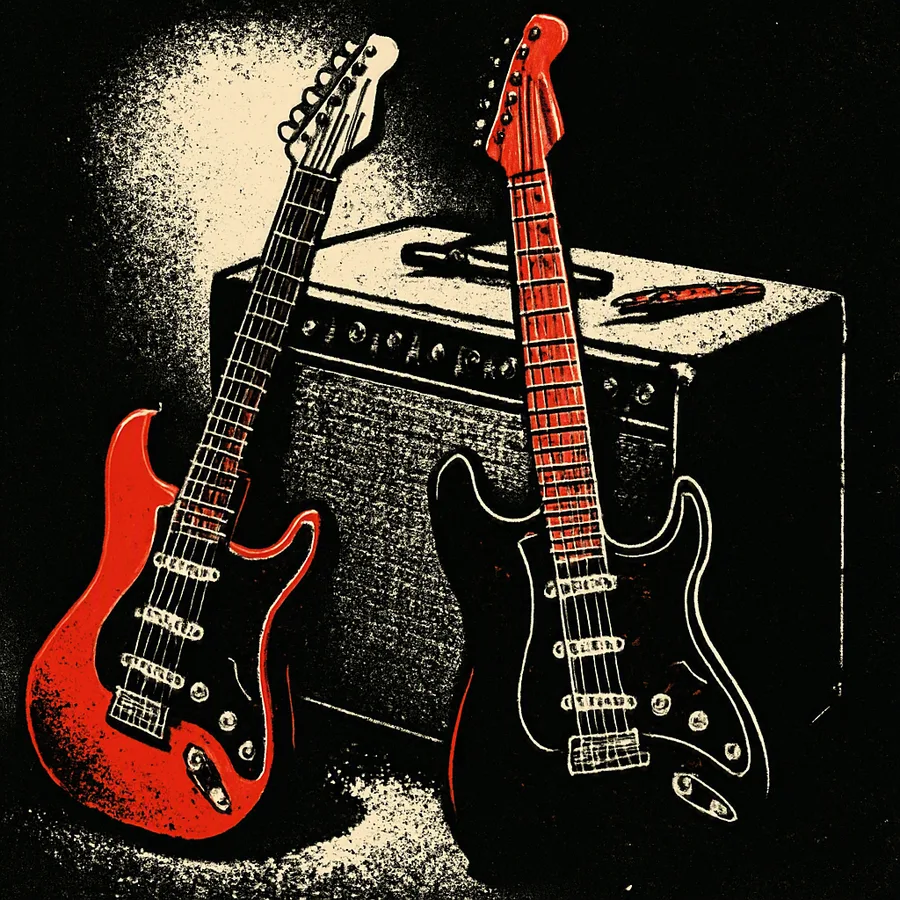
Ranaldo's playing tends toward ringing, open repetition; Moore's is more fractured and abrupt. Together they sound like two radios tuned to adjacent stations.
🎤 Kim Gordon's voice
Gordon rarely sings so much as speaks on pitch, flat and unbothered, which makes her the perfect counterweight to the guitars. Where the instruments escalate, she stays level.
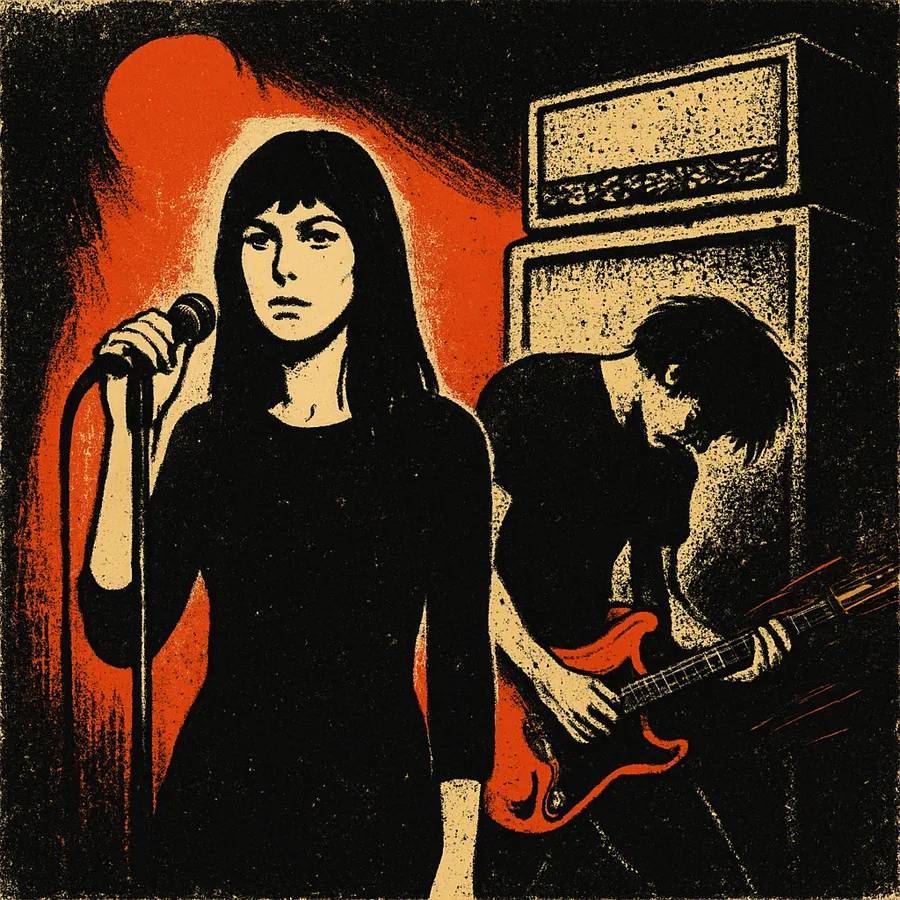
That deadpan is a structural choice, not a limitation — it keeps the noise from tipping into melodrama and gives the band a cool center. When she does push, it registers because she so rarely does.
⏳ Why they last
Their real trick was dynamic patience. A track will sit in one droning figure for minutes, then shift by a single interval and feel like a door opening. That mechanic — small harmonic move, huge emotional return — is why the songs survive repeated listening. They also made the underground a viable career path, proving you could stay strange and still reach people.
🔍 Curiosities
- The name came from combining a reggae artist's nickname with a slang term for a younger hanger-on.
- Steve Shelley arrived from the punk band the Crucifucks, a harder and faster context than anything the group had played.
- Kim Gordon came out of the visual art world, which shaped how the band treated performance and presentation.
- Mark Ibold joined after years in Pavement, making the final lineup a small summit of nineties indie.
🏁 Final note
Most bands use noise as a threat. Sonic Youth used it as a chord voicing — something to build a verse on. That inversion is why their quiet moments feel loud and their loud moments feel oddly tender, and why the records still reward a listener willing to sit through the scrape.
🎧 Essential tracks
Teen Age Riot
The rare case where the band's experiments resolve into an actual anthem. The opening guitar figure circles for a full minute before the vocal arrives, and that delay is the payoff — you've been waiting without realizing it.
Listen: Spotify · Apple Music · YouTube
Schizophrenia
A showcase for the alternate tuning as melody. The chords ring in intervals that shouldn't work together, yet the song floats. Gordon's spoken-sung sections keep it from drifting into pure atmosphere.
Listen: Spotify · Apple Music · YouTube
Kool Thing
Gordon's deadpan delivery is the whole engine. The riff is simple and repetitive on purpose, so the tension comes from her voice staying flat while the guitars push forward.
Listen: Spotify · Apple Music · YouTube
Dirty Boots
The rhythm section gets room here, and the groove is the point. Shelley's drumming is steady and unflashy, which lets the guitars sprawl without the song losing its footing.
Listen: Spotify · Apple Music · YouTube
The Diamond Sea
A long-form piece that tests the band's patience mechanic. It sits in one figure, drifts, and then opens up — the kind of track that explains why they were never a singles band.
Listen: Spotify · Apple Music · YouTube
Sunday
A late-era track that shows the band in restraint mode. Cleaner, quieter, and more melodic, it proves the formula could still produce something gentle without losing its edge.
Listen: Spotify · Apple Music · YouTube
📚 Source
Sonic Youth Wikipedia

Comentários (0)
Deixe um Comentário
Seja o primeiro a comentar!