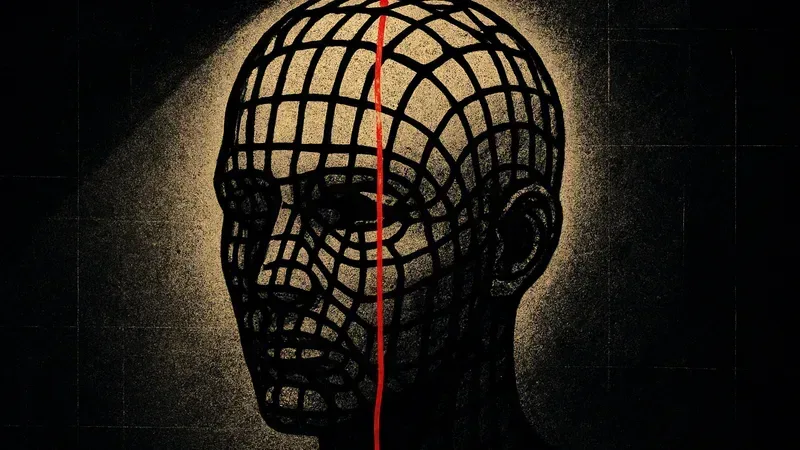
Wire's first album, Pink Flag, is a shock of controlled noise. Twenty-one songs in under forty minutes, each one a stripped-down idea pushed to its limit. The guitars are jagged, the drums are flat, and the vocals are either shouted or barely there. It sounds like a blueprint for a thousand punk bands, but it moves with the logic of a puzzle, not a tantrum.
📋 At a Glance
- Subgenre: Post-punk, art rock
- Years active: 1976-present
- Origin: London, England
- Core lineup: Colin Newman, Graham Lewis, Bruce Gilbert, Robert Grey
- Label: Harvest, Mute
🎯 The Pitch
Wire are the thinking person's punks. They came out of the same London scene as the Sex Pistols, but they treated the genre as a starting point, not a destination. Over four decades, they've moved from razor-sharp minimalism to electronic abstraction, never repeating themselves and never losing their edge.
📜 History
Formed in London in 1976, Wire were part of the original punk explosion, appearing on the live compilation The Roxy London WC2. Their debut, Pink Flag, came in 1977, followed by Chairs Missing and 154, which expanded their sound into art-rock and electronic territory. After a hiatus in the early '80s, they returned in the mid-'80s with a more experimental approach, and have continued to release music into the 21st century, with a core lineup of Newman, Lewis, Gilbert, and Grey.
⚔️ The Case Against Them
Wire can be maddeningly insular. Their mid-career work, especially in the late '80s and '90s, often feels like a private conversation between band members, with songs that meander into self-indulgence. They've also been known to abandon a style just when they've perfected it, leaving fans of a particular era stranded.
⚠️If you love a specific Wire era, they may abruptly move on. But that restlessness is also their strength.
🔄 The Paradox
That same restlessness is what keeps Wire vital. Their willingness to break their own rules means every album is a risk, and when it pays off, it's thrilling. The flaws are part of the deal: you take the occasional dead end with the moments of pure, startling brilliance.
🎸 Sonic Identity: Minimalism as a Weapon
Wire's early sound was built on subtraction. Songs like "Three Girl Rhumba" are just a few chords and a staccato riff, with no solos, no fills, no wasted notes. The production is dry and immediate, as if recorded in a concrete room. This is punk stripped to its skeleton, but with a wit that punk usually lacked.
🔊 Sonic Identity: The Electronic Turn
By the late '70s, Wire were already incorporating synthesizers and tape effects, as heard on Chairs Missing. This wasn't a sell-out; it was an expansion. The guitars got cleaner, the rhythms more mechanical, and the vocals more detached. In the '80s, they dove fully into electronic and industrial territory, using drum machines and sequencers to create a colder, more alienated sound.
🌟 Why They Last
Wire's influence is everywhere, from punk to post-punk to indie rock. Their songwriting mechanic is often about tension and release through structure, not volume. A song like "Outdoor Miner" builds on a circular guitar figure and a cryptic lyric, creating a mood that's both unsettling and beautiful. People still listen because Wire never stopped asking what a song could be.
ℹ️Wire's approach to songwriting has inspired countless artists, making them a cornerstone of alternative music.
💡 Curiosities
- ✅ The band's name came from a telephone wire, chosen because it was short and neutral.
- ✅ Pink Flag's song "Three Girl Rhumba" was later used by Elastica for their hit "Connection," leading to a legal settlement.
- ✅ Wire appeared on the live album The Roxy London WC2, one of the first documents of the punk scene.
🎧 Final Note
Wire are not a band you put on for comfort. They demand attention, but they reward it with moments of pure, crystalline insight. Their music is a reminder that rock can be a place for ideas, not just anthems.
🎵 Essential Tracks
Three Girl Rhumba (1977, Pink Flag)
The entire song is a single, jagged riff repeated with variations, showing how Wire could make minimalism feel like a full statement. The dry, flat production makes it sound like a demo, but that's the point.
Listen: Spotify · Apple Music · YouTube
Outdoor Miner (1979, Chairs Missing)
A perfect example of Wire's art-pop shift. The circular guitar figure and Newman's detached vocal create a hypnotic, almost lullaby-like quality, while the lyrics hint at something darker beneath the surface.
Listen: Spotify · Apple Music · YouTube
Map Ref (1979, 154)
This track shows Wire's growing interest in rhythm and texture. The bassline is the lead instrument, and the song builds through repetition and subtle shifts, creating a sense of forward motion without a traditional chorus.
Listen: Spotify · Apple Music · YouTube
Drill (1987, The Ideal Copy)
A return after a hiatus, this song is built on a relentless, mechanical beat and a single-note guitar pulse. It's a stark, hypnotic piece that shows Wire's embrace of electronic and industrial elements.
Listen: Spotify · Apple Music · YouTube
I Am the Fly (1978, Chairs Missing)
A weird, almost humorous track that uses a distorted, insect-like vocal effect. The song is a perfect example of Wire's willingness to experiment with sound and production, even within a pop structure.
Listen: Spotify · Apple Music · YouTube
📚 Source
Wire (band) Wikipedia

Kommentare (0)
Kommentar hinterlassen
Schreiben Sie den ersten Kommentar!