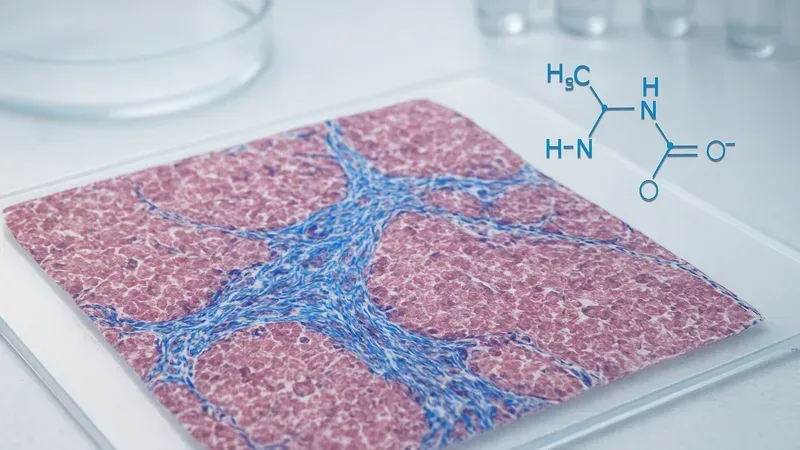
This study tested whether betaine, a natural substance, affects liver fibrosis in mice. Liver fibrosis is scarring of the liver. The researchers looked at a protein called macrophage inhibitory factor (MIF) and how betaine might change its effects.
🔬 Study design
The study used mice, some with and some without the MIF gene. They gave some mice a chemical called TAA to cause liver fibrosis. Some mice also received betaine. After eight weeks, the researchers measured several markers of fibrosis in the liver tissue.
📊 Key findings
- Mice without MIF that got TAA had higher levels of fibrosis markers than normal mice with TAA.
- Betaine reduced some fibrosis markers in mice without MIF, but not as much as in normal mice.
- Betaine lowered levels of TGF-β1, PDGF-BB, and enzymes like MMP-2 and MMP-9 in the liver.
- Histological exams confirmed less scarring in betaine-treated mice.
- The study measured markers, not whether the mice lived longer or had better liver function.
ℹ️Betaine reduced several markers of liver fibrosis in mice, especially when MIF was present. However, the changes were in laboratory markers, not in direct health outcomes like survival or disease reversal.
🔍 Study vs. claim
The study tested how betaine affects fibrosis markers in mice. It does not make a broader claim about betaine preventing or reversing liver disease in people.
🚫 What it does NOT show
- Does not show effects in humans.
- Does not measure lifespan or disease incidence.
- Does not establish long-term safety or effectiveness.
- Does not prove causation between betaine and health outcomes.
📉 Evidence level & confidence
Study type: not clearly specified. Subjects: not clearly specified.
Confidence: Low to moderate — because the study type is unclear and it is animal research.
⚖️ How much to trust it
The trust tier is Moderate. This means the findings are preliminary and should be treated with caution. Evidence in humans is not established.
⚠️ Limitations
- Study type not clearly specified.
- Animal-only study; human relevance unknown.
- Small sample size not reported.
- Short duration of eight weeks.
❓ Open questions
- Do these marker changes lead to real health benefits in people?
- What dose of betaine would be needed in humans?
- Are there long-term safety concerns?
📋 Your action plan
- ✅ Understand that this is early animal research, not a human recommendation.
- ✅ Do not take betaine for liver health based on this study alone.
- ✅ Talk to a doctor before making any changes to your health routine.
- ✅ Follow future human studies for more reliable evidence.
🏁 Takeaway
Betaine reduced some fibrosis markers in mice, but human evidence is missing, so no health claims can be made.
This summary is for general information only and is not medical advice. Talk to a qualified professional before changing anything about your health.
📄 Source
The Role of Macrophage Inhibitory Factor in TAA-Induced Liver Fibrosis in Mice: Modulatory Effects of Betaine.. Biomedicines. 2024 PubMed

Comments (0)
Leave a Comment
Be the first to comment!