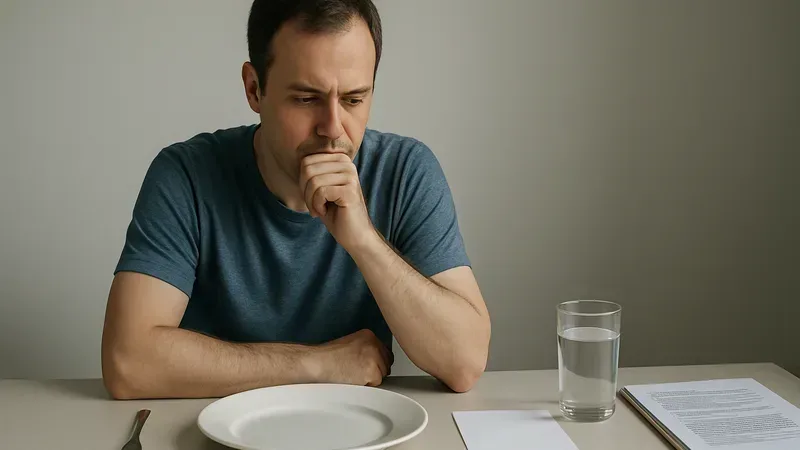
This review asked a simple question: when healthy adults skip eating on purpose for a while, does their thinking change? It matters because fasting is popular, and people want to know if it helps or hurts the mind.
🔬 What the study did
The authors gathered peer-reviewed articles published between August 2013 and January 2021. To be included, a study had to look at adults, measure thinking with neutral tasks, and compare people who were fasting with people who had eaten.
Nineteen articles covering 21 studies met those rules. The number of participants, the fasting methods, and the thinking tasks differed from study to study.
📊 What it found
- Across the reviewed studies, fasting was linked to lower scores on cognitive tasks.
- Few studies showed any cognitive benefit after a single voluntary fast.
- Sample sizes varied widely across the included studies.
- Fasting methods differed from study to study.
- The thinking tasks used were not the same across studies.
🧠 What it means
In this body of research, going without food for a period tended to go together with weaker performance on thinking tasks, not stronger. Only a small number of studies pointed the other way. The mixed methods make it hard to say anything firm about cause.
Across 21 human studies, fasting was mostly tied to weaker thinking, though the research is too mixed for firm conclusions.
❓ Study vs. claim
The study tested whether fasting and thinking are linked in adults, using neutral tasks. It did not test claims that fasting sharpens the mind or protects brain health.
🚫 What it does NOT show
- It cannot show that fasting causes cognitive decline.
- It cannot show how long any effect lasts.
- It cannot show which fasting methods are better or worse.
- It cannot show how results apply to people with health conditions.
📈 Evidence level
A systematic review of human studies.
🎯 Confidence indicator
Confidence: High — a systematic review pools many studies, the strongest single source of evidence.
⚖️ How much to trust it
The trust tier is Strong. A systematic review gathers and weighs many studies at once, which is why this type of evidence earns that rating.
⚠️ Limitations
- The included studies were few and varied a lot.
- Fasting methods and thinking tasks were not consistent.
- Several social and personal factors were not examined.
- Sample sizes differed widely across studies.
⚠️Keep the mixed methods in mind: they make firm conclusions difficult.
🤔 Open questions
- Which fasting patterns affect thinking, and how much?
- Do factors like age, stress, or sleep change the results?
- Do effects differ between short and longer fasts?
✅ Your action plan
- ✅ The reviewed studies compared a fasted state with a fed state in adults.
- ✅ No proven human plan for using fasting to improve thinking exists yet.
- ✅ If you are curious about fasting research, read systematic reviews rather than single studies.
- ✅ If you are considering changing how you eat, discuss this with a professional.
📚 Source
How Does Fasting Affect Cognition? An Updated Systematic Review (2013-2020).. Current nutrition reports. 2021 PubMed
This summary is for general information only and is not medical advice. Talk to a qualified professional before changing anything about your health.

Comments (0)
Leave a Comment
Be the first to comment!