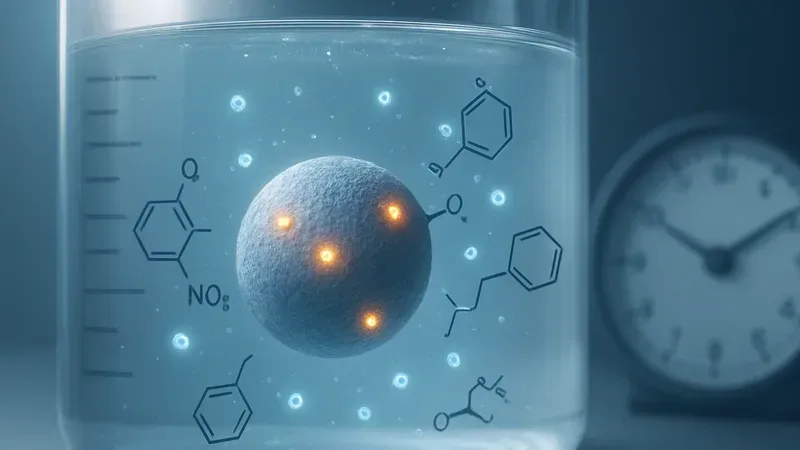
This study tested whether palladium-doped zinc oxide nanoparticles could break down a toxic pollutant called nitrobenzene in water. The work was done in a laboratory, not in people or animals.
🔬 Study design
The researchers made nanoparticles by adding small amounts of palladium to zinc oxide. They tested how well these particles broke down nitrobenzene in water under visible light.
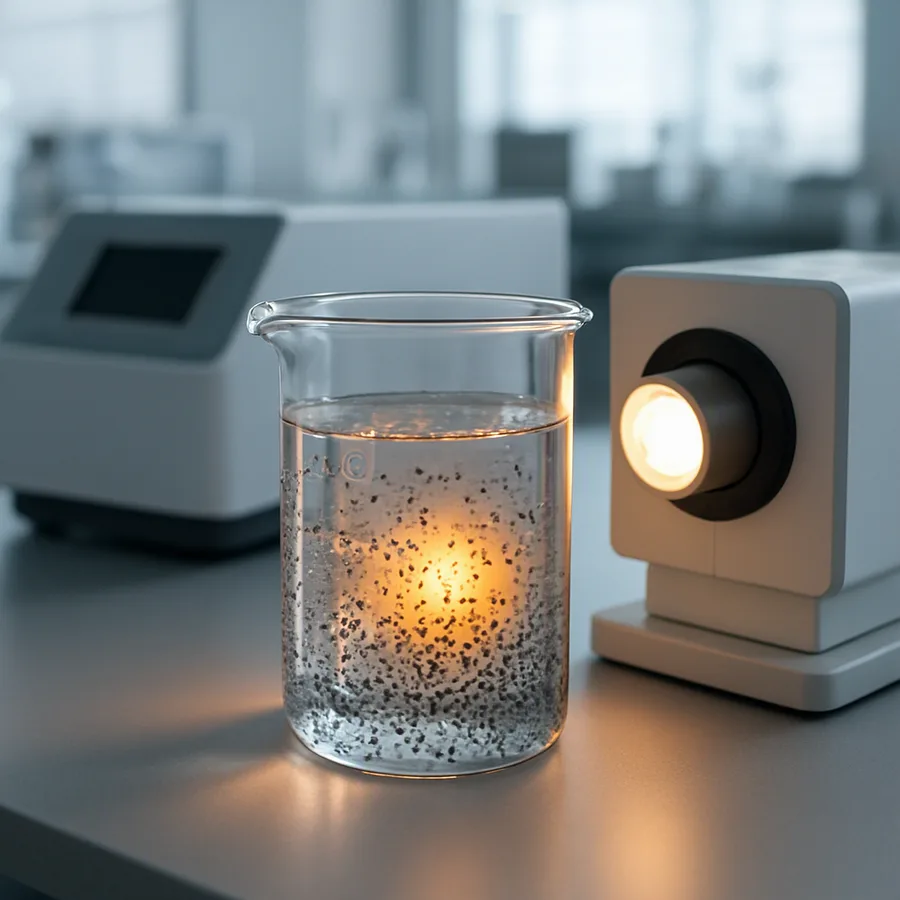
The experiment used a concentration of 200 µg/L nitrobenzene at pH 7, with 16 µg/mL of catalyst, over 320 minutes.
📊 Key findings
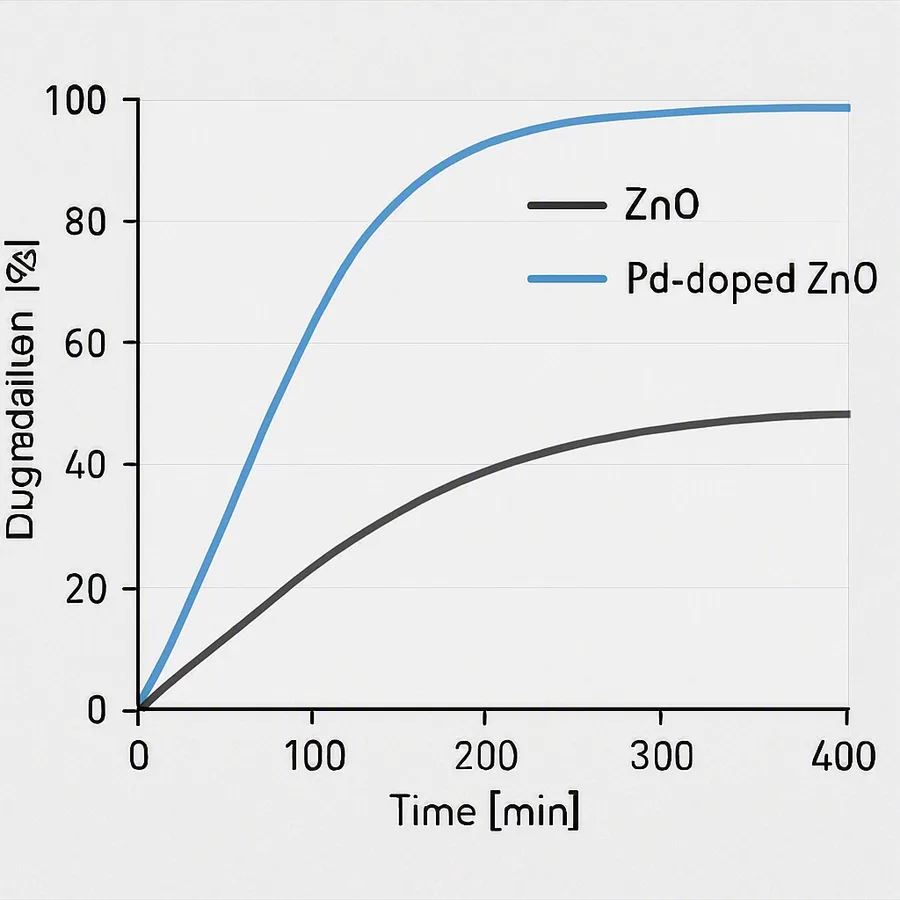
- The best version of the nanoparticles (0.08 wt% Pd) degraded 90% of nitrobenzene in 320 minutes.
- This version worked 25 times faster than plain zinc oxide nanoparticles.
- Hydroxyl radicals were identified as the main active species driving the breakdown.
- The nanoparticles could be reused for up to five treatment cycles.
- Adding more palladium reduced the bandgap of zinc oxide from 3.12 to 2.94 eV.
In a lab dish, adding a tiny amount of palladium to zinc oxide made it much better at breaking down a common pollutant under visible light.
⚗️ What the study measured
The study measured a chemical reaction, not health effects in living things. It tested a chemical cleanup method in a lab. It does not make a broader health claim.
ℹ️The study type was not reported; this is a laboratory experiment.
⚠️ What it does NOT show
- ✅ It did not test effects in humans or animals.
- ✅ It did not measure health outcomes or safety.
- ✅ It did not test real-world water conditions.
📈 Confidence and trust
Confidence: Low to moderate — because the study type is unclear.
Trust tier: Moderate. The study type is not clearly specified, so treat the findings with healthy caution. This is a lab-only experiment, so evidence in humans is not established.
🚧 Limitations
- Study type is not clearly specified.
- Only one pollutant concentration was tested.
- Real-world water conditions were not simulated.
❓ Open questions
- Would this work in real polluted water?
- How safe are the breakdown products?
- Can this be scaled up for practical use?
✅ Your action plan
- Understand that this is a lab experiment, not a health study.
- A proven human plan does not exist yet.
- Follow future research on nanoparticle water treatment.
- Do not attempt to reproduce this experiment at home.
🎯 Takeaway
This lab study shows that doped nanoparticles can break down a pollutant, but it does not apply to human health.
This summary is for general information only and is not medical advice. Talk to a qualified professional before changing anything about your health.
📚 Source
Visible-light induced effective and sustainable remediation of nitro organics pollutants using Pd-doped ZnO nanocatalyst. Scientific Reports. 2024 PubMed

Comments (0)
Leave a Comment
Be the first to comment!