🔬 Study overview
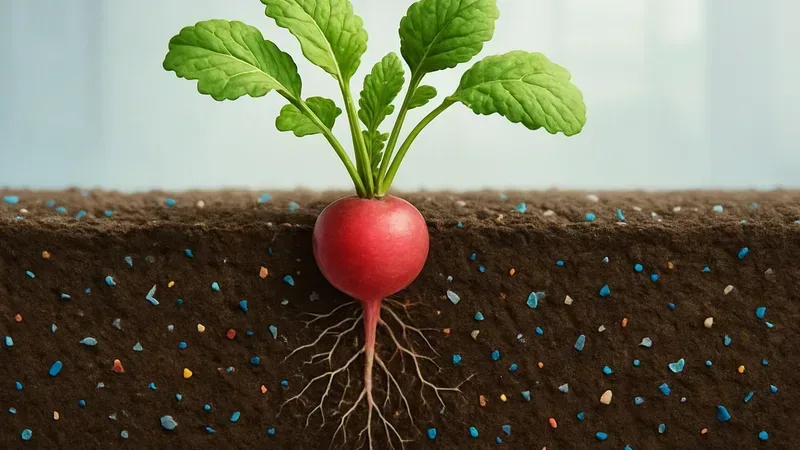
This study tested whether radish plants help soil resist the effects of microplastics. It compared planted and unplanted soil exposed to common microplastics. The question matters because microplastics are widespread and may affect soil health and carbon storage.
🧪 What the study did
The study used soil with and without radish plants. It added three common nonbiodegradable microplastics to both types of soil. Researchers measured changes in dissolved organic matter (DOM), microbial activity, and carbon dioxide (CO2) emissions over the study period.
📊 Key findings
- Microplastics reduced the chemical diversity of dissolved organic matter in soil.
- Microplastics increased breakdown of lignin-like compounds, lowering DOM stability.
- In planted soil, microplastics caused less disruption to microbes than in unplanted soil.
- Planted soil showed higher photoautotrophic activity, which helped stabilize the system.
- Microplastics led to less CO2 release from planted soil compared to unplanted soil.
ℹ️The study measured soil chemistry and microbial changes, not direct health or longevity outcomes. It does not make a broader health claim.
🌱 What it means
Radish plants appear to buffer soil against some harmful effects of microplastics. The plants helped maintain microbial stability and reduced extra CO2 emissions. This suggests plant roots play a key role in protecting soil ecosystems from plastic pollution.
⚠️ What it does NOT show
- It did not test effects on human health.
- It did not measure long-term soil health.
- It did not study other plant species.
- It did not establish causation in natural environments.
Radish plants helped soil resist microplastic damage, but this is early evidence from a single lab study.
📋 Evidence level
A laboratory study in soil with radish plants.
🔎 Confidence indicator
Confidence: Low to moderate — study type not clearly specified.
⭐ How much to trust it
The trust tier is Moderate. This means findings are preliminary and should be treated with caution. The study type is not clearly specified, so results may not apply broadly.
🚧 Limitations
- Study type not clearly specified.
- Only one plant species was tested.
- Laboratory conditions may not reflect real soil.
- Only three microplastic types were used.
❓ Open questions
- Do results apply to other plants and soils?
- How long do the protective effects last?
- Do microplastics affect soil over many years?
💡Your action plan:
- ✅ Understand that plants may help reduce microplastic harm in soil.
- ✅ Support research on plant-based soil protection.
- ✅ Consider reducing plastic waste to limit microplastic pollution.
- ✅ Discuss soil health with a gardening or environmental expert.
📝 Takeaway
Radish plants helped soil resist microplastic damage, but this is early evidence from a single lab study.
This summary is for general information only and is not medical advice. Talk to a qualified professional before changing anything about your health.
📚 Source
Planting Enhances Soil Resistance to Microplastics: Evidence from Carbon Emissions and Dissolved Organic Matter Stability.. Environmental science & technology. 2024 PubMed

Comments (0)
Leave a Comment
Be the first to comment!