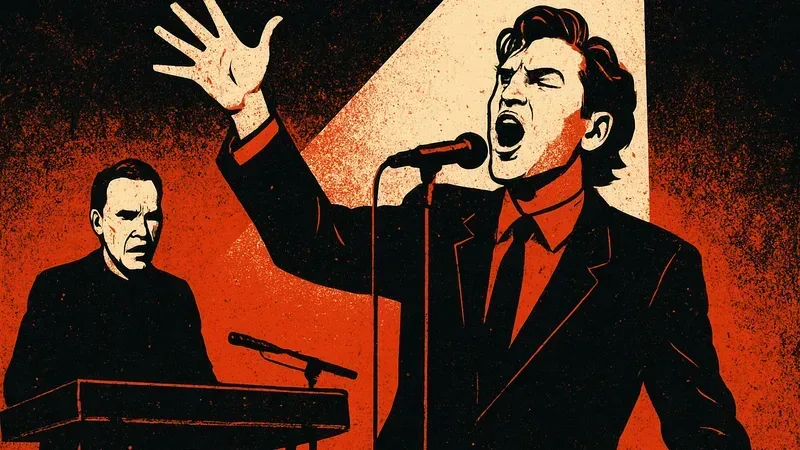
Russell Mael's voice can leap from a whisper to a falsetto that seems to come from somewhere above the stage, while his brother Ron stands motionless behind the keyboards, scowling like a man who just discovered his coffee is cold. That contrast—hyperactive frontman versus deadpan keyboardist—is the visual hook, but the music itself is where the real tension lives.
📋 At a glance
- Style: Art pop, rock
- Years active: 1968–present
- Origin: Los Angeles, California
- Core lineup: Ron Mael (keyboards), Russell Mael (vocals)
- Key era: 2003 (What You Hear Is What You Get)
- Label: Various
🎭 The brothers who refuse to sit still
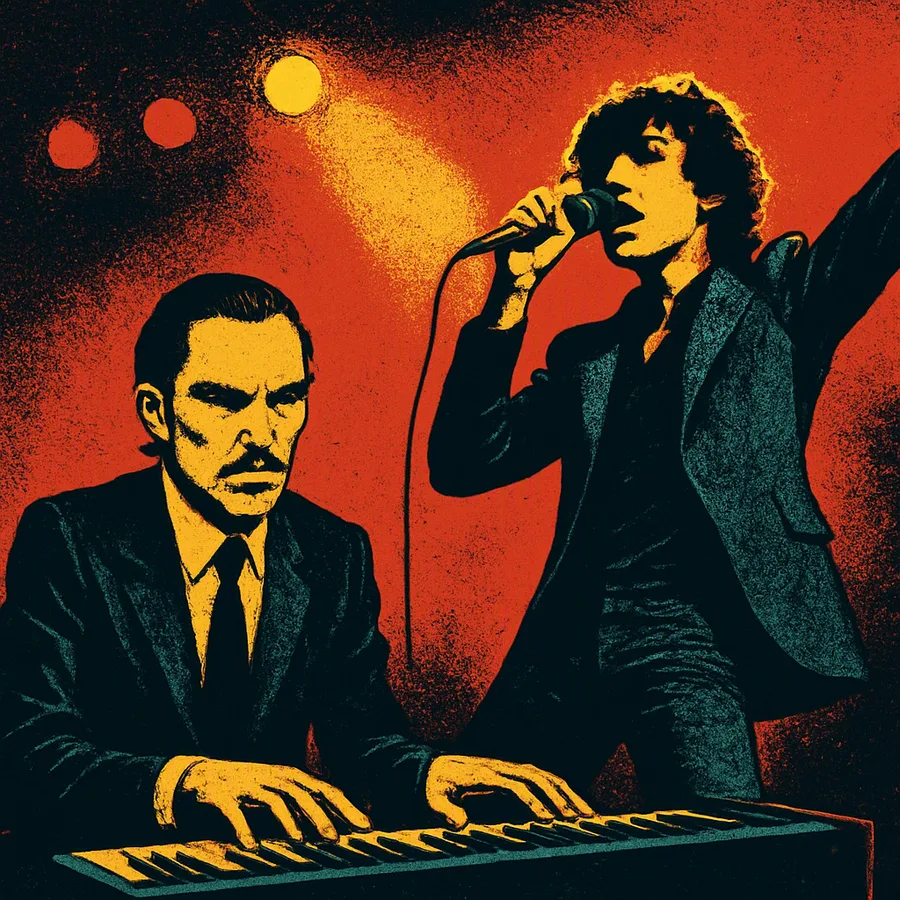
Sparks are a duo built on contradiction. Ron writes intricate, rhythmic keyboard parts that could anchor a prog record, while Russell sings lyrics that are clever enough to make you laugh and sharp enough to make you wince. Their sound shifts from album to album—sometimes synth-pop, sometimes orchestral, sometimes rock—but the core remains the same: two brothers making music that sounds like no one else.
📜 History
Ron and Russell Mael started as Halfnelson in 1968 in Pacific Palisades, Los Angeles. They changed the name to Sparks and released a string of albums through the 1970s and beyond, each one a stylistic pivot. The duo never stopped, and their 2003 album What You Hear Is What You Get represents a later chapter in a career that has always valued invention over consistency.
"The duo never stopped, and their 2003 album represents a later chapter in a career that has always valued invention over consistency."
⚖️ The case against them
Their constant style-hopping can feel like a lack of identity. A listener who loves one album might find the next one unrecognizable. The cleverness of the lyrics sometimes tips into self-consciousness, and Ron's deadpan stage presence can come across as aloof rather than mysterious. For some, the theatricality overshadows the songwriting.
🎹 The controlled chaos of a duo
Most bands rely on a rhythm section to hold things together. Sparks have only two people: one singing, one playing keyboards. That limitation forces every arrangement to be precise. There is no bassist to fill out the low end, no drummer to push the beat. Ron's keyboard parts have to do the work of both rhythm and harmony, and Russell's voice has to carry the melody alone.
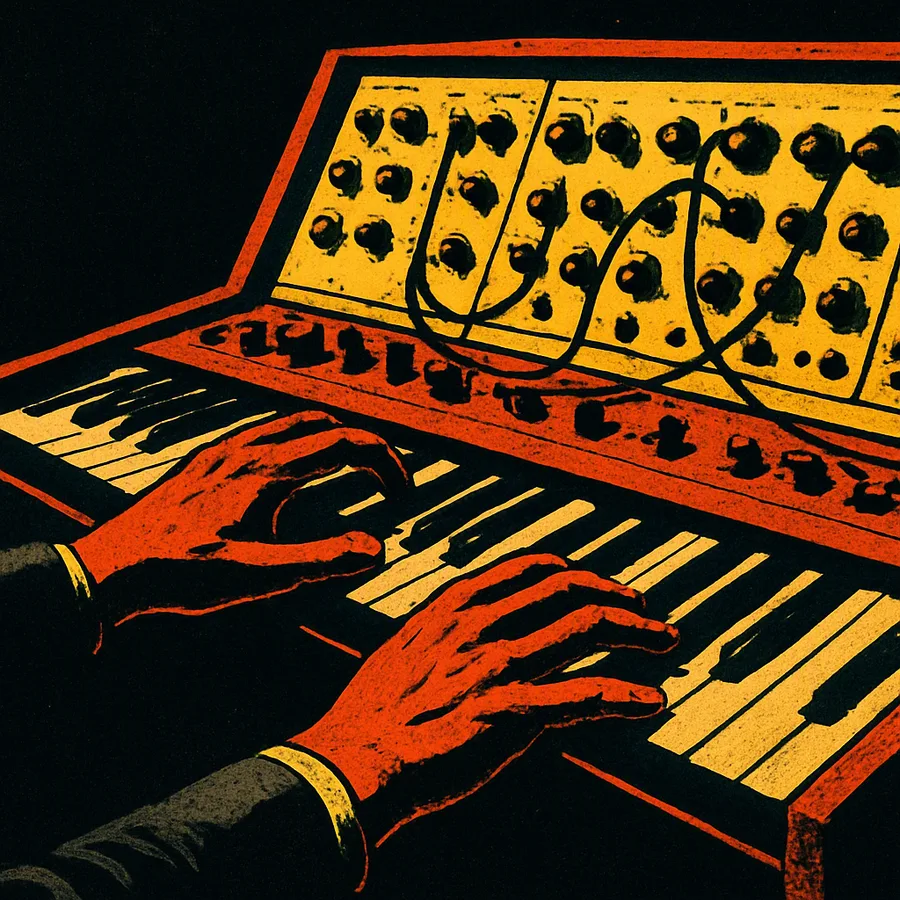
The result is music that feels both sparse and full, like a tightrope walk with no net.
✨ Why Sparks still matter
Their approach to pop songwriting—literate, theatrical, rhythmically intricate—has influenced a range of artists who value wit and structure over raw emotion. They proved that a duo could sound like a full band without pretending to be one. The best of their work rewards attention: the way a keyboard line twists unexpectedly, or how a vocal melody lands on a word you didn't see coming.
🤔 Curiosities
- ✅ The band originally called themselves Halfnelson, after their producer Todd Rundgren's middle name.
- ✅ Ron Mael's signature scowl became a trademark, but he has said in interviews that it is not an act—he simply focuses intensely on the music.
- ✅ Russell Mael's falsetto is so distinctive that it has been compared to a helium balloon, but he can also sing in a low, conversational register.
💿 One record, many worlds
What You Hear Is What You Get is a snapshot of Sparks at a moment when they had already been making music for thirty-five years. It contains everything that defines them: clever lyrics, intricate keyboards, a vocal performance that swings from conversational to stratospheric. It is not a starting point—it is a reminder that some artists never stop refining their particular kind of chaos.
ℹ️Note: The album What You Hear Is What You Get is a snapshot of Sparks at a moment when they had already been making music for thirty-five years. It contains everything that defines them.
🎧 Essential tracks
What You Hear Is What You Get (2003)
The title track encapsulates the duo's philosophy: direct, clever, and built on a keyboard riff that drives the whole song. Russell's vocal leaps from verse to chorus with the kind of precision that makes the theatricality feel earned.
Listen: Spotify · Apple Music · YouTube
The Calm Before the Storm (2003)
A rare moment of restraint. The keyboard line is sparser, and Russell's voice stays lower, creating a tension that never quite breaks. It shows that Sparks can do subtle without losing their edge.
Listen: Spotify · Apple Music · YouTube
I Can't Believe It's Not Love (2003)
The closest the album gets to a straightforward pop song, but the lyrics undercut the sweetness. Ron's keyboard part is deceptively simple—a repeating figure that anchors the track while Russell sells the irony.
Listen: Spotify · Apple Music · YouTube
📚 Related articles
- Wire: The Art of Controlled Noise — Another duo-like band that turns limitations into intricate, genre-defying art.
- Shellac: The Band That Made Restraint Sound Like a Threat — A trio with no bass that turns minimalism into a weapon, much like Sparks' sparse duo setup.
- Autechre: The Duo That Made Rhythm Unrecognizable — Another duo that redefines its genre through precise, unconventional arrangements.
📖 Sources
- Sparks (band) Wikipedia
- Discography MusicBrainz

Comments (0)
Leave a Comment
Be the first to comment!