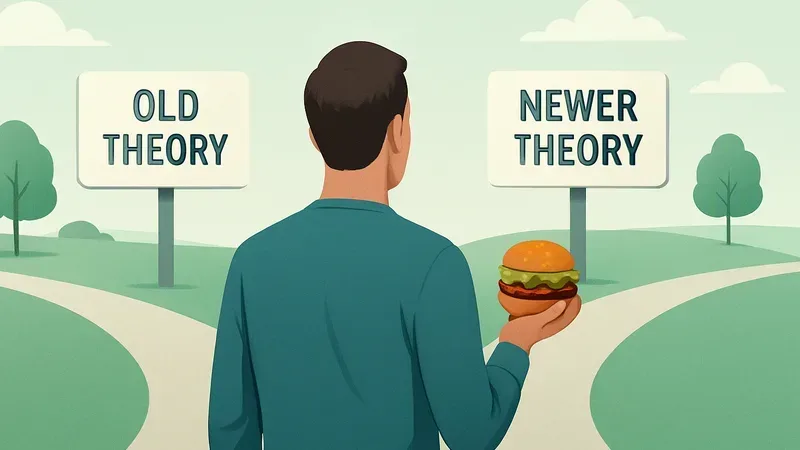
This study looked at what predicts a person's intention to choose plant-based foods. Researchers surveyed 454 North American adults to compare two psychological theories.
🔬 What the study did
Researchers used an online survey to measure participants' intentions to change their diet toward plant-based foods. They compared two theories: the theory of planned behavior and the newer theory of behavioral choice. The survey included questions about attitudes, social norms, habits, and sense of obligation.
📈 What it found
- The older theory explained 65% of the differences in people's intentions.
- The newer theory explained 80% of the differences—a significantly larger amount.
- The strongest predictors were sense of obligation, attitude-values-affect, and habit.
- Social norms from the older theory also played a role.
- Five small interactions between factors also contributed to intentions.
ℹ️The newer theory does a better job of predicting plant-based food intentions than the older one. Key drivers include personal obligation and attitudes, not just social pressure. However, this study measured intentions, not actual behavior.
⚖️ Study vs. claim
The study measured what predicts intentions to choose plant-based foods. It did not test whether these intentions lead to actual dietary changes or health outcomes.
🚫 What it does NOT show
- It does not show that people actually changed their diet.
- It does not show cause and effect—only associations.
- It does not apply to non-North American populations.
- It does not measure health or longevity outcomes.
📊 Evidence level
An observational study in people.
🎯 Confidence indicator
Confidence: Low to moderate — based on a single survey with self-reported intentions.
🔍 How much to trust it
Trust tier: Moderate. This is an observational human study — it shows association, not proof of cause. The results are informative but not definitive.
This survey shows that personal obligation and attitudes strongly predict plant-based food intentions, but actual behavior was not measured.
⚠️ Limitations
- Self-reported intentions, not actual behavior.
- Cross-sectional design—no follow-up over time.
- Single survey of 454 adults.
- Only North American participants.
❓ Open questions
- Do these intentions lead to real dietary changes?
- Would the same predictors apply in other cultures?
- How do these intentions relate to long-term health?
📋 Your action plan
- ✅ Understand that intentions are not the same as actions.
- ✅ If you want to eat more plant-based foods, consider your own sense of obligation and attitudes.
- ✅ Talk to a dietitian or doctor before making big dietary changes.
- ✅ Look for studies that measure actual behavior, not just intentions.
💡This summary is for general information only and is not medical advice. Talk to a qualified professional before changing anything about your health.
📄 Source
Applying the theory of behavioral choice to plant-based dietary intentions. Appetite. 2024 PubMed

Comments (0)
Leave a Comment
Be the first to comment!