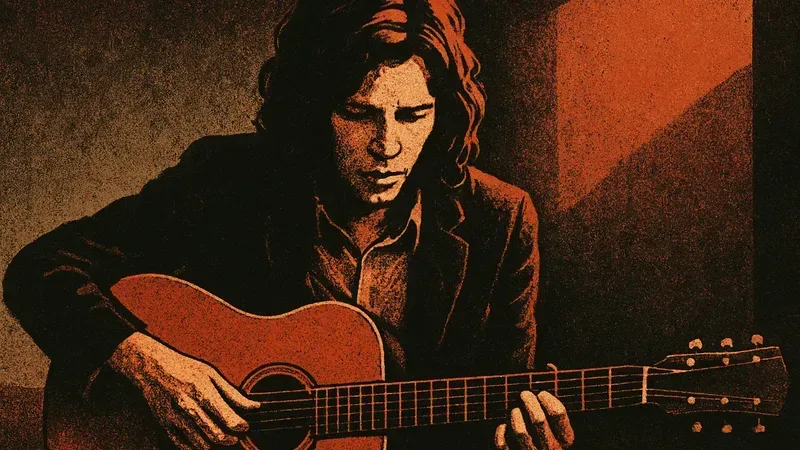
There is a photograph of Nick Drake from the early 1970s. He sits with a guitar, looking down, almost disappearing into the frame. That is the music too—quiet, intricate, and easy to miss if you are not paying attention.
📋 At a Glance
- Style: Folk, singer-songwriter
- Years active: 1969–1972
- Origin: England
- Label: Island Records
- Key era: 1969–1972
🎵 What You Need to Know
Nick Drake made three studio albums between 1969 and 1972. He played acoustic guitar with a fingerpicking style that was both delicate and rhythmically complex. His voice was soft, often barely above a whisper. The arrangements ranged from near-solo performances to fuller orchestrations, but they never overwhelmed the songs. He sold few records while alive and stopped performing early. After his death, his music found a slow, steady audience.
📜 History
Drake signed to Island Records while still at Cambridge. His debut, Five Leaves Left, came out in 1969. Bryter Layter followed in 1971, with more elaborate production. Pink Moon arrived in 1972, recorded mostly alone with just guitar and voice. He withdrew from music shortly after. He died in 1974 at twenty-six. The albums sold poorly at first but grew in reputation over the following decades.
⚖️ The Case Against Him
Drake's catalogue is small—three albums, less than two hours of music. The later work, especially Pink Moon, strips away the warmth of the earlier records. Some listeners find the spareness cold or monotonous. There is no evolution toward a fuller sound; instead, the music contracts. For those who prefer the richer arrangements of Bryter Layter, the final album can feel like a retreat.
ℹ️Drake's music is intimate, but his life was marked by deep isolation. The gentle fingerpicking and soft vocals suggest a calm interior, yet the songs often deal with melancholy and withdrawal. This tension—between the beauty of the sound and the sadness behind it—is what gives the work its staying power. It is not that the music is sad; it is that the sadness is delivered so gently that it takes time to register.
🎸 The Guitar Work
Drake's guitar playing is the center of everything. He used a fingerpicking style that moved between bass notes and melody lines in a single pattern. The rhythms are not simple strums; they shift and hesitate, giving the songs a natural, breathing feel. On Five Leaves Left, the guitar is supported by strings and woodwinds that follow its lead rather than overpower it. On Pink Moon, the guitar stands alone, and the details become more important—every brush of the strings, every pause.
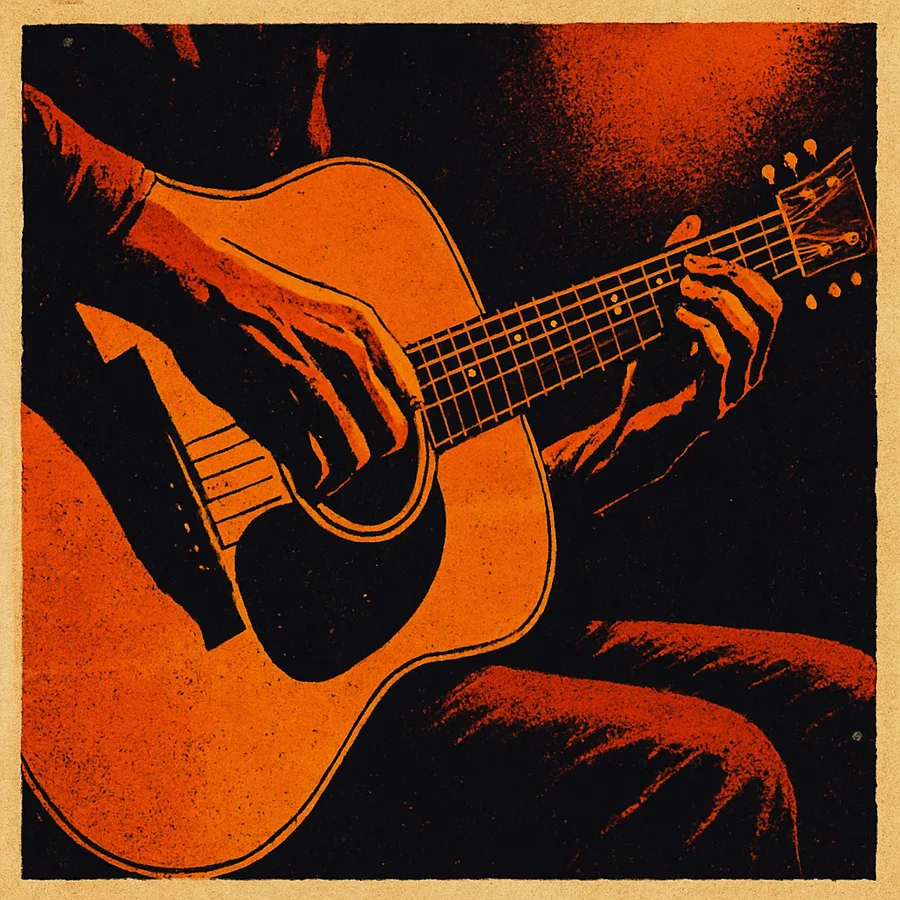
The quietness became his strength. His guitar style influenced later singer-songwriters, and his willingness to leave space in the music set him apart from his peers.
🎚 The Arrangements
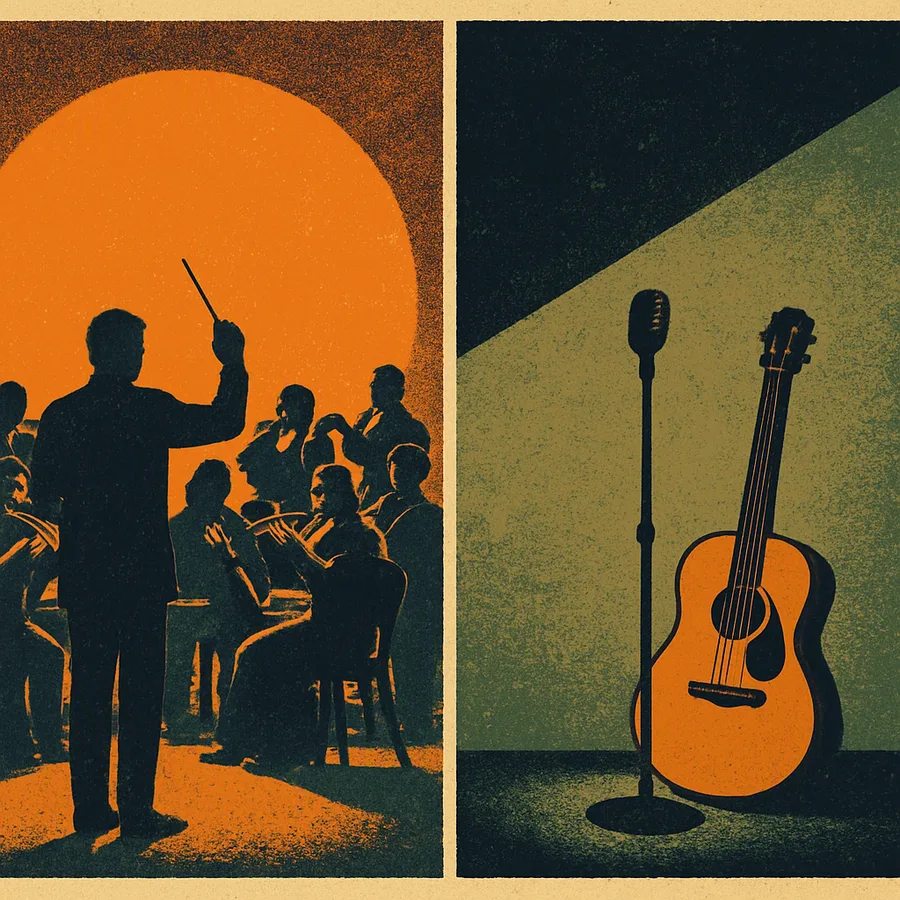
The production on Bryter Layter is the fullest Drake ever got. There are flutes, brass, and backing vocals, but they are placed with restraint. The songs never feel crowded. On Pink Moon, the production is nearly absent—just guitar and voice, with a single piano part on the title track. The contrast between the two approaches shows how much Drake's music depended on space. When the arrangements are busy, the guitar still leads. When they are bare, the voice fills the room.
🏆 Why He Still Matters
Drake's music did not fit the trends of his time—it was too quiet for the folk clubs and too introspective for the pop charts. But that quietness became his strength. The three albums form a small, complete body of work that rewards attention without demanding it.
💡Drake's music does not change. It stays at the same temperature, the same volume, the same pace. That consistency is not a limitation—it is the point. He found a sound that belonged to him alone, and he stayed there long enough to leave it behind.
🔍 Curiosities
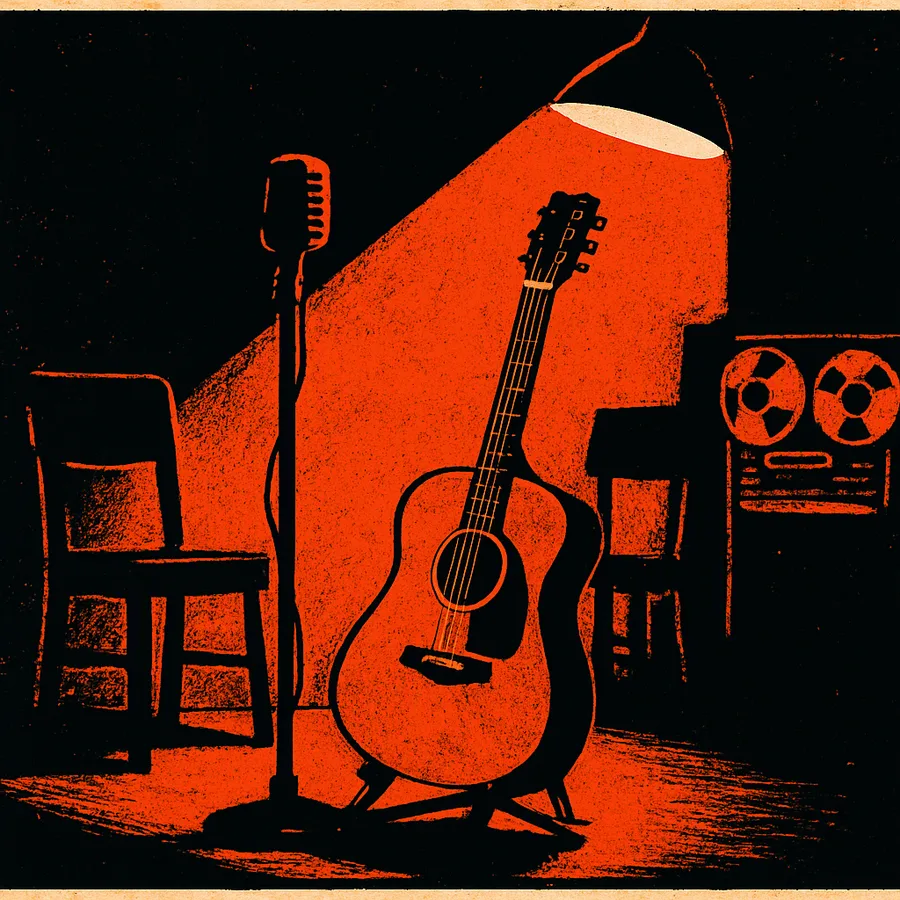
- ✅ Drake recorded Pink Moon in two late-night sessions at Sound Techniques Studio in London, with only engineer John Wood present.
- ✅ He never performed live after 1970, and only a handful of concert recordings exist.
- ✅ His song "Pink Moon" was used in a Volkswagen commercial in 1999, decades after his death, which introduced him to a new generation.
🎧 Essential Tracks
River Man 1969 - Five Leaves Left
The guitar part moves in a way that feels both free and precise, with a melody that seems to drift. The string arrangement enters late and stays subtle, letting the guitar remain the focus.
Listen: Spotify · Apple Music · YouTube
Northern Sky 1971 - Bryter Layter
The fullest arrangement Drake ever used—piano, celeste, and backing vocals—but the song never feels crowded. The warmth comes from how the instruments stay out of each other's way.
Listen: Spotify · Apple Music · YouTube
Pink Moon 1972 - Pink Moon
Barely two minutes long, with only guitar and voice. The piano part that appears midway is the only addition. It shows how much Drake could do with almost nothing.
Listen: Spotify · Apple Music · YouTube
From the Morning 1972 - Pink Moon
The closing track of the last album, and one of the few moments that sounds openly hopeful. The guitar pattern is simple and repeated, and the vocal line rises at the end.
Listen: Spotify · Apple Music · YouTube
Cello Song 1969 - Five Leaves Left
The cello enters early and stays close to the guitar line, creating a dialogue between the two instruments. It is a good example of how Drake used strings to support rather than decorate.
Listen: Spotify · Apple Music · YouTube
📚 Sources
Nick Drake Wikipedia
Discography MusicBrainz
📝 Related Articles
- Big Star: The Cult Band That Changed Everything by Selling Almost Nothing - Another cult artist whose small catalogue grew in reputation after selling almost nothing at first.
- The Blue Nile: The Sound of Deliberate Silence - Like Drake, a small, perfect catalogue built on sparse arrangements and a voice that never raises itself.
- Talk Talk: The Quiet After the Synth-Pop Storm - A band that also retreated from commercial sound into quiet, sparse music that took years to be understood.

Comments (0)
Leave a Comment
Be the first to comment!