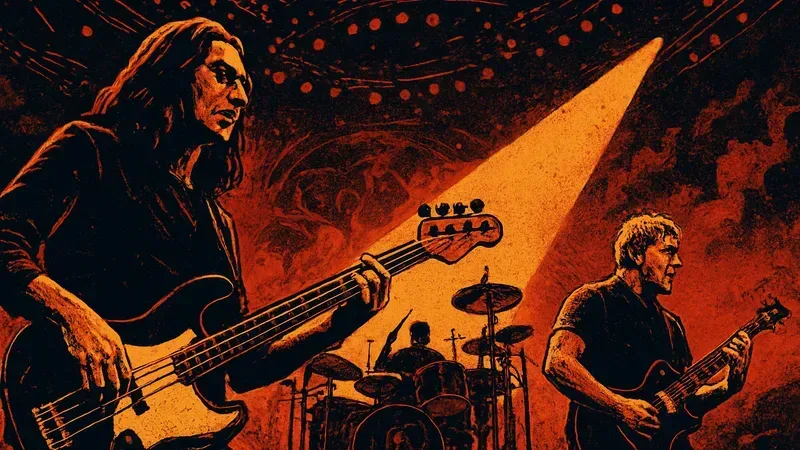
Rush is a band that made a career out of doing things the hard way. Three musicians who never stopped pushing each other, writing songs that sprawled across album sides and demanded attention. Their sound—Geddy Lee's high-register bass and vocals, Alex Lifeson's chordal guitar work, Neil Peart's drumming—became instantly recognizable. They were a cult band that somehow filled arenas.
📋 At a Glance
- Style: Progressive rock, hard rock
- Years active: 1968–2018, reunion announced 2025
- Origin: Toronto, Canada
- Core lineup: Geddy Lee, Alex Lifeson, Neil Peart
- Key era: 1975–1981
- Label: Mercury, Anthem
📖 History
Formed in Toronto in 1968, Rush went through early line-up shuffles before settling on the classic trio: guitarist Alex Lifeson, bassist/vocalist Geddy Lee, and drummer Neil Peart, who replaced John Rutsey in 1974. Peart also took over lyric writing, steering the band toward science fiction and fantasy.
The band released a self-titled debut that year, then quickly evolved. Their 1976 album 2112 broke them in the US. The trio remained stable until 2015, when Peart retired due to health issues. The band disbanded in 2018 after Peart's death in 2020. A reunion tour was announced for 2026–2027 with new members.
🤔 The Case Against Them
Rush's earnestness can feel cold. The technical skill sometimes overshadows emotional connection. Their 1980s synth period, while commercially successful, lost some of the guitar-driven energy that defined their earlier work. The lyrics, especially Peart's early Ayn Rand-inspired material, can come across as preachy or detached. For listeners who prefer looseness, Rush can feel overly controlled.
🎸 Virtuosity Meets Arena Rock
Rush occupies a strange space: they are a band for people who love complexity, but they also wrote hooks that stuck. The tension is real. 2112 is a 20-minute suite about individualism versus collectivism, yet it became a radio staple. Moving Pictures opens with 'Tom Sawyer,' a song built on odd time signatures and shifting keys that still sounds like a pop song.
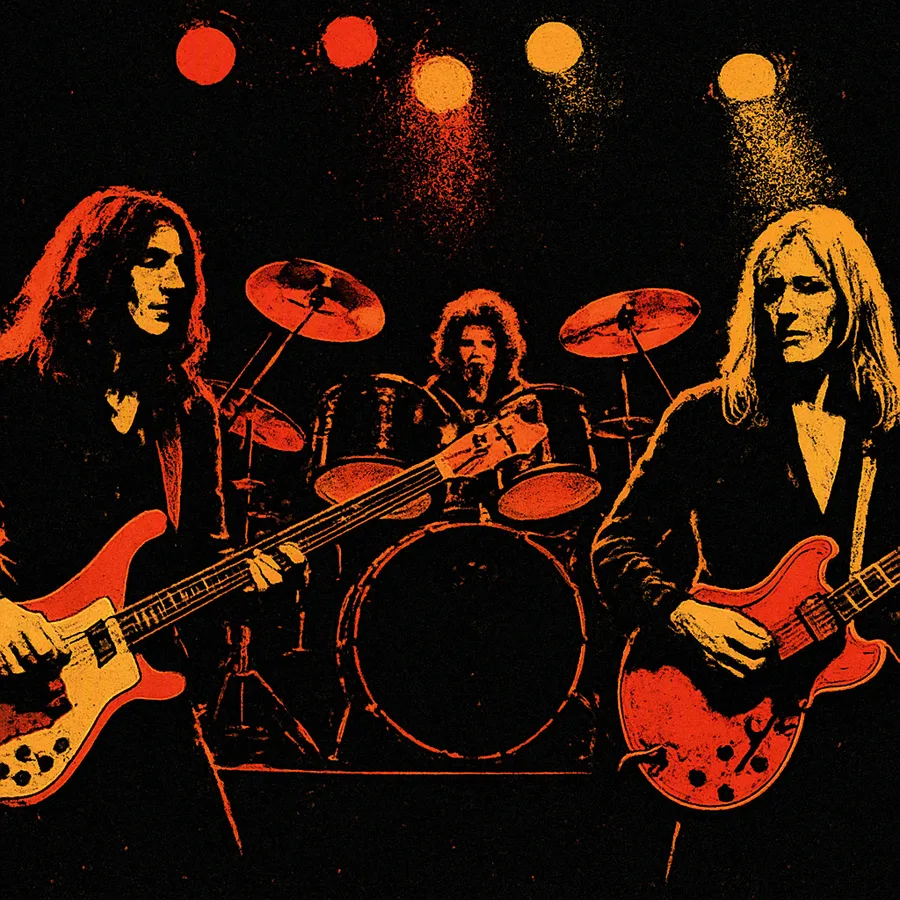
This is not a contradiction that resolves neatly. It is simply how Rush operated: they made the difficult sound natural, and the natural sound difficult.
🥁 The Rhythm Section as Lead
Most rock bands feature guitar as the lead instrument. In Rush, the bass and drums drive the melody. Geddy Lee's bass lines are often the most active melodic element, playing high on the neck and using a distorted tone that cuts through.
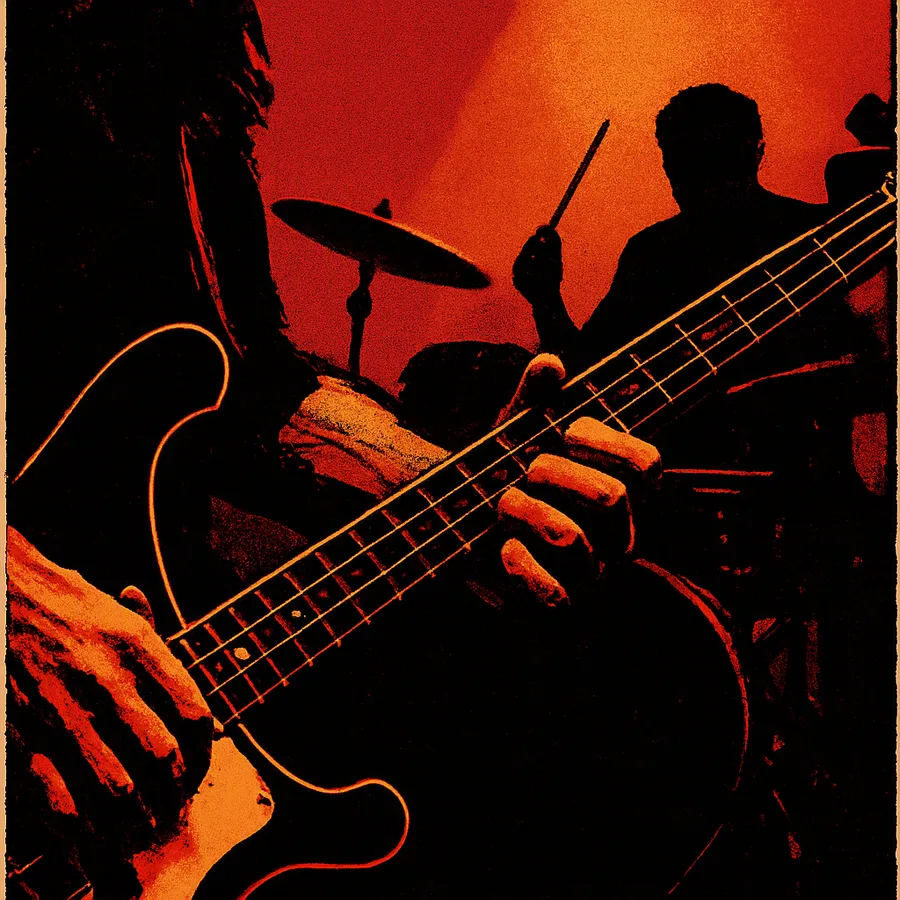
Neil Peart's drumming is equally melodic, filling space with intricate patterns and cymbal work. Alex Lifeson's guitar often provides texture and chordal support rather than flashy solos. The result is a sound where every member is constantly playing, yet the arrangement never feels crowded.
🌟 Why They Matter
Rush proved that progressive rock could be direct. They took the complexity of Yes and Genesis and stripped it of the pastoral, replacing it with a hard rock edge and a workmanlike attitude. Their influence extends beyond prog: alternative rock bands like the Smashing Pumpkins and Foo Fighters have cited them, and their approach to rhythm section interplay has been studied by metal and math-rock musicians. Their best work—roughly 1975 to 1981—remains a benchmark for what a trio can achieve when every member is a lead player.
🔍 Curiosities
- Neil Peart was not a founding member. He joined just before the first album's tour and became the band's primary lyricist.
- The band's original name was Hadrian. They changed it to Rush before their first gig.
- Geddy Lee's high-pitched singing voice was initially mocked by critics, but it became one of the band's defining features.
🎵 One Last Thing
Rush made a career out of being taken seriously by people who took music seriously. They never apologized for their ambition, and they never dumbed it down. The best way to understand them is to put on Moving Pictures and listen to how three people can sound like a much larger band without ever feeling like they are trying to impress you.
📀 Essential Tracks
Tom Sawyer
The tightest arrangement in their catalogue. The synth and guitar blend is seamless, and the rhythm section locks into a groove that makes the odd time signatures feel natural.
Listen: Spotify · Apple Music · YouTube
2112
The side-long suite that broke them in the US. It is the clearest example of their early progressive ambition, with Peart's dystopian lyrics and the band's willingness to let a single idea stretch over 20 minutes.
Listen: Spotify · Apple Music · YouTube
The Spirit of Radio
A song that shifts from reggae to hard rock within three minutes. It shows how Rush could incorporate outside influences without losing their identity, and it remains one of their most accessible singles.
Listen: Spotify · Apple Music · YouTube
YYZ
An instrumental that functions as a masterclass in trio interplay. The opening riff is based on the Morse code for Toronto's airport, and the track lets each member take a turn in the spotlight.
Listen: Spotify · Apple Music · YouTube
Subdivisions
The definitive song of their synth-heavy era. The lyrics shift from fantasy to suburban alienation, and the arrangement is built around a pulsing keyboard line rather than guitar.
Listen: Spotify · Apple Music · YouTube
La Villa Strangiato
An instrumental that moves through multiple sections with a surreal, almost cinematic quality. It is the band at their most playful, and it demonstrates their ability to write complex music that still feels like a journey.
Listen: Spotify · Apple Music · YouTube
📚 Sources
Rush (band) Wikipedia
📚 Related Articles
- Autechre: The Duo That Made Rhythm Unrecognizable - After Rush's precise rhythms, explore how Autechre deconstructs rhythm into alien, algorithmic patterns.
- Tortoise: The Band That Made Post-Rock a Verb - Like Rush, Tortoise uses complex interplay—but with a minimalist, studio-as-instrument approach.
- Godspeed You! Black Emperor: The Band That Waits - If Rush's long-form suites appeal, Godspeed's patient, cinematic crescendos offer a darker, wordless counterpart.

Comments (0)
Leave a Comment
Be the first to comment!