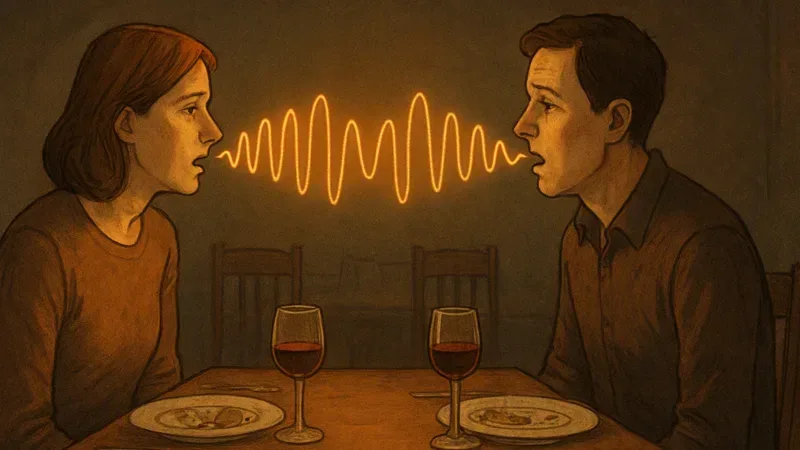
I was at a dinner party last month. Eight people, good food, wine. Someone mentioned a local zoning dispute — whether to build a new apartment building on a block of old houses. Within minutes, the table had split. Not angry, but tired. Each person repeated a point someone else had just made, as if the other hadn't spoken at all. It was like watching two radios play different stations at the same volume.
❓ The real question
Why do conversations about public life so often feel like they never reach the other side? Not because people are stupid or mean, but because something in the structure of the talk itself keeps us apart.
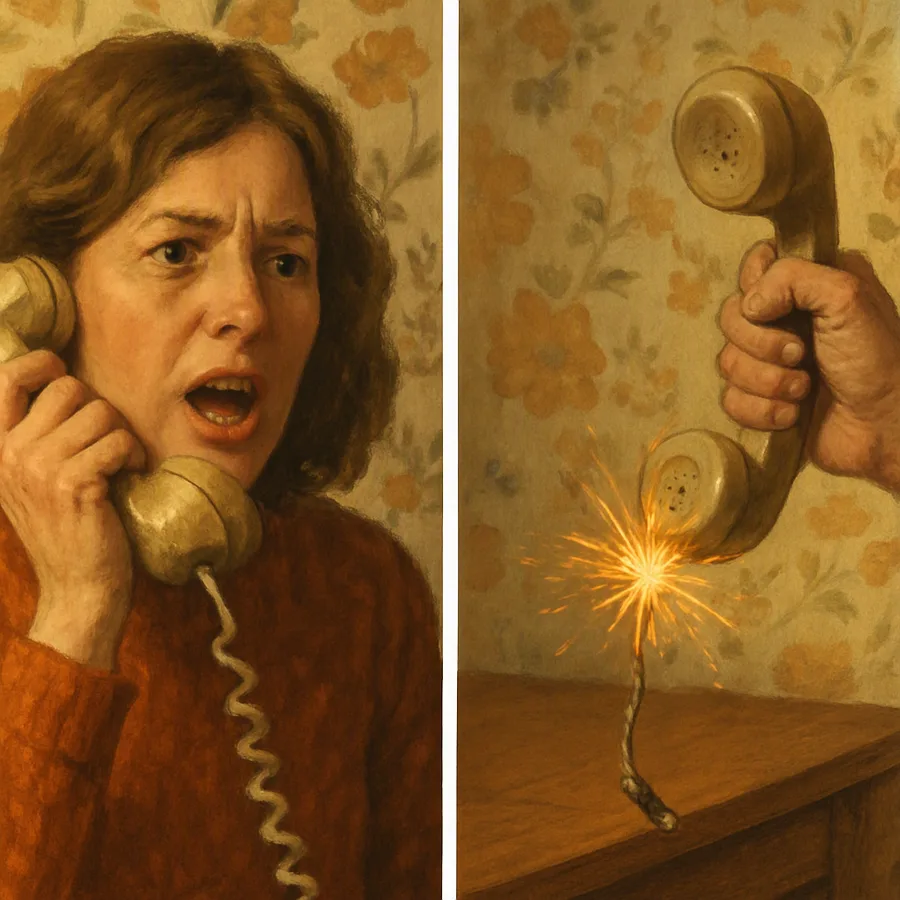
🎵 The comfort of the chorus
Most of us spend our days surrounded by people who mostly agree with us. At work, among friends, in the news we choose. This isn't conspiracy — it's convenience. It feels good to have your assumptions confirmed. It feels safe.

So when we finally sit across from someone who disagrees, we're not just arguing about the apartment building. We're defending the world we've built in our heads, the one where our side is obviously right. The other person's words sound foreign, even offensive, because they don't fit the familiar song.
It was like watching two radios play different stations at the same volume.
😩 The exhaustion of translation
Real listening is work. It means holding your own view lightly while you try to understand someone else's. That takes energy most of us don't have at the end of a long day. We want to be understood, not to understand. So we talk past each other, each waiting for our turn to speak, not to hear.

The zoning debate becomes a test of loyalty: are you with me or against me? The actual question — what kind of neighborhood do we want to live in? — gets buried under the weight of who wins.
ℹ️This idea of "exhaustion of translation" appears again in an article on why we repeat the same political arguments — the pattern of talking past each other is deeply human.
💸 The cost of agreement
There's a quieter reason we don't reach each other. Sometimes, agreeing would cost too much. If I admit your point about the apartment building has merit, I might have to change my mind about other things. I might have to see my own side as less pure, my own arguments as less solid. That's uncomfortable.
It's easier to stay in the familiar fight, to keep the other person at arm's length, than to risk the small death of being wrong.
💡Recognising the cost of agreement can be a first step toward more honest conversations. Sometimes the most generous thing is to admit that being wrong feels like a small death — and that's okay.
🤝 The honest complication
But I don't want to pretend that all disagreements are just failures of listening. Some differences are real. Some values don't reconcile. The person who wants to preserve the old houses and the person who wants more affordable housing may both be right, in different ways. No amount of good-faith conversation will make one of them wrong.
The best we can do is see the other clearly, without pretending we agree. That's not failure. That's honesty.
The dinner party ended with dessert and a shift to safer topics. The zoning question was left open, unresolved. I drove home thinking about the radios, still playing different stations. Maybe the point isn't to get them to play the same song. Maybe it's just to remember that the other station exists, and that someone is listening to it.
📚 Related articles
- The Argument You Have With the Same Person Every Year — Explores why some disagreements never move, suggesting they're really about something else — a natural next step.
- Why We Repeat the Same Political Arguments — Examines the function of repetition in political talk, deepening the article's insight into why conversations stall.

Comments (0)
Leave a Comment
Be the first to comment!