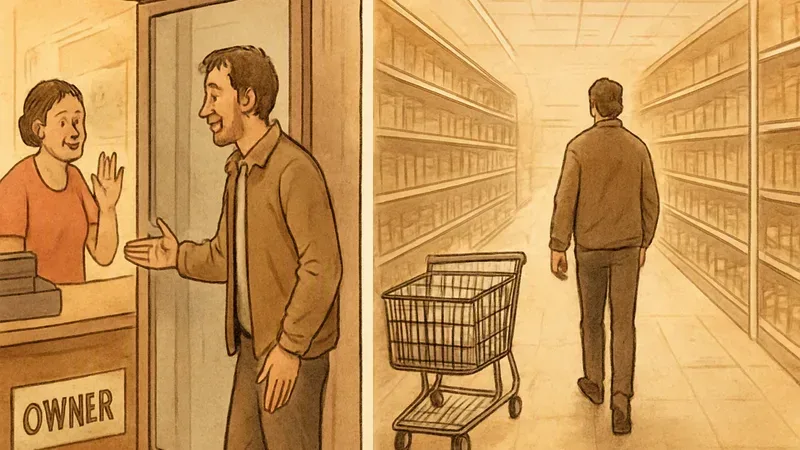
The man ahead of me in the corner store holds the door with his whole body, says thank you twice, once to the cashier and once to the door itself, and calls the owner by name. Twenty minutes later, in the supermarket two blocks over, the same kind of man leaves his cart sideways in the aisle, walks off to find the mustard, and never comes back for it.
🤔 Why the difference?
I don't think it's hypocrisy exactly. It's something closer to recognition. In the small shop, someone knows your face. The cashier knows your kid's name, or at least your usual order. You are a specific person there, and specific people are harder to be careless around.
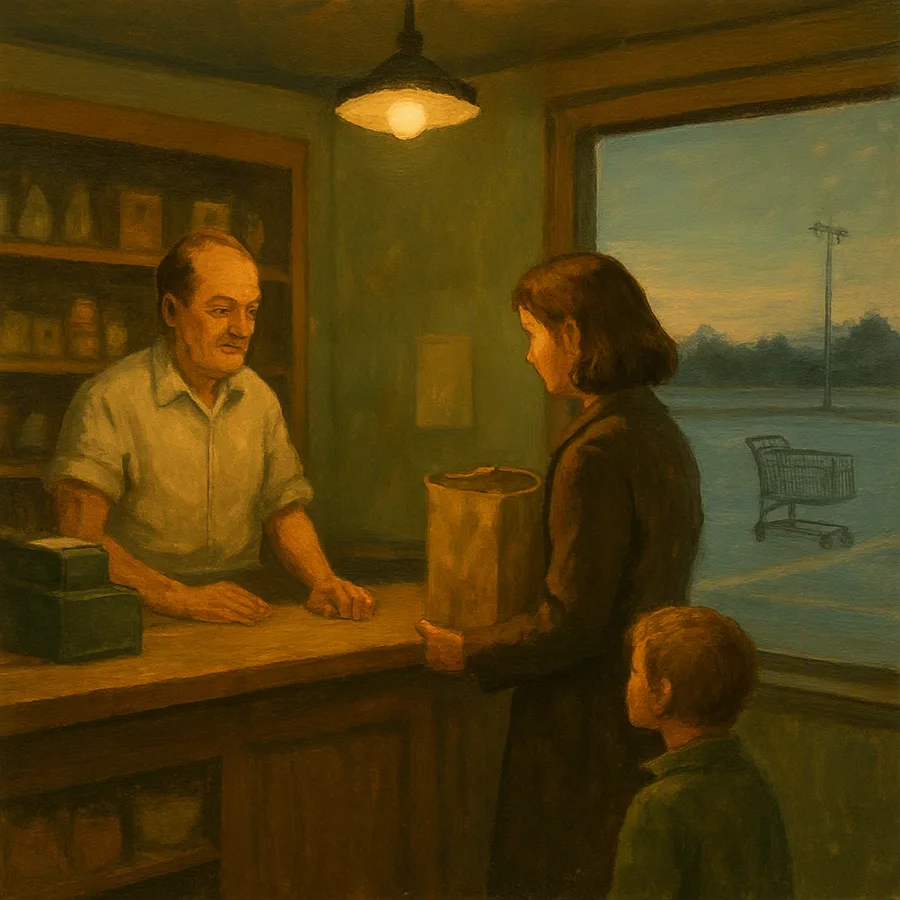
In the big store you are a body with a cart, one of hundreds, and nobody will remember that you blocked the aisle. Being nobody is a kind of permission.
🧠 The store remembers you
A small shop is a place with a memory. The owner notices when you don't come for a while. He notices if you're short by a coin and waves it off, and he'll remember that too. This isn't surveillance, but it works a little like it. You behave because your behavior will land somewhere.
In a supermarket, your rudeness lands nowhere. The cart stays in the aisle until a stranger moves it. There's no ledger, no face, no small debt building up. You can be thoughtless and simply leave.
🎭 The scripts we follow
We like to think our manners come from inside. But watch people in a place where no one can identify them and you see how much of politeness is a response to being seen.
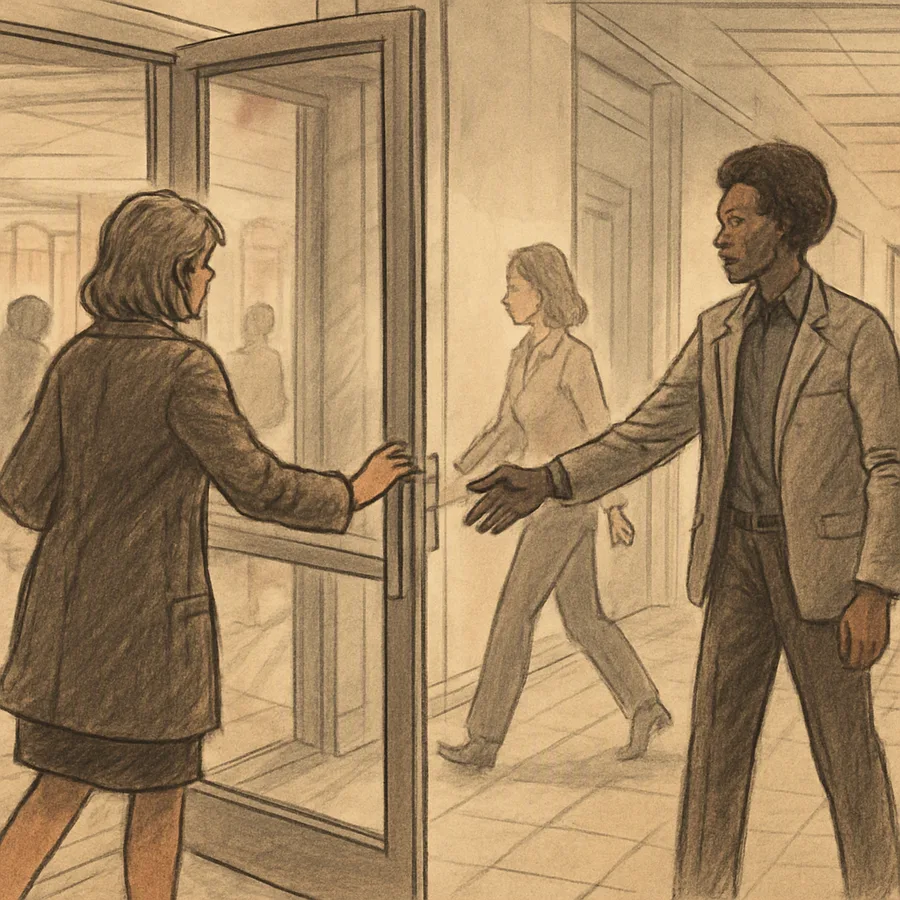
The same person who lets a door slam in a mall will hold it for a full ten seconds in a hallway at work, because a coworker will remember. This isn't a moral failure. It's just that most of us are better at being good to people than to crowds. A crowd doesn't have a face to disappoint.
⚖️ Maybe it isn't scale at all
Here's where I might be wrong. Maybe the difference isn't recognition but consequence. In the small shop, being rude costs you something real: the owner's coldness next week, the small embarrassment of a face that used to be warm. In the supermarket there's nothing to lose, so nothing restrains you.
And if that's true, then small-town politeness isn't character at all. It's just good behavior under mild watch.
Put the same person in a city where no one knows him and the manners evaporate. I don't love this reading, but I can't fully argue with it.
🛒 What the cart is really about
Either way, the cart stays there. Someone moves it. That person is usually a worker, paid to clean up after strangers who will never see her. The small shop hides this cost, because the owner is standing right there. The big store spreads it out, so no single person feels it.
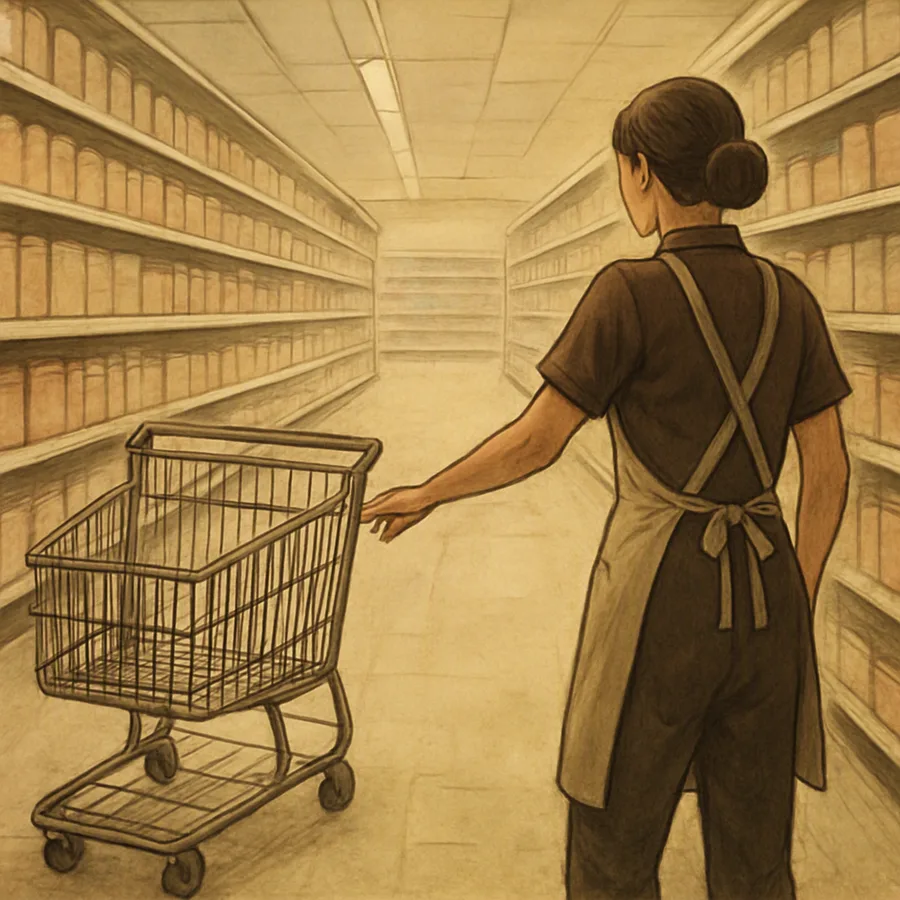
The question isn't really why we're polite in one place and not the other. It's who pays for the difference, and whether they ever get a thank you.
📚 Related Articles
- The Small Announcement Before Leaving the House - Another small social ritual examined: why we narrate exits to rooms that already know we're going.
- The Plate You Don't Bother With When You Eat Alone - Same question of behavior shifting with audience — what changes when nobody specific is watching.
- The Tiny Pencil You Kept From the Furniture Store - A small, oddly persistent object and the quiet meaning we attach to places that don't know us.

Comments (0)
Leave a Comment
Be the first to comment!